
Attending a trade show can be a very effective method of promoting your company and its products. And one of the most effective ways to optimize your trade show display and increase traffic to your booth is through the use of banner stands.

Balamani
Author
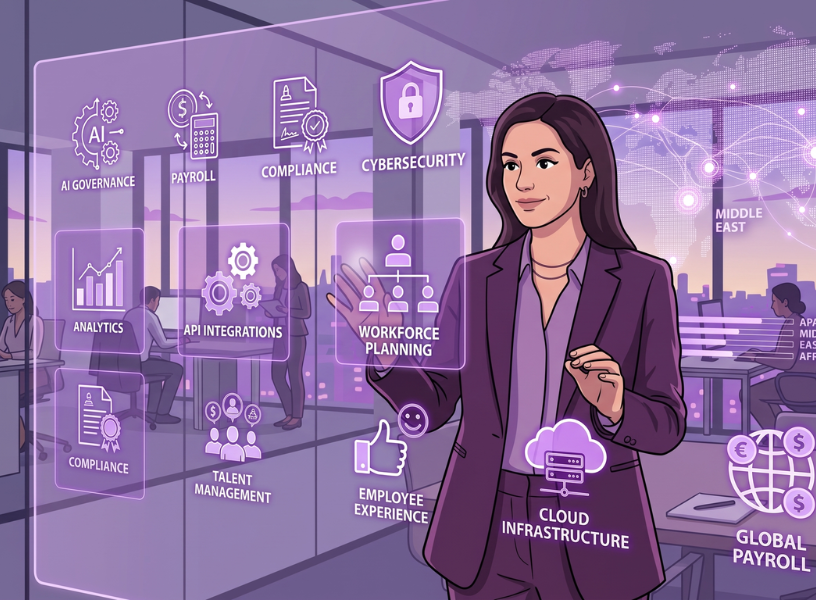
Choosing enterprise HR software is about more than features or pricing. The right platform should support payroll, talent, compliance, employee experience, and future business growth.
For organizations across Asia Pacific, the Middle East and Africa, regional differences in labour laws, payroll and compliance make vendor selection even more critical.
The best buying decisions start with asking the right questions. Here are nine questions to help enterprise HR leaders evaluate HR software vendors beyond product demos and feature lists.
The first question should focus on organizational fit rather than functionality.
Many HR software vendors can demonstrate recruitment workflows, leave management, and performance reviews. Far fewer can explain how their platform supports your specific organizational structure.
Consider whether your organisation operates:
The software should accommodate these realities without requiring excessive customisation.
Ask vendors:
Many vendors describe themselves as "global."
That description alone tells you very little.
Operating successfully across Asia Pacific, the Middle East and Africa require far more than supporting multiple currencies or languages.
Organisations should evaluate whether the platform supports:
The level of localisation required varies considerably.
Ask vendors:
Enterprise HR systems rarely operate in isolation.
They exchange data with:
Poor integration often becomes one of the largest hidden costs of HR transformation.
When evaluating vendors, avoid focusing solely on whether integrations exist.
Instead, understand:
Ask whether customers commonly integrate with platforms similar to those already in your technology landscape.
A platform that integrates effectively today should continue supporting future digital initiatives without creating unnecessary technical debt.
Ask vendors:
We'll also include a practical vendor evaluation scorecard, five AEO-focused FAQs, independent sources, and editorial review notes.
Artificial intelligence (AI) is rapidly becoming a standard capability in enterprise Human Capital Management (HCM) platforms. Vendors now promote AI-powered recruitment, skills matching, workforce planning, employee self-service, learning recommendations, and predictive analytics.
However, the most important question is not whether AI exists within the platform. It is whether the organization can trust how AI is implemented, governed, and monitored.
HR leaders should distinguish between AI features that deliver measurable business value and those that are primarily marketing differentiators.
Look beyond demonstrations and ask vendors how AI models are trained, how recommendations are generated, what data is used, and what governance mechanisms are in place to minimise bias and improve transparency.
This becomes particularly important for organisations operating across Asia Pacific, the Middle East and Africa, where employee demographics, languages, labour regulations and cultural contexts differ significantly. AI models that perform well in one market may require additional oversight or localisation in another.
Ask vendors:
What good looks like
Employee data is among an organisation's most sensitive assets.
Enterprise HR platforms typically contain payroll information, identification documents, performance records, medical information, compensation history and personal details. Any security weakness can expose both employees and the organisation to significant operational and reputational risks.
For organisations operating across multiple jurisdictions, security also extends beyond technical controls. HR leaders should understand how the vendor addresses country-specific data residency expectations, privacy obligations and cross-border data transfers.
While requirements differ between countries such as Singapore, Australia, Saudi Arabia and South Africa, organisations should ensure their chosen platform supports appropriate governance regardless of where employees are located.
Evaluate:
Ask vendors:
Remember that compliance remains a shared responsibility. Even the most secure platform cannot compensate for weak internal governance or poor data management practices.
Many software evaluations focus heavily on product capabilities while giving insufficient attention to implementation.
In reality, implementation often determines whether an HR transformation succeeds.
Enterprise deployments require more than technical configuration. They involve process redesign, data cleansing, integration, change management, testing, governance and user adoption.
A platform with excellent functionality can still fail if implementation assumptions are unrealistic.
Instead of asking how quickly implementation can be completed, ask what conditions are required for success.
Discuss with vendors:
Organisations operating across Asia Pacific, the Middle East and Africa often benefit from phased country deployments rather than simultaneous global implementations.
This allows HR teams to validate processes, resolve localisation issues and refine governance before wider rollout.
The vendor relationship does not end after implementation.
Enterprise HR systems require continuous support as organisations grow, regulations evolve and workforce needs change.
Support quality can significantly influence long-term satisfaction.
Rather than focusing only on service-level agreements (SLAs), understand how the vendor operates after go-live.
Ask:
For organisations spanning multiple time zones, support availability during regional business hours may be just as important as technical capability.
Software subscription fees represent only one component of total investment.
Enterprise buyers should understand the complete cost profile across the expected lifecycle of the platform.
Potential cost areas include:
Software licences - How are users licensed?
Implementation - Fixed price or time and resources?
Integrations - Included or additional cost?
Training - Included in subscription?
Support - Premium support options?
Upgrades - Included or charged separately?
Customisation - Future maintenance implications?
Organisations should also consider internal costs associated with governance, project management, process redesign and change management.
A lower upfront price does not necessarily produce a lower long-term cost.
Enterprise HR software is a long-term investment.
Technology, workforce expectations, and business priorities will continue to evolve.
The final evaluation question should therefore examine the vendor's ability to support future organizational change.
Areas to explore include:
Rather than requesting confidential roadmap details, ask how customer feedback influences product development and how frequently major capabilities are released.
The objective is to assess whether the platform can evolve alongside your organisation rather than requiring another replacement within a few years.
Choosing enterprise HR software is about more than comparing features. It requires evaluating how well a platform supports your organisation's operating model, regional workforce needs and long-term business goals. By asking the right questions and aligning stakeholders across HR, IT, Finance and Procurement, organisations can make more informed, future-ready decisions and select a solution that delivers lasting business value.
Frequently Asked Questions
1. What should enterprises evaluate when comparing HR software vendors?
Evaluate business fit, regional capabilities, integrations, security, AI, implementation, support, total cost of ownership, and long-term product roadmap—not just features.
2. Why are regional capabilities important in HR software?
They ensure the platform supports local payroll, compliance, languages, currencies, and employment regulations across different countries.
3. How important is AI in enterprise HR software?
AI should deliver measurable business value while offering strong governance, transparency, security, and human oversight.
4. What is the biggest mistake when choosing HR software?
Focusing only on product demos instead of implementation, integrations, scalability, and long-term costs.
5. How can organisations compare HR software vendors fairly?
Use a weighted scorecard covering business fit, technology, implementation, security, regional support, AI, and total cost of ownership.

Many people would say that it is absolute madness to keep on doing the same thing, time after time, expecting to get a different result or for something different to happen.
Hoover Dam and the Grand Canyon: Book yourself a seat on any of the many sightseeing tours available and go and watch the architectural marvel that is Hoover Dam built over the Grand canyon which is also a grand sight to see by itself. Black Canyon is another must see as is Lake Mead which is so beautiful just because it is a body of water all surrounded by desert-like nature. Colorado River:
While looking at the Dam and Canyon is from above, to see the true beauty of the river, you have to go down. The Colorado river is excellent for river-rafting and water sports, but you do not have to take part if it is not your thing. Instead just sit back and enjoy another of nature’s marvels.


.webp)
Who can not resist going to one of the old towns like those in the Western gun slinging movies? Your destination needs to be Old Nevada. There you can delight in an old western town right in the middle of Red Rock Canyon. They host western shootouts too so come prepared, partner! I could go on and on about other attractions like the theme park in Circus Circus, the Gilcrease Nature Sanctuary, the Henderson Bird Viewing Preserve and Mt. Charleston but I think you get the picture. In Las Vegas and hate gambling? Do not despair. Just go out and have some clean un-gambling fun.
Choosing enterprise HR software is about more than features or pricing. The right platform should support payroll, talent, compliance, employee experience, and future business growth.
For organizations across Asia Pacific, the Middle East and Africa, regional differences in labour laws, payroll and compliance make vendor selection even more critical.
The best buying decisions start with asking the right questions. Here are nine questions to help enterprise HR leaders evaluate HR software vendors beyond product demos and feature lists.
The first question should focus on organizational fit rather than functionality.
Many HR software vendors can demonstrate recruitment workflows, leave management, and performance reviews. Far fewer can explain how their platform supports your specific organizational structure.
Consider whether your organisation operates:
The software should accommodate these realities without requiring excessive customisation.
Ask vendors:
Many vendors describe themselves as "global."
That description alone tells you very little.
Operating successfully across Asia Pacific, the Middle East and Africa require far more than supporting multiple currencies or languages.
Organisations should evaluate whether the platform supports:
The level of localisation required varies considerably.
Ask vendors:
Enterprise HR systems rarely operate in isolation.
They exchange data with:
Poor integration often becomes one of the largest hidden costs of HR transformation.
When evaluating vendors, avoid focusing solely on whether integrations exist.
Instead, understand:
Ask whether customers commonly integrate with platforms similar to those already in your technology landscape.
A platform that integrates effectively today should continue supporting future digital initiatives without creating unnecessary technical debt.
Ask vendors:
We'll also include a practical vendor evaluation scorecard, five AEO-focused FAQs, independent sources, and editorial review notes.
Artificial intelligence (AI) is rapidly becoming a standard capability in enterprise Human Capital Management (HCM) platforms. Vendors now promote AI-powered recruitment, skills matching, workforce planning, employee self-service, learning recommendations, and predictive analytics.
However, the most important question is not whether AI exists within the platform. It is whether the organization can trust how AI is implemented, governed, and monitored.
HR leaders should distinguish between AI features that deliver measurable business value and those that are primarily marketing differentiators.
Look beyond demonstrations and ask vendors how AI models are trained, how recommendations are generated, what data is used, and what governance mechanisms are in place to minimise bias and improve transparency.
This becomes particularly important for organisations operating across Asia Pacific, the Middle East and Africa, where employee demographics, languages, labour regulations and cultural contexts differ significantly. AI models that perform well in one market may require additional oversight or localisation in another.
Ask vendors:
What good looks like
Employee data is among an organisation's most sensitive assets.
Enterprise HR platforms typically contain payroll information, identification documents, performance records, medical information, compensation history and personal details. Any security weakness can expose both employees and the organisation to significant operational and reputational risks.
For organisations operating across multiple jurisdictions, security also extends beyond technical controls. HR leaders should understand how the vendor addresses country-specific data residency expectations, privacy obligations and cross-border data transfers.
While requirements differ between countries such as Singapore, Australia, Saudi Arabia and South Africa, organisations should ensure their chosen platform supports appropriate governance regardless of where employees are located.
Evaluate:
Ask vendors:
Remember that compliance remains a shared responsibility. Even the most secure platform cannot compensate for weak internal governance or poor data management practices.
Many software evaluations focus heavily on product capabilities while giving insufficient attention to implementation.
In reality, implementation often determines whether an HR transformation succeeds.
Enterprise deployments require more than technical configuration. They involve process redesign, data cleansing, integration, change management, testing, governance and user adoption.
A platform with excellent functionality can still fail if implementation assumptions are unrealistic.
Instead of asking how quickly implementation can be completed, ask what conditions are required for success.
Discuss with vendors:
Organisations operating across Asia Pacific, the Middle East and Africa often benefit from phased country deployments rather than simultaneous global implementations.
This allows HR teams to validate processes, resolve localisation issues and refine governance before wider rollout.
The vendor relationship does not end after implementation.
Enterprise HR systems require continuous support as organisations grow, regulations evolve and workforce needs change.
Support quality can significantly influence long-term satisfaction.
Rather than focusing only on service-level agreements (SLAs), understand how the vendor operates after go-live.
Ask:
For organisations spanning multiple time zones, support availability during regional business hours may be just as important as technical capability.
Software subscription fees represent only one component of total investment.
Enterprise buyers should understand the complete cost profile across the expected lifecycle of the platform.
Potential cost areas include:
Software licences - How are users licensed?
Implementation - Fixed price or time and resources?
Integrations - Included or additional cost?
Training - Included in subscription?
Support - Premium support options?
Upgrades - Included or charged separately?
Customisation - Future maintenance implications?
Organisations should also consider internal costs associated with governance, project management, process redesign and change management.
A lower upfront price does not necessarily produce a lower long-term cost.
Enterprise HR software is a long-term investment.
Technology, workforce expectations, and business priorities will continue to evolve.
The final evaluation question should therefore examine the vendor's ability to support future organizational change.
Areas to explore include:
Rather than requesting confidential roadmap details, ask how customer feedback influences product development and how frequently major capabilities are released.
The objective is to assess whether the platform can evolve alongside your organisation rather than requiring another replacement within a few years.
Choosing enterprise HR software is about more than comparing features. It requires evaluating how well a platform supports your organisation's operating model, regional workforce needs and long-term business goals. By asking the right questions and aligning stakeholders across HR, IT, Finance and Procurement, organisations can make more informed, future-ready decisions and select a solution that delivers lasting business value.
Frequently Asked Questions
1. What should enterprises evaluate when comparing HR software vendors?
Evaluate business fit, regional capabilities, integrations, security, AI, implementation, support, total cost of ownership, and long-term product roadmap—not just features.
2. Why are regional capabilities important in HR software?
They ensure the platform supports local payroll, compliance, languages, currencies, and employment regulations across different countries.
3. How important is AI in enterprise HR software?
AI should deliver measurable business value while offering strong governance, transparency, security, and human oversight.
4. What is the biggest mistake when choosing HR software?
Focusing only on product demos instead of implementation, integrations, scalability, and long-term costs.
5. How can organisations compare HR software vendors fairly?
Use a weighted scorecard covering business fit, technology, implementation, security, regional support, AI, and total cost of ownership.


.webp)


.webp)

Passionately focused on people and fostering relationships for over 25 Years