
Attending a trade show can be a very effective method of promoting your company and its products. And one of the most effective ways to optimize your trade show display and increase traffic to your booth is through the use of banner stands.

Balamani
Author
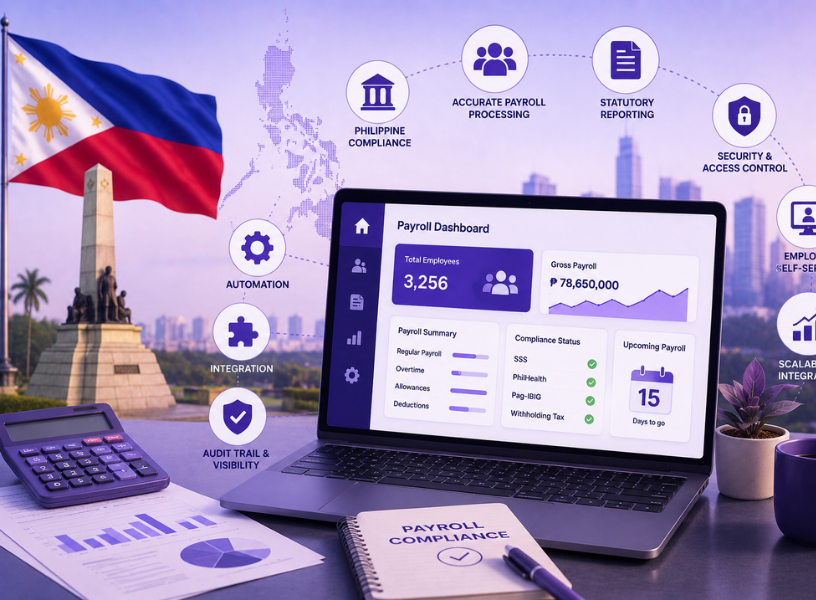
Choosing the right payroll software in the Philippines is an important decision for enterprise HR teams. Payroll involves more than calculating salaries. Organizations must also manage employee data, deductions, government contributions, tax calculations, reporting, approvals, and changing statutory requirements.
The right payroll platform can reduce manual work, improve accuracy, and help HR teams stay compliant. Here are the key factors to consider when evaluating payroll software and Philippines payroll vendors.
Tax and statutory compliance should be a top priority when evaluating payroll software.
The system should support Philippine payroll requirements, including applicable withholding tax calculations and statutory contributions such as:
Ask vendors how frequently their compliance rules are updated and whether regulatory changes are automatically reflected in the system.
Enterprise payroll can involve complex salary structures, multiple pay schedules, overtime, bonuses, allowances, deductions, and other adjustments.
Your payroll management software should automate calculations while reducing the need for spreadsheets and manual intervention.
Look for capabilities covering:
During vendor demonstrations, ask them to show how the system handles a realistic payroll scenario rather than simply listing features.
Payroll accuracy is only one part of compliance. HR and payroll teams also need to maintain appropriate government reports and records.
A strong payroll platform should make statutory reporting easier through automated calculations, report generation, downloadable documents, and organized historical records.
Ask potential Philippines payroll vendors:
Automation can significantly reduce the administrative workload associated with compliance.
Payroll should connect smoothly with other business systems.
Integration with HR, attendance, leave, accounting, benefits, and payment systems can reduce duplicate data entry and improve data consistency.
For example, employee information and attendance data can flow into payroll, while payroll results can be transferred to finance for accounting and reconciliation.
This is particularly important for large organizations managing thousands of employees or multiple entities.
Payroll data contains sensitive employee information, including compensation, tax details, bank information, and government identifiers.
Enterprise HR leaders should evaluate whether the software provides:
Ask vendors where data is stored, who can access it, and what controls are in place to protect sensitive information.
A reliable payroll system should provide a clear record of payroll changes and approvals.
Audit trails can help organizations identify who changed employee information, when changes were made, and who approved payroll transactions.
This visibility is valuable for internal controls, payroll investigations, and financial or compliance audits.
Employee self-service features can reduce repetitive payroll queries.
Depending on the platform, employees may be able to access payslips, tax documents, leave information, and other payroll-related details through a secure portal or mobile application.
This gives employees faster access to information while allowing HR teams to focus on higher-value activities.
Enterprise payroll requirements can become more complex as an organization grows.
Before choosing software, determine whether it can accommodate increasing employee numbers, multiple legal entities, different payroll schedules, and changing compensation structures.
Scalability is especially important for organizations expanding operations across locations or integrating newly acquired businesses.
The quality of vendor support can be just as important as the software itself.
Ask whether the provider offers timely support during payroll cycles and has expertise in Philippine payroll regulations.
For example, Adrenalin HCM provides an integrated HR and payroll platform that can help organizations centralize employee information and streamline payroll-related processes. When evaluating any HCM or payroll provider, enterprises should assess not only the software's features but also its approach to compliance updates, implementation, customer support, and ongoing service.
If you are considering payroll outsourcing solutions, also clarify which payroll responsibilities remain with your internal team and which are handled by the provider.
Implementation can determine whether a payroll project succeeds.
Ask vendors about employee data migration, historical payroll records, integrations, testing, parallel payroll runs, user training, and go-live support.
A structured implementation process allows organizations to identify calculation or data issues before the system is used for live payroll.
Don't compare payroll platforms based solely on subscription prices.
Consider implementation fees, integrations, customization, support, employee licenses, compliance updates, and additional services.
A low-cost system may become expensive if it requires significant manual work or external tools to meet Philippine payroll requirements.
Before selecting payroll software in the Philippines, ask:
The best payroll management software should do more than automate salary calculations. It should help enterprises improve payroll accuracy, reduce administrative effort, strengthen compliance, and provide employees with a reliable payroll experience.
Payroll software in the Philippines is a digital solution that automates salary calculations, deductions, employee payroll processing, statutory contributions, tax calculations, reporting, and related payroll activities.
Key capabilities include withholding tax calculations, SSS, PhilHealth and Pag-IBIG contributions, payroll processing, statutory reporting, employee self-service, audit trails, security, and integration with HR and finance systems.
Payroll errors can result in incorrect employee payments, inaccurate government contributions, reporting problems, and potential compliance issues. Software with regularly updated Philippine payroll rules can help reduce these risks.
Compare vendors based on Philippine compliance capabilities, automation, integrations, security, scalability, implementation support, customer service, and total cost of ownership rather than relying only on the number of features.
Yes. Many modern payroll platforms can integrate with HR, attendance, leave, accounting, benefits, and payment systems. Integration can reduce duplicate data entry and improve the accuracy of employee payroll processing.

Many people would say that it is absolute madness to keep on doing the same thing, time after time, expecting to get a different result or for something different to happen.
Hoover Dam and the Grand Canyon: Book yourself a seat on any of the many sightseeing tours available and go and watch the architectural marvel that is Hoover Dam built over the Grand canyon which is also a grand sight to see by itself. Black Canyon is another must see as is Lake Mead which is so beautiful just because it is a body of water all surrounded by desert-like nature. Colorado River:
While looking at the Dam and Canyon is from above, to see the true beauty of the river, you have to go down. The Colorado river is excellent for river-rafting and water sports, but you do not have to take part if it is not your thing. Instead just sit back and enjoy another of nature’s marvels.


.webp)
Who can not resist going to one of the old towns like those in the Western gun slinging movies? Your destination needs to be Old Nevada. There you can delight in an old western town right in the middle of Red Rock Canyon. They host western shootouts too so come prepared, partner! I could go on and on about other attractions like the theme park in Circus Circus, the Gilcrease Nature Sanctuary, the Henderson Bird Viewing Preserve and Mt. Charleston but I think you get the picture. In Las Vegas and hate gambling? Do not despair. Just go out and have some clean un-gambling fun.
Choosing the right payroll software in the Philippines is an important decision for enterprise HR teams. Payroll involves more than calculating salaries. Organizations must also manage employee data, deductions, government contributions, tax calculations, reporting, approvals, and changing statutory requirements.
The right payroll platform can reduce manual work, improve accuracy, and help HR teams stay compliant. Here are the key factors to consider when evaluating payroll software and Philippines payroll vendors.
Tax and statutory compliance should be a top priority when evaluating payroll software.
The system should support Philippine payroll requirements, including applicable withholding tax calculations and statutory contributions such as:
Ask vendors how frequently their compliance rules are updated and whether regulatory changes are automatically reflected in the system.
Enterprise payroll can involve complex salary structures, multiple pay schedules, overtime, bonuses, allowances, deductions, and other adjustments.
Your payroll management software should automate calculations while reducing the need for spreadsheets and manual intervention.
Look for capabilities covering:
During vendor demonstrations, ask them to show how the system handles a realistic payroll scenario rather than simply listing features.
Payroll accuracy is only one part of compliance. HR and payroll teams also need to maintain appropriate government reports and records.
A strong payroll platform should make statutory reporting easier through automated calculations, report generation, downloadable documents, and organized historical records.
Ask potential Philippines payroll vendors:
Automation can significantly reduce the administrative workload associated with compliance.
Payroll should connect smoothly with other business systems.
Integration with HR, attendance, leave, accounting, benefits, and payment systems can reduce duplicate data entry and improve data consistency.
For example, employee information and attendance data can flow into payroll, while payroll results can be transferred to finance for accounting and reconciliation.
This is particularly important for large organizations managing thousands of employees or multiple entities.
Payroll data contains sensitive employee information, including compensation, tax details, bank information, and government identifiers.
Enterprise HR leaders should evaluate whether the software provides:
Ask vendors where data is stored, who can access it, and what controls are in place to protect sensitive information.
A reliable payroll system should provide a clear record of payroll changes and approvals.
Audit trails can help organizations identify who changed employee information, when changes were made, and who approved payroll transactions.
This visibility is valuable for internal controls, payroll investigations, and financial or compliance audits.
Employee self-service features can reduce repetitive payroll queries.
Depending on the platform, employees may be able to access payslips, tax documents, leave information, and other payroll-related details through a secure portal or mobile application.
This gives employees faster access to information while allowing HR teams to focus on higher-value activities.
Enterprise payroll requirements can become more complex as an organization grows.
Before choosing software, determine whether it can accommodate increasing employee numbers, multiple legal entities, different payroll schedules, and changing compensation structures.
Scalability is especially important for organizations expanding operations across locations or integrating newly acquired businesses.
The quality of vendor support can be just as important as the software itself.
Ask whether the provider offers timely support during payroll cycles and has expertise in Philippine payroll regulations.
For example, Adrenalin HCM provides an integrated HR and payroll platform that can help organizations centralize employee information and streamline payroll-related processes. When evaluating any HCM or payroll provider, enterprises should assess not only the software's features but also its approach to compliance updates, implementation, customer support, and ongoing service.
If you are considering payroll outsourcing solutions, also clarify which payroll responsibilities remain with your internal team and which are handled by the provider.
Implementation can determine whether a payroll project succeeds.
Ask vendors about employee data migration, historical payroll records, integrations, testing, parallel payroll runs, user training, and go-live support.
A structured implementation process allows organizations to identify calculation or data issues before the system is used for live payroll.
Don't compare payroll platforms based solely on subscription prices.
Consider implementation fees, integrations, customization, support, employee licenses, compliance updates, and additional services.
A low-cost system may become expensive if it requires significant manual work or external tools to meet Philippine payroll requirements.
Before selecting payroll software in the Philippines, ask:
The best payroll management software should do more than automate salary calculations. It should help enterprises improve payroll accuracy, reduce administrative effort, strengthen compliance, and provide employees with a reliable payroll experience.
Payroll software in the Philippines is a digital solution that automates salary calculations, deductions, employee payroll processing, statutory contributions, tax calculations, reporting, and related payroll activities.
Key capabilities include withholding tax calculations, SSS, PhilHealth and Pag-IBIG contributions, payroll processing, statutory reporting, employee self-service, audit trails, security, and integration with HR and finance systems.
Payroll errors can result in incorrect employee payments, inaccurate government contributions, reporting problems, and potential compliance issues. Software with regularly updated Philippine payroll rules can help reduce these risks.
Compare vendors based on Philippine compliance capabilities, automation, integrations, security, scalability, implementation support, customer service, and total cost of ownership rather than relying only on the number of features.
Yes. Many modern payroll platforms can integrate with HR, attendance, leave, accounting, benefits, and payment systems. Integration can reduce duplicate data entry and improve the accuracy of employee payroll processing.


.webp)


.webp)

Passionately focused on people and fostering relationships for over 25 Years