

Attending a trade show can be a very effective method of promoting your company and its products. And one of the most effective ways to optimize your trade show display and increase traffic to your booth is through the use of banner stands.

Balamani
Author
Performance appraisals are no longer just an annual form-filling exercise. For enterprise HR teams, they are increasingly part of abroader performance management process that connects goals, feedback, development, recognition and workforce decisions.
That makes the choice of performance management software more important than simply finding a system with attractive review templates. The right platform should help managers have better conversations, give employees clearer expectations and give HR reliable performance data across teams, business units and countries.
CIPD describes performance management as a broad discipline covering objectives, feedback, development, reward and career progression. Its recent guidance also highlights the shift towards more regular and flexible performance conversations rather than relying solely on annual appraisals.
A strong performance appraisal system should make it easy to create, cascade and track goals.
Look for capabilities that allow organisations to:
· Align individual goals with team and organisational priorities
· Set measurable objectives and key results
· Update goals when business priorities change
· Track progress throughout the review cycle
· Support different goal frameworks across business units
This matters because employees need to understand what is expected of them, while HR needs visibility into how individual performance connects with organisational priorities.
Importantly, goals should not be overly rigid. Complex roles may require qualitative objectives, development goals or manager judgement alongside measurable targets.
Annual reviews can create a long gap between performance issues and corrective action.
Modern performance appraisal tools should support ongoing check-ins, manager feedback and employee reflections throughout the year. CIPD notes that recent performance management practice is moving towards regular reviews and higher-quality conversations rather than simply relying on formal annual processes.
Evaluate whether the software makes frequent feedback easy rather than adding another administrative task for managers.
Managers do not always see the full picture of an employee's contribution.
Multi-source feedback can allow organisations to gather relevant input from managers, peers, direct reports or other stakeholders. This can be particularly useful in matrix organisations and distributed workforces.
The important question is not simply whether a vendor offers 360-degree feedback. Ask whether HR can control who provides feedback, configure workflows and maintain appropriate confidentiality.
Enterprise organisations rarely have one universal review process.
A multinational may need different workflows for countries, employee groups, job families, leadership levels or business units while maintaining common governance.
Your employee performance software should therefore support configurable:
· Review cycles
· Rating scales
· Competencies
· Approval stages
· Question sets
· Employee populations
· Review templates
The objective is controlled flexibility: enough standardisation for consistency, without forcing every workforce segment into the same process.
Ratings can influence promotions, development plans, recognition and compensation, making consistency important.
Look for features such as calibration workflows, rating guidance and audit trails that help HR identify inconsistencies before decisions are finalised.
This is especially relevant across geographically distributed organisations, where different managers may interpret performance standards differently.
Deloitte's 2025 research highlights continuing concerns around trust and fairness in performance management, reinforcing the importance of designing processes that employees perceive as credible and equitable.
A performance appraisal should not end with a rating.
The system should help translate performance discussions into development actions, such as learning goals, capability gaps, career aspirations and development plans.
This creates a stronger connection between performance management and broader talent management software capabilities.
For organisations in markets facing skills shortages or significant workforce transformation, this connection can help HR move from simply assessing past performance towards building future capability.
Enterprise HR teams also need to manage under performance consistently and fairly.
Performance management vendors should offer structured workflows for improvement plans, agreed objectives, milestones, documentation and follow-up conversations.
The goal is not to automate difficult conversations. It is to give managers and HR a consistent framework for documenting expectations, support and progress.
Performance data becomes significantly more valuable when HR can analyse it across the organisation.
Look for dashboards and reporting that help answer questions such as:
· Which teams have consistently high or low performance?
· Are goals being completed?
· Where are development needs concentrated?
· Are performance outcomes linked to retention, promotion or mobility?
Advanced analytics should support decisions rather than simply generate more reports. Research suggests organisations need better ways to evaluate the actual value created by workers, rather than relying only on easy-to-measure activity metrics.
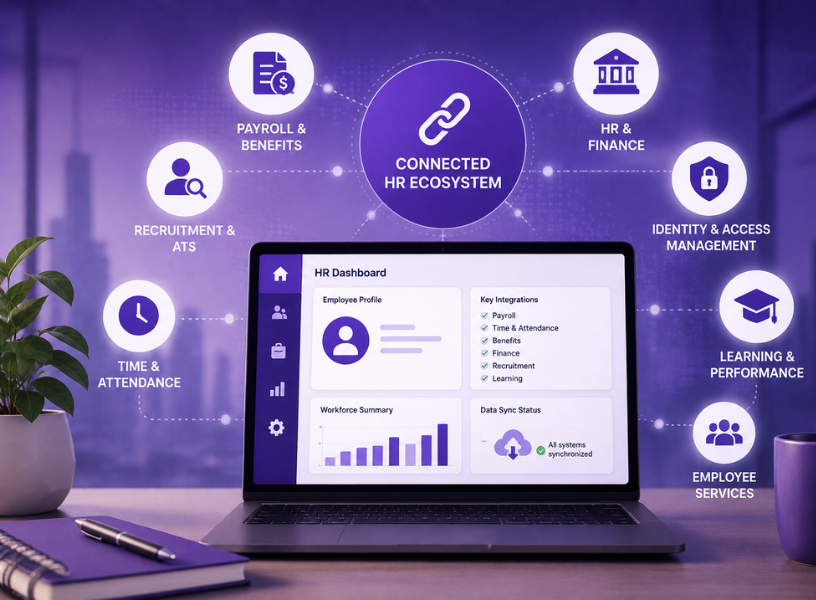
For enterprise organisations, performance software cannot operate in isolation.
Before selecting a platform, assess how well it integrates with your existing HR technology environment, including core HR, payroll, learning, talent and identity systems.
Also examine:
· Role-based access controls
· Audit trails
· Data protection capabilities
· Reporting permissions
· Mobile accessibility
· API and integration options
· Support for multiple countries and workforce structures
These requirements become particularly important when performance management operates across regions, where organisations may have different operating models, workforce segments and local requirements.
How should HR evaluate performance management software?
The strongest evaluation question is not “How many appraisal features does this platform have?”
Instead, ask:
“Will this system help our managers and employees create a clearer, fairer and more continuous performance process?”
Prioritise platforms that combine goal alignment, feedback, development, fair assessment, analytics and enterprise-grade governance.
Performance management software should support better performance conversations, not simply digitise an existing process. That distinction matters because technology cannot compensate for unclear expectations, weak manager capability or a poorly designed performance philosophy.
For enterprise HR leaders, the best starting point is therefore to define the outcomes and operating principles first, then assess which performance appraisal tools can support them across the organisation.
Frequently asked questions
1. What features should performance management software include?
At minimum, enterprise performance management software should support goal setting, continuous feedback, performance reviews, ratings, development planning, performance improvement and reporting. Enterprise buyers should also assess workflow configuration, integrations, security, scalability and analytics. The right feature set depends on the organisation's performance philosophy and workforce structure rather than the number of features listed by a vendor.
2. Are annual performance appraisals still effective?
Annual appraisals can still play a role, particularly for formal assessment and reward decisions, but they should not necessarily be the only performance conversation.
3. Why is continuous feedback important in performance management?
Continuous feedback allows managers and employees to address issues, recognise progress and adjust goals closer to when work happens. It can reduce the risk of an annual review becoming a retrospective conversation about issues that should have been addressed months earlier.
4. How can performance appraisal software support fairness?
Software can support fairness through consistent criteria, structured workflows, calibration, documentation and analytics that identify unusual rating patterns. However, technology cannot eliminate bias on its own. Organisations also need clear performance standards, manager training and appropriate governance.
5. Should performance management software integrate with other HR systems?
Yes. Integration with core HR, learning, talent and other relevant systems can reduce duplicate data entry and create a more connected employee lifecycle. Enterprise organisations should assess integration requirements before selecting a platform, particularly when operating across multiple countries and workforce groups.

Many people would say that it is absolute madness to keep on doing the same thing, time after time, expecting to get a different result or for something different to happen.
Hoover Dam and the Grand Canyon: Book yourself a seat on any of the many sightseeing tours available and go and watch the architectural marvel that is Hoover Dam built over the Grand canyon which is also a grand sight to see by itself. Black Canyon is another must see as is Lake Mead which is so beautiful just because it is a body of water all surrounded by desert-like nature. Colorado River:
While looking at the Dam and Canyon is from above, to see the true beauty of the river, you have to go down. The Colorado river is excellent for river-rafting and water sports, but you do not have to take part if it is not your thing. Instead just sit back and enjoy another of nature’s marvels.


.webp)
Who can not resist going to one of the old towns like those in the Western gun slinging movies? Your destination needs to be Old Nevada. There you can delight in an old western town right in the middle of Red Rock Canyon. They host western shootouts too so come prepared, partner! I could go on and on about other attractions like the theme park in Circus Circus, the Gilcrease Nature Sanctuary, the Henderson Bird Viewing Preserve and Mt. Charleston but I think you get the picture. In Las Vegas and hate gambling? Do not despair. Just go out and have some clean un-gambling fun.
Performance appraisals are no longer just an annual form-filling exercise. For enterprise HR teams, they are increasingly part of abroader performance management process that connects goals, feedback, development, recognition and workforce decisions.
That makes the choice of performance management software more important than simply finding a system with attractive review templates. The right platform should help managers have better conversations, give employees clearer expectations and give HR reliable performance data across teams, business units and countries.
CIPD describes performance management as a broad discipline covering objectives, feedback, development, reward and career progression. Its recent guidance also highlights the shift towards more regular and flexible performance conversations rather than relying solely on annual appraisals.
A strong performance appraisal system should make it easy to create, cascade and track goals.
Look for capabilities that allow organisations to:
· Align individual goals with team and organisational priorities
· Set measurable objectives and key results
· Update goals when business priorities change
· Track progress throughout the review cycle
· Support different goal frameworks across business units
This matters because employees need to understand what is expected of them, while HR needs visibility into how individual performance connects with organisational priorities.
Importantly, goals should not be overly rigid. Complex roles may require qualitative objectives, development goals or manager judgement alongside measurable targets.
Annual reviews can create a long gap between performance issues and corrective action.
Modern performance appraisal tools should support ongoing check-ins, manager feedback and employee reflections throughout the year. CIPD notes that recent performance management practice is moving towards regular reviews and higher-quality conversations rather than simply relying on formal annual processes.
Evaluate whether the software makes frequent feedback easy rather than adding another administrative task for managers.
Managers do not always see the full picture of an employee's contribution.
Multi-source feedback can allow organisations to gather relevant input from managers, peers, direct reports or other stakeholders. This can be particularly useful in matrix organisations and distributed workforces.
The important question is not simply whether a vendor offers 360-degree feedback. Ask whether HR can control who provides feedback, configure workflows and maintain appropriate confidentiality.
Enterprise organisations rarely have one universal review process.
A multinational may need different workflows for countries, employee groups, job families, leadership levels or business units while maintaining common governance.
Your employee performance software should therefore support configurable:
· Review cycles
· Rating scales
· Competencies
· Approval stages
· Question sets
· Employee populations
· Review templates
The objective is controlled flexibility: enough standardisation for consistency, without forcing every workforce segment into the same process.
Ratings can influence promotions, development plans, recognition and compensation, making consistency important.
Look for features such as calibration workflows, rating guidance and audit trails that help HR identify inconsistencies before decisions are finalised.
This is especially relevant across geographically distributed organisations, where different managers may interpret performance standards differently.
Deloitte's 2025 research highlights continuing concerns around trust and fairness in performance management, reinforcing the importance of designing processes that employees perceive as credible and equitable.
A performance appraisal should not end with a rating.
The system should help translate performance discussions into development actions, such as learning goals, capability gaps, career aspirations and development plans.
This creates a stronger connection between performance management and broader talent management software capabilities.
For organisations in markets facing skills shortages or significant workforce transformation, this connection can help HR move from simply assessing past performance towards building future capability.
Enterprise HR teams also need to manage under performance consistently and fairly.
Performance management vendors should offer structured workflows for improvement plans, agreed objectives, milestones, documentation and follow-up conversations.
The goal is not to automate difficult conversations. It is to give managers and HR a consistent framework for documenting expectations, support and progress.
Performance data becomes significantly more valuable when HR can analyse it across the organisation.
Look for dashboards and reporting that help answer questions such as:
· Which teams have consistently high or low performance?
· Are goals being completed?
· Where are development needs concentrated?
· Are performance outcomes linked to retention, promotion or mobility?
Advanced analytics should support decisions rather than simply generate more reports. Research suggests organisations need better ways to evaluate the actual value created by workers, rather than relying only on easy-to-measure activity metrics.
For enterprise organisations, performance software cannot operate in isolation.
Before selecting a platform, assess how well it integrates with your existing HR technology environment, including core HR, payroll, learning, talent and identity systems.
Also examine:
· Role-based access controls
· Audit trails
· Data protection capabilities
· Reporting permissions
· Mobile accessibility
· API and integration options
· Support for multiple countries and workforce structures
These requirements become particularly important when performance management operates across regions, where organisations may have different operating models, workforce segments and local requirements.
How should HR evaluate performance management software?
The strongest evaluation question is not “How many appraisal features does this platform have?”
Instead, ask:
“Will this system help our managers and employees create a clearer, fairer and more continuous performance process?”
Prioritise platforms that combine goal alignment, feedback, development, fair assessment, analytics and enterprise-grade governance.
Performance management software should support better performance conversations, not simply digitise an existing process. That distinction matters because technology cannot compensate for unclear expectations, weak manager capability or a poorly designed performance philosophy.
For enterprise HR leaders, the best starting point is therefore to define the outcomes and operating principles first, then assess which performance appraisal tools can support them across the organisation.
Frequently asked questions
1. What features should performance management software include?
At minimum, enterprise performance management software should support goal setting, continuous feedback, performance reviews, ratings, development planning, performance improvement and reporting. Enterprise buyers should also assess workflow configuration, integrations, security, scalability and analytics. The right feature set depends on the organisation's performance philosophy and workforce structure rather than the number of features listed by a vendor.
2. Are annual performance appraisals still effective?
Annual appraisals can still play a role, particularly for formal assessment and reward decisions, but they should not necessarily be the only performance conversation.
3. Why is continuous feedback important in performance management?
Continuous feedback allows managers and employees to address issues, recognise progress and adjust goals closer to when work happens. It can reduce the risk of an annual review becoming a retrospective conversation about issues that should have been addressed months earlier.
4. How can performance appraisal software support fairness?
Software can support fairness through consistent criteria, structured workflows, calibration, documentation and analytics that identify unusual rating patterns. However, technology cannot eliminate bias on its own. Organisations also need clear performance standards, manager training and appropriate governance.
5. Should performance management software integrate with other HR systems?
Yes. Integration with core HR, learning, talent and other relevant systems can reduce duplicate data entry and create a more connected employee lifecycle. Enterprise organisations should assess integration requirements before selecting a platform, particularly when operating across multiple countries and workforce groups.


.webp)


.webp)

Passionately focused on people and fostering relationships for over 25 Years