
Attending a trade show can be a very effective method of promoting your company and its products. And one of the most effective ways to optimize your trade show display and increase traffic to your booth is through the use of banner stands.

Balamani
Author
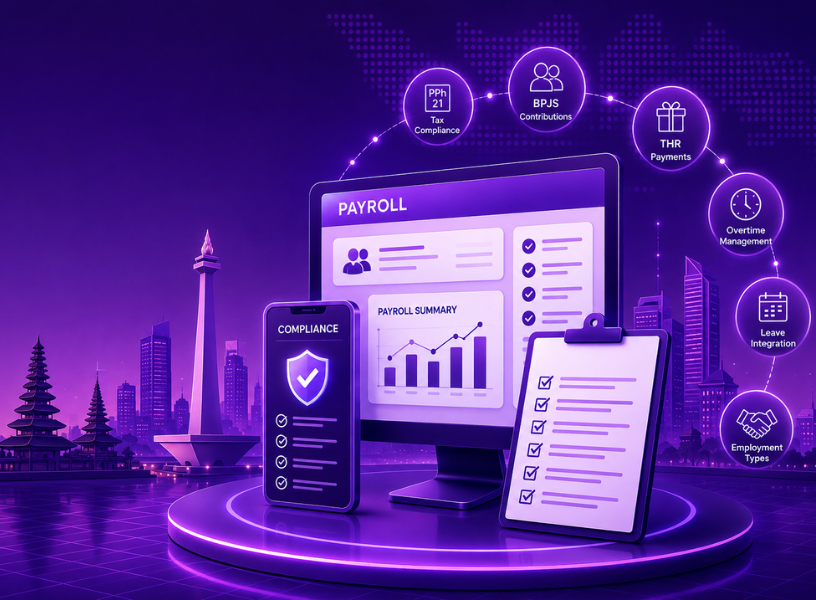
Choosing payroll software for an enterprise organization in Indonesia involves far more than comparing features or pricing. The right solution must support statutory compliance, integrate with existing HR and finance systems, accommodate complex workforce structures, and adapt to evolving employment regulations.
Many payroll platforms advertise automation, but not all are equipped to manage Indonesia's unique payroll requirements. From PPh 21 income tax and BPJS contributions to Religious Holiday Allowance (THR), overtime calculations, and employee leave, even a small compliance gap can create administrative burdens, payroll inaccuracies, or regulatory risks.
Rather than asking vendors whether their solution is "compliant," enterprise HR teams should evaluate whether it supports the specific payroll processes their organization needs today- and can continue supporting as the business grows.
One of the first questions to ask is whether the payroll software fully automates PPh Pasal 21 (PPh 21) calculations.
PPh 21 is the income tax employers must withhold from employee salaries. Calculating it manually becomes increasingly difficult as organizations introduce bonuses, commissions, allowances, or multiple employee categories.
A suitable payroll solution should automatically:
• Calculate monthly PPh 21 deductions using the current TER (Tarif Efektif Rata-rata / Average Effective Rate) method, mandatory for monthly withholding since January 2024 under PP 58/2023 and PMK 168/2023
• Process bonuses and variable pay accurately
• Generate annual employee tax certificates
• Produce statutory tax reports
• Apply legislative updates without manual intervention
• How are tax regulation updates managed?
• Does the system support the TER calculation method for monthly withholding, and the year-end reconciliation using progressive rates?
• Are annual tax reconciliations automated?
• Can payroll administrators audit tax calculations?
Payroll software should automatically calculate and manage Indonesia's mandatory social security contributions.
This includes:
BPJS Kesehatan
The software should:
• Calculate employer and employee contributions
• Apply salary ceilings correctly
• Generate monthly reporting
• Support employee enrolment and status updates
BPJS Ketenagakerjaan
The solution should support all five mandatory programmes:
• Jaminan Hari Tua (JHT)
• Jaminan Pensiun (JP)
• Jaminan Kecelakaan Kerja (JKK)
• Jaminan Kematian (JKM)
• Jaminan Kehilangan Pekerjaan (JKP) , job loss insurance, mandatory since 2021 under PP 32/2021, funded through government contribution and a recomposition of JKK/JKM rates rather than a separate employee deduction
• Are contribution rates automatically updated?
• Does the system support all five BPJS programmes, including JKP eligibility tracking and reporting?
• Can reports be generated for audit purposes?
Tunjangan Hari Raya (THR) is a statutory religious holiday allowance that eligible employees must receive before their respective religious holiday.
Managing THR manually becomes increasingly challenging in large organizations with multiple employee groups.
Payroll software should automatically:
• Identify eligible employees
• Calculate THR entitlements
• Process THR separately from monthly payroll
• Generate payment reports
• Maintain complete audit records
• Can THR rules be configured for different employee groups?
• Does the software automate eligibility calculations?
• Are payment reports available for finance and audit teams?
Overtime is one of the most common causes of payroll disputes.
Payroll software should accurately calculate overtime based on:
• Standard working hours
• Additional working hours
• Public holiday work
• Weekly rest day work
• Shift work
• Maximum overtime limits
Manual overtime calculations often increase payroll processing time and create compliance risks.
• Can overtime policies vary by employee category?
• Does overtime integrate with attendance systems?
• Can public holiday overtime be calculated automatically?
Leave directly affects payroll accuracy.
Disconnected leave and payroll systems often result in incorrect salary payments and additional manual work.
Enterprise payroll software should automatically process:
• Annual leave
• Sick leave
• Maternity leave
• Paternity leave
• Menstrual leave where applicable
• Unpaid leave
• Organization-specific leave policies
• Does payroll update automatically when leave is approved?
• Can unpaid leave be deducted automatically?
• Can organizations configure additional leave types?
Enterprise organizations often employ a combination of permanent, contract, and project-based employees.
Payroll software should support both:
• PKWT (Fixed-Term Employment Agreements)
• PKWTT (Permanent Employment Agreements)
Different employment types may require different payroll treatments, benefits, and contract management processes.
• Can payroll rules differ by employment type?
• Does the software manage contract renewals?
• Can different employee groups have different payroll policies?
Payroll accuracy depends on accurate workforce data.
For organizations with shift-based or frontline employees, payroll software should integrate with:
• Time and attendance systems
• Biometric devices
• Workforce management platforms
• Shift scheduling applications
Integration reduces manual data entry while improving payroll accuracy.
• Which attendance systems are supported?
• Are APIs available?
• Can attendance exceptions flow directly into payroll?
Employee exits often involve complex payroll calculations.
Payroll software should automatically process:
• Final salary payments
• Outstanding overtime
• Leave encashment (where applicable)
• Final PPh 21 calculations
• BPJS adjustments
• Termination-related payments where legally required
Automation reduces manual effort and improves consistency during employee offboarding.
• Can final settlements be processed automatically?
• How are final tax calculations handled?
• Does the software generate employee exit documentation?
Payroll compliance is not static.
Indonesia's tax, employment, and payroll regulations continue to evolve, making ongoing legislative updates essential.
Ask vendors how they monitor regulatory changes and how quickly software updates are released.
• Are statutory updates included in the subscription?
• How quickly are legislative changes deployed?
• Who validates payroll compliance updates?
• Will customers receive implementation guidance?
As you compare payroll software vendors, use this checklist to guide your evaluation.
Compliance Can the software automate PPh 21 (including the TER method), BPJS (including JKP), THR, overtime, statutory reporting, and payroll calculations?
Localization Does it support Bahasa Indonesia, Indonesian payroll practices, and local employment requirements?
Integration Can it integrate with your HR software, ERP, attendance, finance, and workforce management systems?
Security Does it provide role-based access, encryption, audit trails, and secure payroll data management?
Scalability Can it support multiple legal entities, business units, and future business expansion?
Vendor Expertise Does the provider have payroll specialists in Indonesia and a proven process for delivering timely legislative updates?
Selecting payroll software in Indonesia is not simply about automating payroll,it is about choosing a solution that can help your organization maintain compliance, improve operational efficiency, and support long-term workforce growth.
Rather than relying on product demonstrations or feature lists, enterprise HR teams should evaluate vendors against the practical requirements that matter most: statutory compliance, localization, integration, security, scalability, and ongoing regulatory support.
By asking the right questions early in the evaluation process, organizations can reduce implementation risks, improve payroll accuracy, and invest in a payroll solution that continues to meet their needs as regulations and business priorities evolve.
Look for an HCM that supports PPh 21 tax calculations, BPJS contributions, THR payments, overtime rules, leave policies, statutory reporting, and regular legislative updates to help maintain payroll compliance.
Yes. A modern HCM should centralise payroll, employee data, attendance, and leave management while supporting multiple entities, business units, and location-specific payroll requirements.
Assess the platform's compliance capabilities, localization, integrations, scalability, security, reporting, implementation approach, and local customer support,not just its payroll features.
An enterprise HCM should integrate with payroll, time and attendance, finance, ERP, recruitment, and employee self-service systems to reduce manual work and improve data accuracy.
A localised HCM is better equipped to support Indonesian payroll regulations, employment practices, language preferences, statutory benefits, and evolving compliance requirements, helping organizations reduce administrative effort and compliance risks.

Many people would say that it is absolute madness to keep on doing the same thing, time after time, expecting to get a different result or for something different to happen.
Hoover Dam and the Grand Canyon: Book yourself a seat on any of the many sightseeing tours available and go and watch the architectural marvel that is Hoover Dam built over the Grand canyon which is also a grand sight to see by itself. Black Canyon is another must see as is Lake Mead which is so beautiful just because it is a body of water all surrounded by desert-like nature. Colorado River:
While looking at the Dam and Canyon is from above, to see the true beauty of the river, you have to go down. The Colorado river is excellent for river-rafting and water sports, but you do not have to take part if it is not your thing. Instead just sit back and enjoy another of nature’s marvels.


.webp)
Who can not resist going to one of the old towns like those in the Western gun slinging movies? Your destination needs to be Old Nevada. There you can delight in an old western town right in the middle of Red Rock Canyon. They host western shootouts too so come prepared, partner! I could go on and on about other attractions like the theme park in Circus Circus, the Gilcrease Nature Sanctuary, the Henderson Bird Viewing Preserve and Mt. Charleston but I think you get the picture. In Las Vegas and hate gambling? Do not despair. Just go out and have some clean un-gambling fun.
Choosing payroll software for an enterprise organization in Indonesia involves far more than comparing features or pricing. The right solution must support statutory compliance, integrate with existing HR and finance systems, accommodate complex workforce structures, and adapt to evolving employment regulations.
Many payroll platforms advertise automation, but not all are equipped to manage Indonesia's unique payroll requirements. From PPh 21 income tax and BPJS contributions to Religious Holiday Allowance (THR), overtime calculations, and employee leave, even a small compliance gap can create administrative burdens, payroll inaccuracies, or regulatory risks.
Rather than asking vendors whether their solution is "compliant," enterprise HR teams should evaluate whether it supports the specific payroll processes their organization needs today- and can continue supporting as the business grows.
One of the first questions to ask is whether the payroll software fully automates PPh Pasal 21 (PPh 21) calculations.
PPh 21 is the income tax employers must withhold from employee salaries. Calculating it manually becomes increasingly difficult as organizations introduce bonuses, commissions, allowances, or multiple employee categories.
A suitable payroll solution should automatically:
• Calculate monthly PPh 21 deductions using the current TER (Tarif Efektif Rata-rata / Average Effective Rate) method, mandatory for monthly withholding since January 2024 under PP 58/2023 and PMK 168/2023
• Process bonuses and variable pay accurately
• Generate annual employee tax certificates
• Produce statutory tax reports
• Apply legislative updates without manual intervention
• How are tax regulation updates managed?
• Does the system support the TER calculation method for monthly withholding, and the year-end reconciliation using progressive rates?
• Are annual tax reconciliations automated?
• Can payroll administrators audit tax calculations?
Payroll software should automatically calculate and manage Indonesia's mandatory social security contributions.
This includes:
BPJS Kesehatan
The software should:
• Calculate employer and employee contributions
• Apply salary ceilings correctly
• Generate monthly reporting
• Support employee enrolment and status updates
BPJS Ketenagakerjaan
The solution should support all five mandatory programmes:
• Jaminan Hari Tua (JHT)
• Jaminan Pensiun (JP)
• Jaminan Kecelakaan Kerja (JKK)
• Jaminan Kematian (JKM)
• Jaminan Kehilangan Pekerjaan (JKP) , job loss insurance, mandatory since 2021 under PP 32/2021, funded through government contribution and a recomposition of JKK/JKM rates rather than a separate employee deduction
• Are contribution rates automatically updated?
• Does the system support all five BPJS programmes, including JKP eligibility tracking and reporting?
• Can reports be generated for audit purposes?
Tunjangan Hari Raya (THR) is a statutory religious holiday allowance that eligible employees must receive before their respective religious holiday.
Managing THR manually becomes increasingly challenging in large organizations with multiple employee groups.
Payroll software should automatically:
• Identify eligible employees
• Calculate THR entitlements
• Process THR separately from monthly payroll
• Generate payment reports
• Maintain complete audit records
• Can THR rules be configured for different employee groups?
• Does the software automate eligibility calculations?
• Are payment reports available for finance and audit teams?
Overtime is one of the most common causes of payroll disputes.
Payroll software should accurately calculate overtime based on:
• Standard working hours
• Additional working hours
• Public holiday work
• Weekly rest day work
• Shift work
• Maximum overtime limits
Manual overtime calculations often increase payroll processing time and create compliance risks.
• Can overtime policies vary by employee category?
• Does overtime integrate with attendance systems?
• Can public holiday overtime be calculated automatically?
Leave directly affects payroll accuracy.
Disconnected leave and payroll systems often result in incorrect salary payments and additional manual work.
Enterprise payroll software should automatically process:
• Annual leave
• Sick leave
• Maternity leave
• Paternity leave
• Menstrual leave where applicable
• Unpaid leave
• Organization-specific leave policies
• Does payroll update automatically when leave is approved?
• Can unpaid leave be deducted automatically?
• Can organizations configure additional leave types?
Enterprise organizations often employ a combination of permanent, contract, and project-based employees.
Payroll software should support both:
• PKWT (Fixed-Term Employment Agreements)
• PKWTT (Permanent Employment Agreements)
Different employment types may require different payroll treatments, benefits, and contract management processes.
• Can payroll rules differ by employment type?
• Does the software manage contract renewals?
• Can different employee groups have different payroll policies?
Payroll accuracy depends on accurate workforce data.
For organizations with shift-based or frontline employees, payroll software should integrate with:
• Time and attendance systems
• Biometric devices
• Workforce management platforms
• Shift scheduling applications
Integration reduces manual data entry while improving payroll accuracy.
• Which attendance systems are supported?
• Are APIs available?
• Can attendance exceptions flow directly into payroll?
Employee exits often involve complex payroll calculations.
Payroll software should automatically process:
• Final salary payments
• Outstanding overtime
• Leave encashment (where applicable)
• Final PPh 21 calculations
• BPJS adjustments
• Termination-related payments where legally required
Automation reduces manual effort and improves consistency during employee offboarding.
• Can final settlements be processed automatically?
• How are final tax calculations handled?
• Does the software generate employee exit documentation?
Payroll compliance is not static.
Indonesia's tax, employment, and payroll regulations continue to evolve, making ongoing legislative updates essential.
Ask vendors how they monitor regulatory changes and how quickly software updates are released.
• Are statutory updates included in the subscription?
• How quickly are legislative changes deployed?
• Who validates payroll compliance updates?
• Will customers receive implementation guidance?
As you compare payroll software vendors, use this checklist to guide your evaluation.
Compliance Can the software automate PPh 21 (including the TER method), BPJS (including JKP), THR, overtime, statutory reporting, and payroll calculations?
Localization Does it support Bahasa Indonesia, Indonesian payroll practices, and local employment requirements?
Integration Can it integrate with your HR software, ERP, attendance, finance, and workforce management systems?
Security Does it provide role-based access, encryption, audit trails, and secure payroll data management?
Scalability Can it support multiple legal entities, business units, and future business expansion?
Vendor Expertise Does the provider have payroll specialists in Indonesia and a proven process for delivering timely legislative updates?
Selecting payroll software in Indonesia is not simply about automating payroll,it is about choosing a solution that can help your organization maintain compliance, improve operational efficiency, and support long-term workforce growth.
Rather than relying on product demonstrations or feature lists, enterprise HR teams should evaluate vendors against the practical requirements that matter most: statutory compliance, localization, integration, security, scalability, and ongoing regulatory support.
By asking the right questions early in the evaluation process, organizations can reduce implementation risks, improve payroll accuracy, and invest in a payroll solution that continues to meet their needs as regulations and business priorities evolve.
Look for an HCM that supports PPh 21 tax calculations, BPJS contributions, THR payments, overtime rules, leave policies, statutory reporting, and regular legislative updates to help maintain payroll compliance.
Yes. A modern HCM should centralise payroll, employee data, attendance, and leave management while supporting multiple entities, business units, and location-specific payroll requirements.
Assess the platform's compliance capabilities, localization, integrations, scalability, security, reporting, implementation approach, and local customer support,not just its payroll features.
An enterprise HCM should integrate with payroll, time and attendance, finance, ERP, recruitment, and employee self-service systems to reduce manual work and improve data accuracy.
A localised HCM is better equipped to support Indonesian payroll regulations, employment practices, language preferences, statutory benefits, and evolving compliance requirements, helping organizations reduce administrative effort and compliance risks.


.webp)


.webp)

Passionately focused on people and fostering relationships for over 25 Years