
Attending a trade show can be a very effective method of promoting your company and its products. And one of the most effective ways to optimize your trade show display and increase traffic to your booth is through the use of banner stands.

Balamani
Author
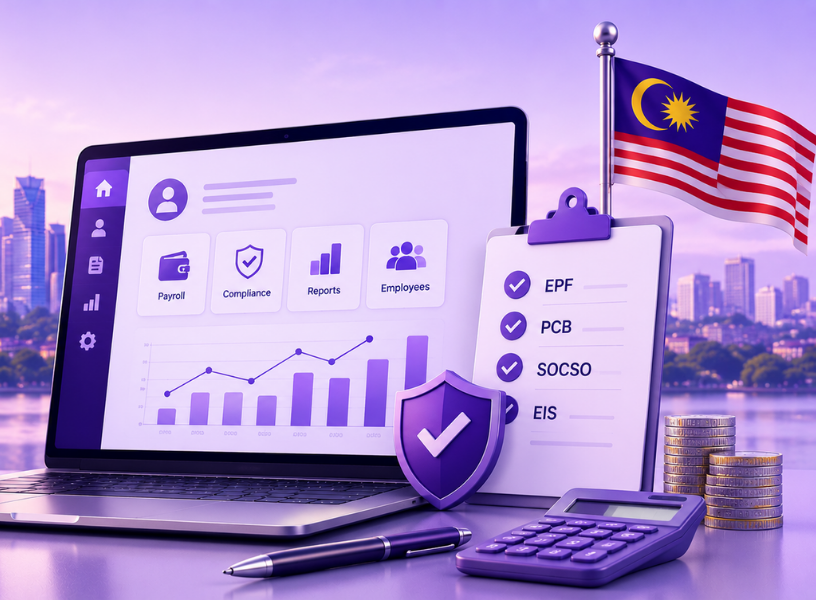
Choosing payroll software in Malaysia involves more than finding a system that calculates monthly salaries accurately.
For Malaysian businesses, payroll processing needs to accommodate statutory contributions, monthly tax deductions, employee changes, reporting requirements and increasingly complex HR data flows. For mid-sized and enterprise organisations, payroll also needs to connect reliably with the wider HRIS environment.
This matters because payroll is not an isolated HR process. Employee information from recruitment, employee records, leave, attendance, benefits and compensation can all affect payroll outcomes. The practical lesson for HR leaders is simple: do not evaluate payroll software by its calculation features alone. Evaluate whether it can reliably connect compliance, data and HR processes from employee record to final payroll output.
Here are nine checks Malaysian businesses should complete before shortlisting payroll vendors.
At minimum, HR teams should assess statutory compliance, payroll calculation accuracy, HRIS integration, employee data, payroll reporting, security, workforce flexibility, implementation and total cost of ownership.
The right weighting will depend on the organisation's workforce and operating model, but each area should be tested before a purchasing decision is made.
Employees Provident Fund (EPF) contributions are a fundamental part of Malaysian payroll.
Employers must ensure accurate monthly contributions are deducted and remitted to EPF. Contributions generally need to be paid by the 15th of the following month. EPF also maintains specific contribution schedules, including different treatment based on employee status, age and other applicable conditions.
This means payroll software should do more than display an EPF deduction.
Ask prospective Malaysia payroll vendors:
This is particularly important because contribution rules can change. EPF's current Third Schedule was updated in May 2026 and includes rates effective from October 2025 salary/wage periods.
A credible provider should be able to explain how statutory updates are incorporated without requiring customers to rebuild payroll rules manually.
Monthly Tax Deduction (PCB) is another essential area to test.
HASiL states that employers must make monthly PCB deductions from employee remuneration and remit the amount by the 15th of the following month. Employers using computerised payroll can use the relevant electronic submission channels and must follow the applicable computerised calculation specifications.
For 2026, HASiL provides specific specifications for computerised PCB calculations, including requirements relevant to payroll software.
When evaluating payroll management software, ask whether the system supports:
TP3 is particularly relevant when employees join from another employer during the same year because previous employment information can affect PCB calculations. HASiL requires employers to retain completed TP3 information and provide it upon request during a PCB audit.
A payroll system should therefore make this information easy to capture, validate and retain.
SOCSO and the Employment Insurance System (EIS) should be included in the software evaluation rather than treated as an administrative detail.
PERKESO states that employers are responsible for monthly contributions for eligible employees. Contribution requirements vary according to applicable employee categories, including age and other eligibility conditions. EIS contributions are also subject to specific rules and contribution limits.
Ask vendors to demonstrate how the system handles:
This is a good area for a live demonstration. Give the vendor several employee profiles and ask the system to calculate the resulting payroll and statutory deductions.
That will reveal more than a generic product presentation.
Payroll becomes harder to manage when employee information is maintained in multiple systems.
An effective HR and payroll system should minimise duplicate data entry and establish a clear flow of information between HR and payroll.
At a minimum, evaluate how the payroll system exchanges information about:
Ask whether the integration is real-time, scheduled or file-based. Also ask what happens when a data transfer fails.
A strong integration design should include validation, error reporting and an audit trail.
For enterprise businesses, the question is not simply "Does it integrate with our HRIS?" It is "Can we trust the data moving between our HR and payroll systems?"
Payroll systems contain highly sensitive information, including salaries, identification details, tax information and bank-related data.
Malaysia's Personal Data Protection Act 2010 applies to organisations processing personal data in connection with commercial transactions, while the Personal Data Protection (Amendment) Act 2024 introduces amendments whose provisions have been brought into operation according to dates appointed through the relevant commencement process.
HR leaders should therefore examine the provider's data governance rather than accepting a general statement that the platform is "secure".
Ask about:
The evaluation should also include your own internal controls. Even secure software can create risk if too many employees have unrestricted payroll access.
Payroll complexity often appears in the exceptions rather than the standard monthly salary calculation.
Before selecting a system, test how it handles the employee scenarios your organisation actually encounters.
These might include:
For larger employers, also consider multiple entities, different payroll calendars and varying approval structures.
Ask vendors to demonstrate these scenarios using realistic data.
The objective is to identify whether the system can manage your payroll rules without extensive manual workarounds.
Payroll teams need to know not only what the system calculated, but also why it calculated that amount.
Reporting should support both operational payroll processing and management oversight.
Useful capabilities may include:
Auditability is especially important when payroll is integrated with an HRIS.
If an employee's salary changes between one payroll period and the next, payroll administrators should be able to trace the source of the change.
The system should make discrepancies easier to investigate rather than turning payroll teams into spreadsheet detectives.
Payroll implementation requires careful planning because errors can directly affect employees.
Ask vendors how they approach:
Do not overlook ongoing support.
Malaysian payroll requirements can change, and the system needs a reliable process for maintaining statutory calculations and reporting requirements.
For example, EPF introduced updated contribution arrangements for non-Malaysian citizen employees, including a 2% employer and 2% employee contribution rate for applicable migrant workers, effective for the relevant wage periods.
The key vendor question is therefore not just "Are you compliant today?" but "How do you maintain compliance when requirements change?"
Price comparisons between payroll solutions for Malaysian businesses can be misleading if they focus only on the subscription fee.
Calculate the full cost of operating the solution, including:
Also consider internal costs.
A system that appears inexpensive but requires significant manual reconciliation may cost more than a higher-priced solution that automates the process reliably.
The business case should therefore measure outcomes such as reduced manual payroll work, fewer payroll errors, faster reconciliation, improved reporting and reduced dependence on spreadsheets.
HR teams can turn these checks into a weighted evaluation framework.
Evaluation areaKey questionEPFCan the system calculate and support current EPF requirements?PCBDoes it support Malaysian tax calculations and submissions?SOCSO & EISCan it handle applicable contribution rules and categories?HRIS integrationCan employee and payroll data flow reliably between systems?SecurityAre sensitive payroll records appropriately protected?Workforce scenariosCan the system handle your actual pay and employee scenarios?ReportingCan payroll teams reconcile and audit results efficiently?ImplementationIs there a robust migration, testing and support process?Total costWhat will the system cost over its full lifecycle?
Give each criterion a weighting based on business risk and importance.
For example, a business with several thousand employees may give greater weight to integration, automation and auditability, while a company with a complex expatriate or migrant workforce may need additional attention on employee classifications and statutory handling.
Before shortlisting providers, ask each vendor to demonstrate the same five scenarios:
Then ask the vendor to show the resulting payroll calculation, employee payslip, statutory outputs, audit trail and HRIS data flow.
This creates a much stronger basis for comparing Malaysia payroll vendors than a standard feature checklist.
The right payroll software in Malaysia should do more than calculate salaries. It should help HR and payroll teams manage statutory requirements, maintain reliable employee data, integrate with the wider HRIS environment and respond to changing business and regulatory needs.
For mid-sized and enterprise businesses, the evaluation should therefore begin with risk and operating requirements rather than software features.
Start by documenting your statutory requirements, employee scenarios and HRIS integrations. Then test shortlisted providers against the same real-world payroll cases.
Most importantly, evaluate how the provider handles change. Malaysian payroll requirements evolve, organisations add employees and entities, and HR processes become more connected.
A payroll platform that is accurate today but difficult to maintain tomorrow may not be the right long-term choice.
The best evaluation process gives HR leaders confidence not only that payroll can be processed, but that it can be processed accurately, transparently and sustainably as the business grows.
Malaysian businesses should look for payroll software that supports current statutory requirements, including EPF, PCB, SOCSO and EIS, while also integrating reliably with the organisation's HRIS. Other important considerations include employee data security, payroll reporting, audit trails, workforce flexibility, implementation support and total cost of ownership. Businesses should test real payroll scenarios rather than relying only on vendor demonstrations of standard features.
Compare Malaysia payroll vendors using a weighted scorecard covering statutory compliance, payroll calculations, HRIS integration, security, reporting, implementation, support and cost. Ask every vendor to demonstrate identical employee and payroll scenarios. This makes it easier to identify differences in actual functionality and workflow. Organisations should also verify how vendors maintain statutory updates and support changes to Malaysian payroll requirements over time.
Yes, many payroll platforms can integrate with HRIS platforms, but the quality and depth of integration varies. Businesses should assess which employee data is exchanged, how frequently it is synchronised, how errors are handled and whether an audit trail exists. The key objective is to establish a reliable flow of information between HR and payroll while reducing duplicate data entry and manual reconciliation.
Payroll software used by Malaysian employers should be capable of supporting the applicable EPF and PCB calculation and reporting requirements relevant to the employer's workforce. EPF maintains statutory contribution schedules, while HASiL publishes requirements for computerised PCB calculations and submissions. Employers remain responsible for ensuring payroll is accurate and compliant, so statutory configurations should be independently validated before production use.
Malaysian businesses should review payroll software whenever there are significant changes to workforce structure, payroll processes, statutory requirements, HRIS architecture or business scale. A formal annual review can also help identify integration, security and reporting issues. The review should assess not only whether payroll calculations remain accurate, but also whether the system continues to support the organisation's future workforce and HR operating model.

Many people would say that it is absolute madness to keep on doing the same thing, time after time, expecting to get a different result or for something different to happen.
Hoover Dam and the Grand Canyon: Book yourself a seat on any of the many sightseeing tours available and go and watch the architectural marvel that is Hoover Dam built over the Grand canyon which is also a grand sight to see by itself. Black Canyon is another must see as is Lake Mead which is so beautiful just because it is a body of water all surrounded by desert-like nature. Colorado River:
While looking at the Dam and Canyon is from above, to see the true beauty of the river, you have to go down. The Colorado river is excellent for river-rafting and water sports, but you do not have to take part if it is not your thing. Instead just sit back and enjoy another of nature’s marvels.


.webp)
Who can not resist going to one of the old towns like those in the Western gun slinging movies? Your destination needs to be Old Nevada. There you can delight in an old western town right in the middle of Red Rock Canyon. They host western shootouts too so come prepared, partner! I could go on and on about other attractions like the theme park in Circus Circus, the Gilcrease Nature Sanctuary, the Henderson Bird Viewing Preserve and Mt. Charleston but I think you get the picture. In Las Vegas and hate gambling? Do not despair. Just go out and have some clean un-gambling fun.
Choosing payroll software in Malaysia involves more than finding a system that calculates monthly salaries accurately.
For Malaysian businesses, payroll processing needs to accommodate statutory contributions, monthly tax deductions, employee changes, reporting requirements and increasingly complex HR data flows. For mid-sized and enterprise organisations, payroll also needs to connect reliably with the wider HRIS environment.
This matters because payroll is not an isolated HR process. Employee information from recruitment, employee records, leave, attendance, benefits and compensation can all affect payroll outcomes. The practical lesson for HR leaders is simple: do not evaluate payroll software by its calculation features alone. Evaluate whether it can reliably connect compliance, data and HR processes from employee record to final payroll output.
Here are nine checks Malaysian businesses should complete before shortlisting payroll vendors.
At minimum, HR teams should assess statutory compliance, payroll calculation accuracy, HRIS integration, employee data, payroll reporting, security, workforce flexibility, implementation and total cost of ownership.
The right weighting will depend on the organisation's workforce and operating model, but each area should be tested before a purchasing decision is made.
Employees Provident Fund (EPF) contributions are a fundamental part of Malaysian payroll.
Employers must ensure accurate monthly contributions are deducted and remitted to EPF. Contributions generally need to be paid by the 15th of the following month. EPF also maintains specific contribution schedules, including different treatment based on employee status, age and other applicable conditions.
This means payroll software should do more than display an EPF deduction.
Ask prospective Malaysia payroll vendors:
This is particularly important because contribution rules can change. EPF's current Third Schedule was updated in May 2026 and includes rates effective from October 2025 salary/wage periods.
A credible provider should be able to explain how statutory updates are incorporated without requiring customers to rebuild payroll rules manually.
Monthly Tax Deduction (PCB) is another essential area to test.
HASiL states that employers must make monthly PCB deductions from employee remuneration and remit the amount by the 15th of the following month. Employers using computerised payroll can use the relevant electronic submission channels and must follow the applicable computerised calculation specifications.
For 2026, HASiL provides specific specifications for computerised PCB calculations, including requirements relevant to payroll software.
When evaluating payroll management software, ask whether the system supports:
TP3 is particularly relevant when employees join from another employer during the same year because previous employment information can affect PCB calculations. HASiL requires employers to retain completed TP3 information and provide it upon request during a PCB audit.
A payroll system should therefore make this information easy to capture, validate and retain.
SOCSO and the Employment Insurance System (EIS) should be included in the software evaluation rather than treated as an administrative detail.
PERKESO states that employers are responsible for monthly contributions for eligible employees. Contribution requirements vary according to applicable employee categories, including age and other eligibility conditions. EIS contributions are also subject to specific rules and contribution limits.
Ask vendors to demonstrate how the system handles:
This is a good area for a live demonstration. Give the vendor several employee profiles and ask the system to calculate the resulting payroll and statutory deductions.
That will reveal more than a generic product presentation.
Payroll becomes harder to manage when employee information is maintained in multiple systems.
An effective HR and payroll system should minimise duplicate data entry and establish a clear flow of information between HR and payroll.
At a minimum, evaluate how the payroll system exchanges information about:
Ask whether the integration is real-time, scheduled or file-based. Also ask what happens when a data transfer fails.
A strong integration design should include validation, error reporting and an audit trail.
For enterprise businesses, the question is not simply "Does it integrate with our HRIS?" It is "Can we trust the data moving between our HR and payroll systems?"
Payroll systems contain highly sensitive information, including salaries, identification details, tax information and bank-related data.
Malaysia's Personal Data Protection Act 2010 applies to organisations processing personal data in connection with commercial transactions, while the Personal Data Protection (Amendment) Act 2024 introduces amendments whose provisions have been brought into operation according to dates appointed through the relevant commencement process.
HR leaders should therefore examine the provider's data governance rather than accepting a general statement that the platform is "secure".
Ask about:
The evaluation should also include your own internal controls. Even secure software can create risk if too many employees have unrestricted payroll access.
Payroll complexity often appears in the exceptions rather than the standard monthly salary calculation.
Before selecting a system, test how it handles the employee scenarios your organisation actually encounters.
These might include:
For larger employers, also consider multiple entities, different payroll calendars and varying approval structures.
Ask vendors to demonstrate these scenarios using realistic data.
The objective is to identify whether the system can manage your payroll rules without extensive manual workarounds.
Payroll teams need to know not only what the system calculated, but also why it calculated that amount.
Reporting should support both operational payroll processing and management oversight.
Useful capabilities may include:
Auditability is especially important when payroll is integrated with an HRIS.
If an employee's salary changes between one payroll period and the next, payroll administrators should be able to trace the source of the change.
The system should make discrepancies easier to investigate rather than turning payroll teams into spreadsheet detectives.
Payroll implementation requires careful planning because errors can directly affect employees.
Ask vendors how they approach:
Do not overlook ongoing support.
Malaysian payroll requirements can change, and the system needs a reliable process for maintaining statutory calculations and reporting requirements.
For example, EPF introduced updated contribution arrangements for non-Malaysian citizen employees, including a 2% employer and 2% employee contribution rate for applicable migrant workers, effective for the relevant wage periods.
The key vendor question is therefore not just "Are you compliant today?" but "How do you maintain compliance when requirements change?"
Price comparisons between payroll solutions for Malaysian businesses can be misleading if they focus only on the subscription fee.
Calculate the full cost of operating the solution, including:
Also consider internal costs.
A system that appears inexpensive but requires significant manual reconciliation may cost more than a higher-priced solution that automates the process reliably.
The business case should therefore measure outcomes such as reduced manual payroll work, fewer payroll errors, faster reconciliation, improved reporting and reduced dependence on spreadsheets.
HR teams can turn these checks into a weighted evaluation framework.
Evaluation areaKey questionEPFCan the system calculate and support current EPF requirements?PCBDoes it support Malaysian tax calculations and submissions?SOCSO & EISCan it handle applicable contribution rules and categories?HRIS integrationCan employee and payroll data flow reliably between systems?SecurityAre sensitive payroll records appropriately protected?Workforce scenariosCan the system handle your actual pay and employee scenarios?ReportingCan payroll teams reconcile and audit results efficiently?ImplementationIs there a robust migration, testing and support process?Total costWhat will the system cost over its full lifecycle?
Give each criterion a weighting based on business risk and importance.
For example, a business with several thousand employees may give greater weight to integration, automation and auditability, while a company with a complex expatriate or migrant workforce may need additional attention on employee classifications and statutory handling.
Before shortlisting providers, ask each vendor to demonstrate the same five scenarios:
Then ask the vendor to show the resulting payroll calculation, employee payslip, statutory outputs, audit trail and HRIS data flow.
This creates a much stronger basis for comparing Malaysia payroll vendors than a standard feature checklist.
The right payroll software in Malaysia should do more than calculate salaries. It should help HR and payroll teams manage statutory requirements, maintain reliable employee data, integrate with the wider HRIS environment and respond to changing business and regulatory needs.
For mid-sized and enterprise businesses, the evaluation should therefore begin with risk and operating requirements rather than software features.
Start by documenting your statutory requirements, employee scenarios and HRIS integrations. Then test shortlisted providers against the same real-world payroll cases.
Most importantly, evaluate how the provider handles change. Malaysian payroll requirements evolve, organisations add employees and entities, and HR processes become more connected.
A payroll platform that is accurate today but difficult to maintain tomorrow may not be the right long-term choice.
The best evaluation process gives HR leaders confidence not only that payroll can be processed, but that it can be processed accurately, transparently and sustainably as the business grows.
Malaysian businesses should look for payroll software that supports current statutory requirements, including EPF, PCB, SOCSO and EIS, while also integrating reliably with the organisation's HRIS. Other important considerations include employee data security, payroll reporting, audit trails, workforce flexibility, implementation support and total cost of ownership. Businesses should test real payroll scenarios rather than relying only on vendor demonstrations of standard features.
Compare Malaysia payroll vendors using a weighted scorecard covering statutory compliance, payroll calculations, HRIS integration, security, reporting, implementation, support and cost. Ask every vendor to demonstrate identical employee and payroll scenarios. This makes it easier to identify differences in actual functionality and workflow. Organisations should also verify how vendors maintain statutory updates and support changes to Malaysian payroll requirements over time.
Yes, many payroll platforms can integrate with HRIS platforms, but the quality and depth of integration varies. Businesses should assess which employee data is exchanged, how frequently it is synchronised, how errors are handled and whether an audit trail exists. The key objective is to establish a reliable flow of information between HR and payroll while reducing duplicate data entry and manual reconciliation.
Payroll software used by Malaysian employers should be capable of supporting the applicable EPF and PCB calculation and reporting requirements relevant to the employer's workforce. EPF maintains statutory contribution schedules, while HASiL publishes requirements for computerised PCB calculations and submissions. Employers remain responsible for ensuring payroll is accurate and compliant, so statutory configurations should be independently validated before production use.
Malaysian businesses should review payroll software whenever there are significant changes to workforce structure, payroll processes, statutory requirements, HRIS architecture or business scale. A formal annual review can also help identify integration, security and reporting issues. The review should assess not only whether payroll calculations remain accurate, but also whether the system continues to support the organisation's future workforce and HR operating model.


.webp)


.webp)

Passionately focused on people and fostering relationships for over 25 Years