
Attending a trade show can be a very effective method of promoting your company and its products. And one of the most effective ways to optimize your trade show display and increase traffic to your booth is through the use of banner stands.

Balamani
Author
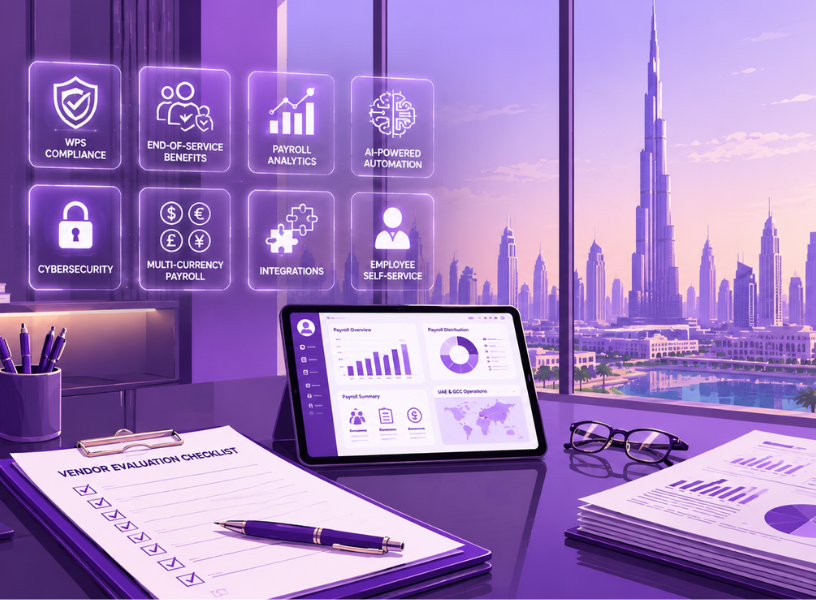
Choosing UAE payroll software is about more than automating salaries. The right solution should support compliance, workforce diversity, system integrations and business growth while adapting to evolving UAE labour requirements.
Instead of comparing features alone, organisations should evaluate how well a payroll platform fits their operating model and long-term needs. Here are seven key considerations to assess before making a decision.
UAE payroll software is a specialised payroll management system designed to calculate employee compensation while supporting the country's employment regulations, salary structures, and reporting requirements.
Unlike generic payroll applications, UAE payroll systems should accommodate local employment practices such as:
Modern payroll platforms increasingly integrate with Human Capital Management (HCM) or Human Resource Management Systems (HRMS), allowing payroll data to connect seamlessly with attendance, leave, recruitment, employee records, and workforce analytics.
However, technology alone does not guarantee compliance. Organisations remain responsible for ensuring payroll processes reflect current legislation and should validate statutory obligations with qualified local advisers.
The first question HR leaders should ask is not "What features does this software have?" but rather:
"How does this system help us remain compliant with UAE payroll regulations?"
Payroll compliance extends well beyond salary calculations.
An effective UAE payroll solution should support operational processes associated with:
Wage Protection System (WPS)
Payroll software should simplify WPS file preparation while reducing manual intervention and potential formatting errors.
End-of-Service Benefits
Calculating gratuity accurately requires consideration of employee tenure, employment status, and applicable labour provisions. Manual spreadsheets increase the likelihood of inconsistencies as workforce numbers grow.
Leave and Attendance
Payroll depends on accurate attendance data. If leave balances, overtime, unpaid leave, or shift patterns are managed separately, payroll errors become more likely.
Payroll Audit Trails
Finance teams increasingly expect detailed payroll reporting that records approvals, adjustments, and historical changes.
Why This Matters
Payroll errors affect more than compliance.
They influence:
For organisations employing hundreds or thousands of workers, even a small recurring payroll error can become a significant operational issue.
Many organisations purchase payroll software based on their current employee population.
That can be a costly mistake.
The better question is:
"Will this system still meet our needs three years from now?"
The UAE workforce is among the world's most diverse, with organisations employing professionals from dozens of nationalities across multiple employment categories.
A payroll solution should therefore support workforce complexity rather than assuming every employee follows the same employment model.
Examples include:
Each group may require different payroll rules, allowance structures, approval workflows, or reporting requirements.
Look Beyond Salary Processing
Payroll increasingly interacts with multiple HR processes.
For example:
Disconnected systems often create duplicated work and inconsistent employee records.
Organisations should therefore evaluate whether payroll software can integrate effectively with wider HR and business processes rather than operating as an isolated application.
Automation is frequently presented as the primary reason to invest in payroll software.
While automation certainly improves efficiency, its greater value lies in reducing operational risk.
The most effective payroll systems automate repetitive processes while maintaining transparency, governance, and human oversight.
Examples include:
Automated Payroll Calculations
Reducing manual calculations lowers the likelihood of data-entry errors and improves payroll consistency.
Workflow Approvals
Structured approval workflows help ensure payroll changes are reviewed by authorised personnel before processing.
Exception Reporting
Instead of assuming everything is correct, robust payroll systems highlight anomalies such as unusually high overtime payments, duplicate entries, or missing attendance records before payroll is finalised.
Employee Self-Service
Providing employees with access to payslips, tax documents where applicable, leave balances, and payroll history can reduce routine HR enquiries while improving transparency.
Automation Is Most Valuable When Combined With Governance
Some organisations focus almost exclusively on automation features during vendor demonstrations.
However, mature payroll operations balance automation with:
In other words, payroll software should automate repetitive work without reducing accountability.
One of the most common reasons organisations replace payroll software is not because it fails to process payroll—but because it cannot keep up with business growth.
Whether you're a fast-growing SME expanding into new Emirates or a regional enterprise managing multiple legal entities across the GCC, your payroll requirements are likely to evolve. Software that works well for 100 employees may become a constraint at 1,000.
Rather than asking, "Can this software meet today's needs?" HR leaders should ask:
"Can it support where our business is heading?"
A future-ready UAE payroll solution should be able to support:
Businesses operating across the GCC should also assess whether the platform can accommodate country-specific payroll rules without forcing a separate payroll process for each market. While every country has its own statutory requirements, consistent payroll governance across the region can reduce administrative complexity.
Flexibility matters as much as scale
Scalability is not just about handling larger employee numbers. Organisations also need the flexibility to respond to changing workforce models.
For example, employers may introduce:
Payroll software should adapt to these operational changes without requiring extensive customisation or manual workarounds.
Payroll data is one of the richest sources of workforce intelligence. Yet many organisations continue to use payroll reports solely for reconciliation and statutory purposes.
Modern payroll software should help HR and finance leaders answer broader business questions.
For example:
These insights become increasingly valuable as organisations seek to improve workforce planning, budgeting and productivity.
Look beyond standard reports
When evaluating payroll software, consider whether reporting capabilities include:
Strong reporting capabilities can reduce manual spreadsheet work while improving confidence in business decisions.
Payroll data should not exist in isolation
The greatest value often comes when payroll data can be analysed alongside information from HR, finance and workforce management systems.
Integrated reporting enables leaders to understand not just what employees are paid, but how workforce decisions influence organisational performance.
Even the most capable payroll software can underperform if implementation is poorly managed.
Successful payroll transformation depends on more than technology. It requires careful planning, accurate data migration, process redesign, stakeholder engagement and ongoing support.
During vendor evaluation, organisations should look beyond product demonstrations and understand how implementation will actually be delivered.
Questions worth asking
The answers often reveal more about long-term success than a feature checklist.
Local expertise matters
The UAE payroll environment has its own regulatory and operational requirements. Vendors should demonstrate a clear understanding of local payroll practices rather than relying solely on global functionality.
For organisations operating across multiple GCC countries, regional implementation experience can also help address differences in payroll rules, employment practices and reporting obligations.
Consider support beyond go-live
Payroll is an ongoing business-critical process. Issues may arise because of regulatory updates, organisational restructuring or changes to workforce policies.
Organisations should evaluate:
Reliable support can significantly reduce operational risk during critical payroll periods.
Price is naturally an important consideration, but selecting payroll software based solely on licence fees can lead to higher long-term costs.
A lower-cost solution may require more manual work, additional integrations or future replacement if it cannot support business growth.
Instead of asking, "Which software is cheapest?" ask:
"Which solution provides the greatest long-term value?"
Consider the total cost of ownership
A comprehensive evaluation should include:
Understanding these factors provides a more realistic picture of the investment.
The value of payroll software should also be assessed through measurable outcomes such as:
These outcomes often deliver greater business value than incremental savings on software licences alone.
Choosing UAE payroll software is about more than automating salary processing. The right solution should support compliance, improve operational efficiency and scale with your business. By focusing on long-term business needs rather than just features or price, HR leaders can build a payroll function that is accurate, resilient and future-ready.
UAE payroll software helps businesses process employee salaries while supporting local payroll requirements such as WPS, end-of-service benefits, leave calculations and payroll reporting. It reduces manual work and improves payroll accuracy.
Look for software that supports UAE compliance, automates payroll calculations, integrates with HR and finance systems, offers employee self-service, provides robust reporting and can scale as your business grows.
Yes. If your organisation is required to comply with the Wage Protection System (WPS), your payroll software should simplify WPS file generation and help minimise manual errors in salary processing.
Many payroll platforms support multiple countries, but organisations should confirm that the software can handle country-specific payroll regulations, currencies and reporting requirements across the GCC or other regions.
The right payroll system should improve compliance, reduce manual effort, provide accurate reporting, integrate with your existing systems and continue to support your organisation as it grows.

Many people would say that it is absolute madness to keep on doing the same thing, time after time, expecting to get a different result or for something different to happen.
Hoover Dam and the Grand Canyon: Book yourself a seat on any of the many sightseeing tours available and go and watch the architectural marvel that is Hoover Dam built over the Grand canyon which is also a grand sight to see by itself. Black Canyon is another must see as is Lake Mead which is so beautiful just because it is a body of water all surrounded by desert-like nature. Colorado River:
While looking at the Dam and Canyon is from above, to see the true beauty of the river, you have to go down. The Colorado river is excellent for river-rafting and water sports, but you do not have to take part if it is not your thing. Instead just sit back and enjoy another of nature’s marvels.


.webp)
Who can not resist going to one of the old towns like those in the Western gun slinging movies? Your destination needs to be Old Nevada. There you can delight in an old western town right in the middle of Red Rock Canyon. They host western shootouts too so come prepared, partner! I could go on and on about other attractions like the theme park in Circus Circus, the Gilcrease Nature Sanctuary, the Henderson Bird Viewing Preserve and Mt. Charleston but I think you get the picture. In Las Vegas and hate gambling? Do not despair. Just go out and have some clean un-gambling fun.
Choosing UAE payroll software is about more than automating salaries. The right solution should support compliance, workforce diversity, system integrations and business growth while adapting to evolving UAE labour requirements.
Instead of comparing features alone, organisations should evaluate how well a payroll platform fits their operating model and long-term needs. Here are seven key considerations to assess before making a decision.
UAE payroll software is a specialised payroll management system designed to calculate employee compensation while supporting the country's employment regulations, salary structures, and reporting requirements.
Unlike generic payroll applications, UAE payroll systems should accommodate local employment practices such as:
Modern payroll platforms increasingly integrate with Human Capital Management (HCM) or Human Resource Management Systems (HRMS), allowing payroll data to connect seamlessly with attendance, leave, recruitment, employee records, and workforce analytics.
However, technology alone does not guarantee compliance. Organisations remain responsible for ensuring payroll processes reflect current legislation and should validate statutory obligations with qualified local advisers.
The first question HR leaders should ask is not "What features does this software have?" but rather:
"How does this system help us remain compliant with UAE payroll regulations?"
Payroll compliance extends well beyond salary calculations.
An effective UAE payroll solution should support operational processes associated with:
Wage Protection System (WPS)
Payroll software should simplify WPS file preparation while reducing manual intervention and potential formatting errors.
End-of-Service Benefits
Calculating gratuity accurately requires consideration of employee tenure, employment status, and applicable labour provisions. Manual spreadsheets increase the likelihood of inconsistencies as workforce numbers grow.
Leave and Attendance
Payroll depends on accurate attendance data. If leave balances, overtime, unpaid leave, or shift patterns are managed separately, payroll errors become more likely.
Payroll Audit Trails
Finance teams increasingly expect detailed payroll reporting that records approvals, adjustments, and historical changes.
Why This Matters
Payroll errors affect more than compliance.
They influence:
For organisations employing hundreds or thousands of workers, even a small recurring payroll error can become a significant operational issue.
Many organisations purchase payroll software based on their current employee population.
That can be a costly mistake.
The better question is:
"Will this system still meet our needs three years from now?"
The UAE workforce is among the world's most diverse, with organisations employing professionals from dozens of nationalities across multiple employment categories.
A payroll solution should therefore support workforce complexity rather than assuming every employee follows the same employment model.
Examples include:
Each group may require different payroll rules, allowance structures, approval workflows, or reporting requirements.
Look Beyond Salary Processing
Payroll increasingly interacts with multiple HR processes.
For example:
Disconnected systems often create duplicated work and inconsistent employee records.
Organisations should therefore evaluate whether payroll software can integrate effectively with wider HR and business processes rather than operating as an isolated application.
Automation is frequently presented as the primary reason to invest in payroll software.
While automation certainly improves efficiency, its greater value lies in reducing operational risk.
The most effective payroll systems automate repetitive processes while maintaining transparency, governance, and human oversight.
Examples include:
Automated Payroll Calculations
Reducing manual calculations lowers the likelihood of data-entry errors and improves payroll consistency.
Workflow Approvals
Structured approval workflows help ensure payroll changes are reviewed by authorised personnel before processing.
Exception Reporting
Instead of assuming everything is correct, robust payroll systems highlight anomalies such as unusually high overtime payments, duplicate entries, or missing attendance records before payroll is finalised.
Employee Self-Service
Providing employees with access to payslips, tax documents where applicable, leave balances, and payroll history can reduce routine HR enquiries while improving transparency.
Automation Is Most Valuable When Combined With Governance
Some organisations focus almost exclusively on automation features during vendor demonstrations.
However, mature payroll operations balance automation with:
In other words, payroll software should automate repetitive work without reducing accountability.
One of the most common reasons organisations replace payroll software is not because it fails to process payroll—but because it cannot keep up with business growth.
Whether you're a fast-growing SME expanding into new Emirates or a regional enterprise managing multiple legal entities across the GCC, your payroll requirements are likely to evolve. Software that works well for 100 employees may become a constraint at 1,000.
Rather than asking, "Can this software meet today's needs?" HR leaders should ask:
"Can it support where our business is heading?"
A future-ready UAE payroll solution should be able to support:
Businesses operating across the GCC should also assess whether the platform can accommodate country-specific payroll rules without forcing a separate payroll process for each market. While every country has its own statutory requirements, consistent payroll governance across the region can reduce administrative complexity.
Flexibility matters as much as scale
Scalability is not just about handling larger employee numbers. Organisations also need the flexibility to respond to changing workforce models.
For example, employers may introduce:
Payroll software should adapt to these operational changes without requiring extensive customisation or manual workarounds.
Payroll data is one of the richest sources of workforce intelligence. Yet many organisations continue to use payroll reports solely for reconciliation and statutory purposes.
Modern payroll software should help HR and finance leaders answer broader business questions.
For example:
These insights become increasingly valuable as organisations seek to improve workforce planning, budgeting and productivity.
Look beyond standard reports
When evaluating payroll software, consider whether reporting capabilities include:
Strong reporting capabilities can reduce manual spreadsheet work while improving confidence in business decisions.
Payroll data should not exist in isolation
The greatest value often comes when payroll data can be analysed alongside information from HR, finance and workforce management systems.
Integrated reporting enables leaders to understand not just what employees are paid, but how workforce decisions influence organisational performance.
Even the most capable payroll software can underperform if implementation is poorly managed.
Successful payroll transformation depends on more than technology. It requires careful planning, accurate data migration, process redesign, stakeholder engagement and ongoing support.
During vendor evaluation, organisations should look beyond product demonstrations and understand how implementation will actually be delivered.
Questions worth asking
The answers often reveal more about long-term success than a feature checklist.
Local expertise matters
The UAE payroll environment has its own regulatory and operational requirements. Vendors should demonstrate a clear understanding of local payroll practices rather than relying solely on global functionality.
For organisations operating across multiple GCC countries, regional implementation experience can also help address differences in payroll rules, employment practices and reporting obligations.
Consider support beyond go-live
Payroll is an ongoing business-critical process. Issues may arise because of regulatory updates, organisational restructuring or changes to workforce policies.
Organisations should evaluate:
Reliable support can significantly reduce operational risk during critical payroll periods.
Price is naturally an important consideration, but selecting payroll software based solely on licence fees can lead to higher long-term costs.
A lower-cost solution may require more manual work, additional integrations or future replacement if it cannot support business growth.
Instead of asking, "Which software is cheapest?" ask:
"Which solution provides the greatest long-term value?"
Consider the total cost of ownership
A comprehensive evaluation should include:
Understanding these factors provides a more realistic picture of the investment.
The value of payroll software should also be assessed through measurable outcomes such as:
These outcomes often deliver greater business value than incremental savings on software licences alone.
Choosing UAE payroll software is about more than automating salary processing. The right solution should support compliance, improve operational efficiency and scale with your business. By focusing on long-term business needs rather than just features or price, HR leaders can build a payroll function that is accurate, resilient and future-ready.
UAE payroll software helps businesses process employee salaries while supporting local payroll requirements such as WPS, end-of-service benefits, leave calculations and payroll reporting. It reduces manual work and improves payroll accuracy.
Look for software that supports UAE compliance, automates payroll calculations, integrates with HR and finance systems, offers employee self-service, provides robust reporting and can scale as your business grows.
Yes. If your organisation is required to comply with the Wage Protection System (WPS), your payroll software should simplify WPS file generation and help minimise manual errors in salary processing.
Many payroll platforms support multiple countries, but organisations should confirm that the software can handle country-specific payroll regulations, currencies and reporting requirements across the GCC or other regions.
The right payroll system should improve compliance, reduce manual effort, provide accurate reporting, integrate with your existing systems and continue to support your organisation as it grows.


.webp)


.webp)

Passionately focused on people and fostering relationships for over 25 Years