

Attending a trade show can be a very effective method of promoting your company and its products. And one of the most effective ways to optimize your trade show display and increase traffic to your booth is through the use of banner stands.

Balamani
Author
Payroll is one of the most business-critical functions in any organization. Beyond ensuring employees are paid accurately and on time, payroll teams in the Philippines must navigate statutory contributions, tax compliance, evolving labour regulations, and growing employee expectations.
For mid-sized and enterprise organizations, choosing the right payroll software isn't simply about automating salary calculations. The right solution should simplify compliance, reduce administrative effort, integrate with existing HR systems, and support future business growth.
Rather than comparing payroll vendors based on feature lists alone, HR leaders should evaluate solutions against the factors that matter most in the Philippine business landscape.
Compliance should be your first priority when evaluating payroll software.
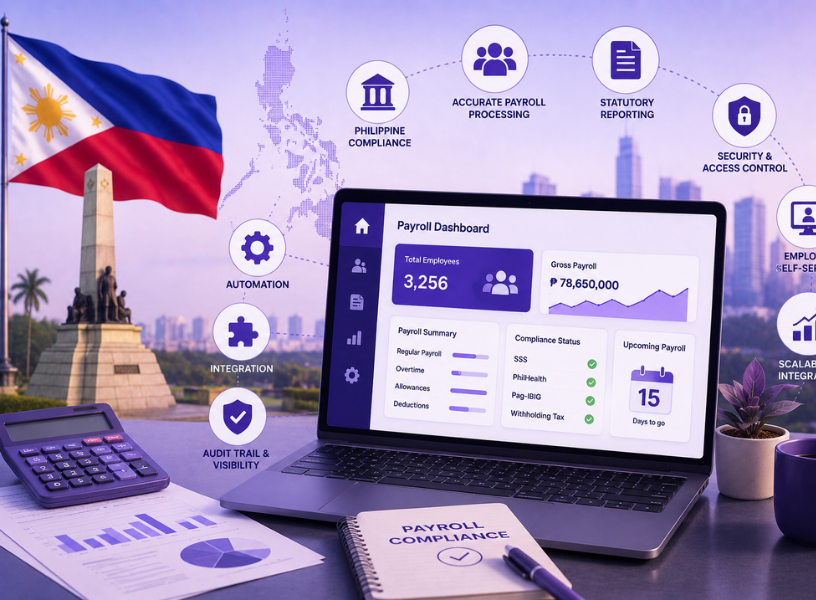
A payroll solution should automate the calculation, deduction, and reporting of statutory payroll obligations, including:
• Bureau of Internal Revenue (BIR) withholding tax
• Social Security System (SSS) contributions
• PhilHealth contributions
• Pag-IBIG Fund contributions
• 13th Month Pay calculations
• Tax-adjusted payroll processing
• Statutory payroll reports
As payroll regulations evolve, the software should also receive regular legislative updates to help organizations remain compliant.
• How quickly are statutory updates released?
• Are compliance updates included in the subscription?
• Can payroll reports be generated automatically?
Enterprise payroll often involves much more than fixed monthly salaries.
The payroll software should support:
• Multiple salary structures
• Shift differentials
• Night differential pay
• Overtime calculations
• Holiday pay
• Bonuses and incentives
• Commission payments
• Salary deductions
• Employee loans and repayments
Flexible payroll rules reduce manual calculations while improving payroll accuracy.
Payroll accuracy depends on accurate workforce data.
Instead of processing attendance separately, payroll software should integrate with leave and timekeeping systems to automatically calculate:
• Annual leave
• Sick leave
• Emergency leave
• Maternity leave
• Paternity leave
• Solo Parent Leave
• Service Incentive Leave (SIL)
• Overtime
• Rest day work
• Holiday work
• Absences and unpaid leave
Automation reduces payroll errors while ensuring employees receive the correct compensation.
• Does payroll integrate with attendance systems?
• Can leave balances automatically update payroll?
• Can overtime rules be configured for different employee groups?
Payroll should never operate in isolation.
The best payroll solutions integrate seamlessly with:
• Core HR software
• Time and attendance systems
• Recruitment and onboarding platforms
• Employee self-service portals
• Finance and ERP systems
• Learning and performance platforms
Integrated systems eliminate duplicate data entry, improve reporting, and create a smoother employee experience.
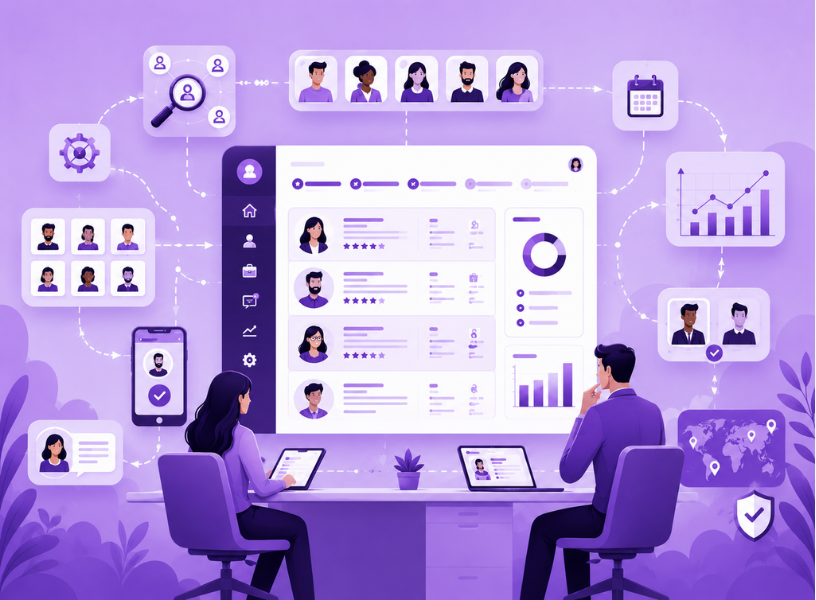
For organizations seeking a unified HR ecosystem, platforms such as Adrenalin HCM integrate payroll with core HR, attendance, leave management, talent management, and employee self-service, enabling HR teams to manage the entire employee lifecycle from a single platform.
Payroll requirements become increasingly complex as organizations expand.
Before selecting a payroll vendor, determine whether the solution can support:
• Multiple business entities
• Multiple payroll groups
• Thousands of employees
• Regional or multi-country payroll operations
• Flexible approval workflows
• Future integrations
Choosing scalable payroll software helps organizations avoid costly system replacements as workforce requirements evolve.
Payroll systems process highly sensitive employee information.
Enterprise payroll software should provide:
• Role-based access controls
• Data encryption
• Audit trails
• Multi-factor authentication
• Secure cloud infrastructure
• Disaster recovery capabilities
Equally important is local expertise.
• Is customer support available in the Philippines?
• Are payroll specialists available during payroll processing?
• How are legislative updates communicated?
• What implementation support is provided?
Reliable support can significantly reduce payroll risks during implementation and ongoing operations.
Modern payroll software should benefit both payroll teams and employees.
Look for capabilities such as:
• Employee self-service
• Mobile payslips
• Tax document access
• Leave applications
• Payroll notifications
• Digital approval workflows
These features reduce routine HR enquiries, improve transparency, and allow payroll teams to focus on more strategic initiatives instead of administrative tasks.
Before choosing payroll software, ask these essential questions:
• Does the software comply with Philippine statutory payroll requirements?
• Can it automate overtime, leave, holiday pay, and 13th Month Pay calculations?
• Does it integrate with our HR, attendance, and finance systems?
• Can it support future business growth?
• How frequently are compliance updates released?
• What reporting and analytics are available?
• What implementation and customer support does the vendor provide?
Using these questions during vendor evaluations can help HR teams make more informed purchasing decisions based on long-term business needs rather than product demonstrations alone.
Choosing the right payroll software is about more than processing employee salaries. It is about selecting a solution that supports statutory compliance, simplifies payroll operations, integrates with your broader HR ecosystem, and scales as your organization grows.
By evaluating payroll vendors against these seven factors, HR leaders can reduce compliance risks, improve operational efficiency, and build a payroll function that supports both employees and the business. Investing in the right payroll solution today can create a stronger foundation for future workforce growth and digital HR transformation.
Look for payroll software that supports Philippine statutory compliance, automates payroll calculations, integrates with HR systems, and provides strong reporting, security, and scalability.
A payroll solution should support BIR withholding tax, SSS, PhilHealth, Pag-IBIG contributions, 13th Month Pay, overtime, holiday pay, and statutory payroll reporting.
Integrating payroll with HR, attendance, leave, and finance systems reduces manual work, improves payroll accuracy, and streamlines HR operations.
Evaluate payroll vendors based on compliance capabilities, localization, automation, integrations, scalability, security, reporting, implementation support, and local customer service.
Yes. Modern payroll software offers employee self-service features such as digital payslips, leave requests, tax documents, and mobile access, making payroll information more accessible while reducing routine HR enquiries.

Many people would say that it is absolute madness to keep on doing the same thing, time after time, expecting to get a different result or for something different to happen.
Hoover Dam and the Grand Canyon: Book yourself a seat on any of the many sightseeing tours available and go and watch the architectural marvel that is Hoover Dam built over the Grand canyon which is also a grand sight to see by itself. Black Canyon is another must see as is Lake Mead which is so beautiful just because it is a body of water all surrounded by desert-like nature. Colorado River:
While looking at the Dam and Canyon is from above, to see the true beauty of the river, you have to go down. The Colorado river is excellent for river-rafting and water sports, but you do not have to take part if it is not your thing. Instead just sit back and enjoy another of nature’s marvels.


.webp)
Who can not resist going to one of the old towns like those in the Western gun slinging movies? Your destination needs to be Old Nevada. There you can delight in an old western town right in the middle of Red Rock Canyon. They host western shootouts too so come prepared, partner! I could go on and on about other attractions like the theme park in Circus Circus, the Gilcrease Nature Sanctuary, the Henderson Bird Viewing Preserve and Mt. Charleston but I think you get the picture. In Las Vegas and hate gambling? Do not despair. Just go out and have some clean un-gambling fun.
Payroll is one of the most business-critical functions in any organization. Beyond ensuring employees are paid accurately and on time, payroll teams in the Philippines must navigate statutory contributions, tax compliance, evolving labour regulations, and growing employee expectations.
For mid-sized and enterprise organizations, choosing the right payroll software isn't simply about automating salary calculations. The right solution should simplify compliance, reduce administrative effort, integrate with existing HR systems, and support future business growth.
Rather than comparing payroll vendors based on feature lists alone, HR leaders should evaluate solutions against the factors that matter most in the Philippine business landscape.
Compliance should be your first priority when evaluating payroll software.
A payroll solution should automate the calculation, deduction, and reporting of statutory payroll obligations, including:
• Bureau of Internal Revenue (BIR) withholding tax
• Social Security System (SSS) contributions
• PhilHealth contributions
• Pag-IBIG Fund contributions
• 13th Month Pay calculations
• Tax-adjusted payroll processing
• Statutory payroll reports
As payroll regulations evolve, the software should also receive regular legislative updates to help organizations remain compliant.
• How quickly are statutory updates released?
• Are compliance updates included in the subscription?
• Can payroll reports be generated automatically?
Enterprise payroll often involves much more than fixed monthly salaries.
The payroll software should support:
• Multiple salary structures
• Shift differentials
• Night differential pay
• Overtime calculations
• Holiday pay
• Bonuses and incentives
• Commission payments
• Salary deductions
• Employee loans and repayments
Flexible payroll rules reduce manual calculations while improving payroll accuracy.
Payroll accuracy depends on accurate workforce data.
Instead of processing attendance separately, payroll software should integrate with leave and timekeeping systems to automatically calculate:
• Annual leave
• Sick leave
• Emergency leave
• Maternity leave
• Paternity leave
• Solo Parent Leave
• Service Incentive Leave (SIL)
• Overtime
• Rest day work
• Holiday work
• Absences and unpaid leave
Automation reduces payroll errors while ensuring employees receive the correct compensation.
• Does payroll integrate with attendance systems?
• Can leave balances automatically update payroll?
• Can overtime rules be configured for different employee groups?
Payroll should never operate in isolation.
The best payroll solutions integrate seamlessly with:
• Core HR software
• Time and attendance systems
• Recruitment and onboarding platforms
• Employee self-service portals
• Finance and ERP systems
• Learning and performance platforms
Integrated systems eliminate duplicate data entry, improve reporting, and create a smoother employee experience.
For organizations seeking a unified HR ecosystem, platforms such as Adrenalin HCM integrate payroll with core HR, attendance, leave management, talent management, and employee self-service, enabling HR teams to manage the entire employee lifecycle from a single platform.
Payroll requirements become increasingly complex as organizations expand.
Before selecting a payroll vendor, determine whether the solution can support:
• Multiple business entities
• Multiple payroll groups
• Thousands of employees
• Regional or multi-country payroll operations
• Flexible approval workflows
• Future integrations
Choosing scalable payroll software helps organizations avoid costly system replacements as workforce requirements evolve.
Payroll systems process highly sensitive employee information.
Enterprise payroll software should provide:
• Role-based access controls
• Data encryption
• Audit trails
• Multi-factor authentication
• Secure cloud infrastructure
• Disaster recovery capabilities
Equally important is local expertise.
• Is customer support available in the Philippines?
• Are payroll specialists available during payroll processing?
• How are legislative updates communicated?
• What implementation support is provided?
Reliable support can significantly reduce payroll risks during implementation and ongoing operations.
Modern payroll software should benefit both payroll teams and employees.
Look for capabilities such as:
• Employee self-service
• Mobile payslips
• Tax document access
• Leave applications
• Payroll notifications
• Digital approval workflows
These features reduce routine HR enquiries, improve transparency, and allow payroll teams to focus on more strategic initiatives instead of administrative tasks.
Before choosing payroll software, ask these essential questions:
• Does the software comply with Philippine statutory payroll requirements?
• Can it automate overtime, leave, holiday pay, and 13th Month Pay calculations?
• Does it integrate with our HR, attendance, and finance systems?
• Can it support future business growth?
• How frequently are compliance updates released?
• What reporting and analytics are available?
• What implementation and customer support does the vendor provide?
Using these questions during vendor evaluations can help HR teams make more informed purchasing decisions based on long-term business needs rather than product demonstrations alone.
Choosing the right payroll software is about more than processing employee salaries. It is about selecting a solution that supports statutory compliance, simplifies payroll operations, integrates with your broader HR ecosystem, and scales as your organization grows.
By evaluating payroll vendors against these seven factors, HR leaders can reduce compliance risks, improve operational efficiency, and build a payroll function that supports both employees and the business. Investing in the right payroll solution today can create a stronger foundation for future workforce growth and digital HR transformation.
Look for payroll software that supports Philippine statutory compliance, automates payroll calculations, integrates with HR systems, and provides strong reporting, security, and scalability.
A payroll solution should support BIR withholding tax, SSS, PhilHealth, Pag-IBIG contributions, 13th Month Pay, overtime, holiday pay, and statutory payroll reporting.
Integrating payroll with HR, attendance, leave, and finance systems reduces manual work, improves payroll accuracy, and streamlines HR operations.
Evaluate payroll vendors based on compliance capabilities, localization, automation, integrations, scalability, security, reporting, implementation support, and local customer service.
Yes. Modern payroll software offers employee self-service features such as digital payslips, leave requests, tax documents, and mobile access, making payroll information more accessible while reducing routine HR enquiries.


.webp)


.webp)

Passionately focused on people and fostering relationships for over 25 Years