
Attending a trade show can be a very effective method of promoting your company and its products. And one of the most effective ways to optimize your trade show display and increase traffic to your booth is through the use of banner stands.

Balamani
Author
Artificial intelligence is becoming part of everyday HR operations. From recruitment and employee management to workforce analytics and performance management, AI-powered HR software can help HR teams automate repetitive work, identify patterns and make sense of large volumes of workforce data.
But as AI takes on a greater role in HR, another question becomes increasingly important: How transparent is the technology?
For HR leaders, transparency is not simply about knowing that AI is being used. It is about understanding what data the system uses, how AI contributes to decisions, what its recommendations mean and where human judgment remains necessary.
Transparency means that organisations have enough visibility into how AI is being used within their HR processes.
This does not mean every HR professional needs to understand the technical algorithms behind an AI system. Instead, they should be able to answer practical questions such as:
These questions become particularly important when AI influences processes that directly affect employees.
HR systems contain some of an organisation's most sensitive information. Employee profiles, compensation, performance records, attendance, career history and other workforce information can all contribute to AI-driven insights.
Without sufficient transparency, employees and HR teams may find it difficult to understand how information is being used.
Transparency can help organisations build greater trust in AI while enabling HR professionals to identify potential errors, biases or inappropriate uses of data.
It also reinforces an important principle: AI should support HR decision-making, not make important people decisions without appropriate human oversight.
The foundation of transparent AI is understanding the data behind it.
An AI-enabled HCM may use information from employee profiles, recruitment records, learning activity, performance data, workforce trends or other HR processes.
HR leaders should know:
Data should have a clear purpose rather than being collected simply because it might become useful for AI in the future.
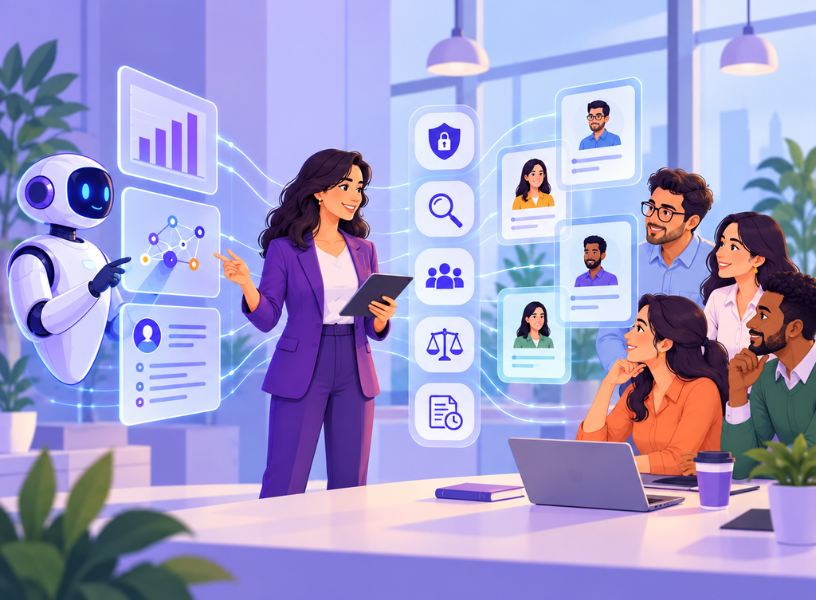
AI-generated recommendations should not appear as unquestionable answers. HR professionals should be able to understand the key factors behind an AI output, review whether the recommendation makes sense in context and override it when necessary.
For example, if an AI system identifies an employee as a potential flight risk, HR should be able to understand what factors contributed to that insight rather than simply receiving a risk score.
This creates a clear division of responsibility: AI provides the insight; HR provides the context and makes the decision.
Transparency should not stop with HR teams. Employees should know, where appropriate, when AI is being used to process their data or support decisions that affect them.
Organisations should communicate what AI is being used for, what types of employee data are involved and how human oversight works.
This helps employees understand how their information is being used rather than leaving AI processes invisible to them.
Transparency also extends to data security.
Employees should not have their information exposed simply because AI is being introduced into an HR process.
Organisations should consider whether their HR technology provides appropriate access controls, permissions, encryption, audit trails and safeguards for sensitive workforce information.
HR leaders should also understand whether employee data is being used for purposes beyond the original HR process.
AI systems learn from data, which means poor-quality or historically biased data can contribute to problematic outcomes.
For example, if historical recruitment or performance data contains patterns that disadvantage certain groups, an AI system may potentially reproduce those patterns.
This makes data quality and ongoing monitoring important components of responsible AI.
HR teams should periodically review AI-supported processes to identify unexpected patterns and ensure that automated recommendations remain appropriate.
More data does not automatically mean better HR decisions.
As organisations adopt HR automation, there can be a temptation to collect increasingly detailed information about employee behaviour.
HR leaders should distinguish between data that genuinely supports workforce management and data collection that creates unnecessary surveillance.
The question should always be: Does collecting this information serve a legitimate and clearly understood HR purpose?
Responsible AI requires restraint as much as innovation.
Before introducing AI into HR processes, organisations can ask:
These questions can help HR leaders evaluate whether AI is being introduced responsibly rather than simply adding automation for its own sake.
AI can make HR more responsive, data-driven and efficient. But its long-term value will depend on more than the sophistication of the underlying technology.
Trust will matter just as much.
For organisations adopting AI-powered HR software, transparency should therefore be considered a core requirement—not an optional feature. Employees need confidence that their data is being handled responsibly, while HR leaders need enough visibility to understand, question and oversee AI-generated outputs.
The goal is not to remove AI from HR decision-making. It is to create an environment where AI provides intelligence, HR provides context, and people remain accountable for decisions.
What is transparency in AI-powered HR software?
Transparency means providing sufficient visibility into how AI uses employee data, generates insights or recommendations, and contributes to HR processes.
Why is transparency important when using AI in HR?
HR systems handle sensitive employee information and can influence important workforce decisions. Transparency helps HR teams understand AI outputs, identify potential issues and maintain human accountability.
Should employees know when AI is being used in HR?
Organisations should consider appropriate disclosure and transparency when AI is used to process employee information or support decisions affecting employees. Specific requirements can depend on applicable laws, regulations and organisational policies.
Can AI make HR decisions without human involvement?
AI can automate certain HR activities, but decisions with significant consequences for employees generally require appropriate human oversight, contextual judgment and accountability.
How can HR leaders promote ethical AI use?
HR leaders can establish clear data-use policies, require transparency around AI applications, maintain human oversight, monitor for bias, protect employee information and regularly review how AI is being used.

Many people would say that it is absolute madness to keep on doing the same thing, time after time, expecting to get a different result or for something different to happen.
Hoover Dam and the Grand Canyon: Book yourself a seat on any of the many sightseeing tours available and go and watch the architectural marvel that is Hoover Dam built over the Grand canyon which is also a grand sight to see by itself. Black Canyon is another must see as is Lake Mead which is so beautiful just because it is a body of water all surrounded by desert-like nature. Colorado River:
While looking at the Dam and Canyon is from above, to see the true beauty of the river, you have to go down. The Colorado river is excellent for river-rafting and water sports, but you do not have to take part if it is not your thing. Instead just sit back and enjoy another of nature’s marvels.


.webp)
Who can not resist going to one of the old towns like those in the Western gun slinging movies? Your destination needs to be Old Nevada. There you can delight in an old western town right in the middle of Red Rock Canyon. They host western shootouts too so come prepared, partner! I could go on and on about other attractions like the theme park in Circus Circus, the Gilcrease Nature Sanctuary, the Henderson Bird Viewing Preserve and Mt. Charleston but I think you get the picture. In Las Vegas and hate gambling? Do not despair. Just go out and have some clean un-gambling fun.
Artificial intelligence is becoming part of everyday HR operations. From recruitment and employee management to workforce analytics and performance management, AI-powered HR software can help HR teams automate repetitive work, identify patterns and make sense of large volumes of workforce data.
But as AI takes on a greater role in HR, another question becomes increasingly important: How transparent is the technology?
For HR leaders, transparency is not simply about knowing that AI is being used. It is about understanding what data the system uses, how AI contributes to decisions, what its recommendations mean and where human judgment remains necessary.
Transparency means that organisations have enough visibility into how AI is being used within their HR processes.
This does not mean every HR professional needs to understand the technical algorithms behind an AI system. Instead, they should be able to answer practical questions such as:
These questions become particularly important when AI influences processes that directly affect employees.
HR systems contain some of an organisation's most sensitive information. Employee profiles, compensation, performance records, attendance, career history and other workforce information can all contribute to AI-driven insights.
Without sufficient transparency, employees and HR teams may find it difficult to understand how information is being used.
Transparency can help organisations build greater trust in AI while enabling HR professionals to identify potential errors, biases or inappropriate uses of data.
It also reinforces an important principle: AI should support HR decision-making, not make important people decisions without appropriate human oversight.
The foundation of transparent AI is understanding the data behind it.
An AI-enabled HCM may use information from employee profiles, recruitment records, learning activity, performance data, workforce trends or other HR processes.
HR leaders should know:
Data should have a clear purpose rather than being collected simply because it might become useful for AI in the future.
AI-generated recommendations should not appear as unquestionable answers. HR professionals should be able to understand the key factors behind an AI output, review whether the recommendation makes sense in context and override it when necessary.
For example, if an AI system identifies an employee as a potential flight risk, HR should be able to understand what factors contributed to that insight rather than simply receiving a risk score.
This creates a clear division of responsibility: AI provides the insight; HR provides the context and makes the decision.
Transparency should not stop with HR teams. Employees should know, where appropriate, when AI is being used to process their data or support decisions that affect them.
Organisations should communicate what AI is being used for, what types of employee data are involved and how human oversight works.
This helps employees understand how their information is being used rather than leaving AI processes invisible to them.
Transparency also extends to data security.
Employees should not have their information exposed simply because AI is being introduced into an HR process.
Organisations should consider whether their HR technology provides appropriate access controls, permissions, encryption, audit trails and safeguards for sensitive workforce information.
HR leaders should also understand whether employee data is being used for purposes beyond the original HR process.
AI systems learn from data, which means poor-quality or historically biased data can contribute to problematic outcomes.
For example, if historical recruitment or performance data contains patterns that disadvantage certain groups, an AI system may potentially reproduce those patterns.
This makes data quality and ongoing monitoring important components of responsible AI.
HR teams should periodically review AI-supported processes to identify unexpected patterns and ensure that automated recommendations remain appropriate.
More data does not automatically mean better HR decisions.
As organisations adopt HR automation, there can be a temptation to collect increasingly detailed information about employee behaviour.
HR leaders should distinguish between data that genuinely supports workforce management and data collection that creates unnecessary surveillance.
The question should always be: Does collecting this information serve a legitimate and clearly understood HR purpose?
Responsible AI requires restraint as much as innovation.
Before introducing AI into HR processes, organisations can ask:
These questions can help HR leaders evaluate whether AI is being introduced responsibly rather than simply adding automation for its own sake.
AI can make HR more responsive, data-driven and efficient. But its long-term value will depend on more than the sophistication of the underlying technology.
Trust will matter just as much.
For organisations adopting AI-powered HR software, transparency should therefore be considered a core requirement—not an optional feature. Employees need confidence that their data is being handled responsibly, while HR leaders need enough visibility to understand, question and oversee AI-generated outputs.
The goal is not to remove AI from HR decision-making. It is to create an environment where AI provides intelligence, HR provides context, and people remain accountable for decisions.
What is transparency in AI-powered HR software?
Transparency means providing sufficient visibility into how AI uses employee data, generates insights or recommendations, and contributes to HR processes.
Why is transparency important when using AI in HR?
HR systems handle sensitive employee information and can influence important workforce decisions. Transparency helps HR teams understand AI outputs, identify potential issues and maintain human accountability.
Should employees know when AI is being used in HR?
Organisations should consider appropriate disclosure and transparency when AI is used to process employee information or support decisions affecting employees. Specific requirements can depend on applicable laws, regulations and organisational policies.
Can AI make HR decisions without human involvement?
AI can automate certain HR activities, but decisions with significant consequences for employees generally require appropriate human oversight, contextual judgment and accountability.
How can HR leaders promote ethical AI use?
HR leaders can establish clear data-use policies, require transparency around AI applications, maintain human oversight, monitor for bias, protect employee information and regularly review how AI is being used.


.webp)


.webp)

Passionately focused on people and fostering relationships for over 25 Years