
Attending a trade show can be a very effective method of promoting your company and its products. And one of the most effective ways to optimize your trade show display and increase traffic to your booth is through the use of banner stands.

Balamani
Author
Many organizations believe workforce planning is under control because processes exist, reports are generated, and roles are filled on time. The reality is more complex.
In most enterprises, workforce decisions are still driven by fragmented signals, manager inputs, periodic reports, and static headcount views that are already outdated by the time they are used. What appears to be coordination is often a reactive adjustment.
The cost of this isn’t always visible immediately. It emerges differently over time through delayed hiring decisions, underutilized internal talent, misaligned workforce investments, and missed opportunities to anticipate change.
Traditional HR systems were designed to track what has happened. They were not built to predict what is about to happen or to connect workforce signals across functions in real-time. As business cycles accelerate and workforce dynamics become more fluid, the gap between insight and action becomes harder to sustain.
That’s the gap - AI in workforce planning is built to close, moving from reactive coordination to proactive data-led decision-making.
Historically, workforce planning has followed a predictable, reactive rhythm.
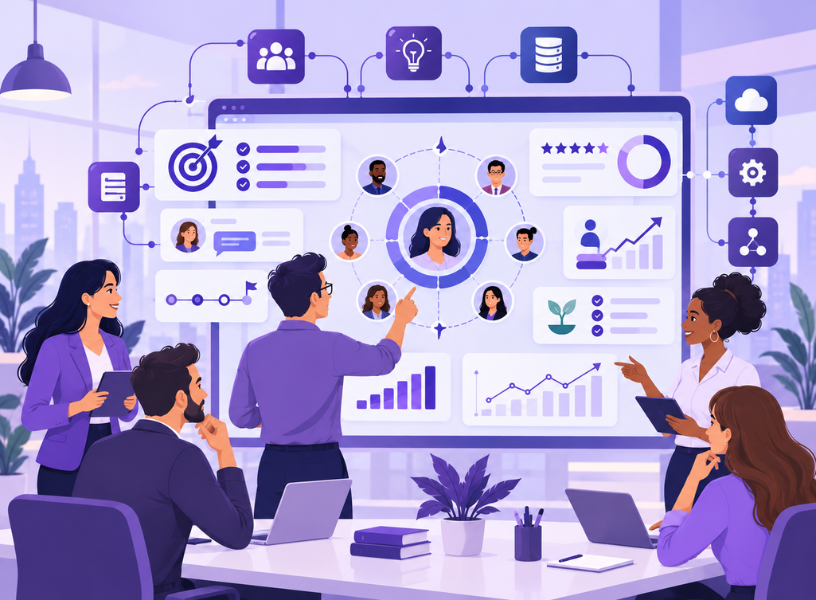
AI is fundamentally reshaping how workforce planning operates. They continuously analyze live signals across the enterprise project pipelines, hiring velocity, skills availability, and engagement patterns, bringing visibility to emerging gaps before they fully materialize.
This shifts workforce planning from periodic reporting to continuous intelligence.
The impact is already visible in practice. A regional bank that previously required weeks to compile quarterly workforce insights can now generate the same view in less than a day. More importantly, the system proactively highlights emerging risks such as early indicators of attrition in critical functions, enabling leadership to act before those risks translate into business disruption.
Workforce planning is no longer about catching up with change. It is about staying ahead of it.
AI in workforce planning is a shift in how organizations understand, deploy, and future-proof their workforce.
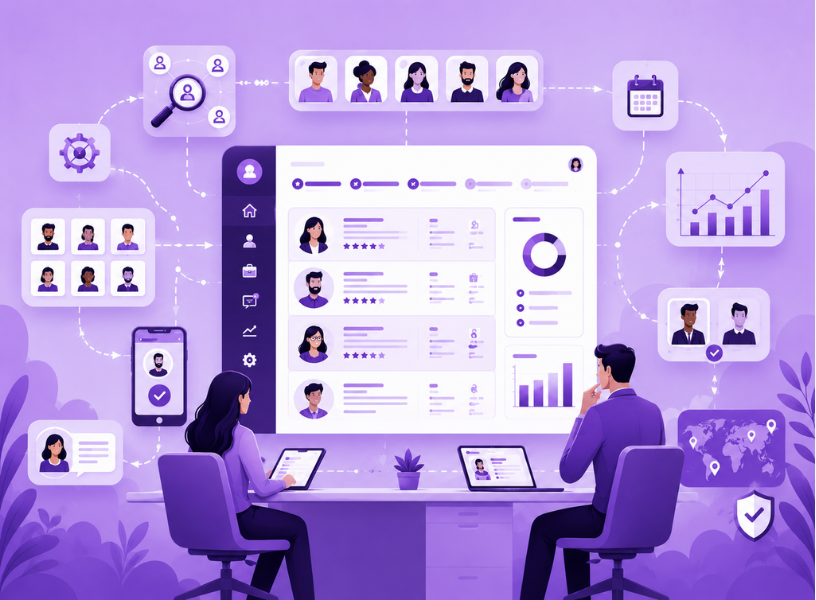
Most organizations have clarity on roles but limited visibility into actual capabilities. AI changes that by creating a continuously updated view of skills, drawing from performance data, project experience, and learning activity. This enables HR and business leaders to identify, in real-time, where critical skills already exist within the organization, thus reducing unnecessary external hiring and accelerating internal mobility.
AI enables a forward-looking approach by identifying patterns linked to attrition, such as tenure trends, compensation positioning, manager dynamics, and engagement signals. This allows organizations to intervene earlier, protecting critical talent and reducing the significant cost associated with unplanned turnover.
AI connects workforce planning directly to business inputs such as pipeline data, project demand, and growth projections. The result is a more precise view of future talent needs, giving organizations the lead time to build their capability internally, rather than responding through last-minute hiring.
Strategic workforce decisions often involve trade-offs – build versus buy, expand versus optimize, and invest versus defer. AI enables HR to model these scenarios using live workforce and business data.
This equips leadership with clear, costed options, allowing workforce strategy to be discussed with the same rigor as financial planning.
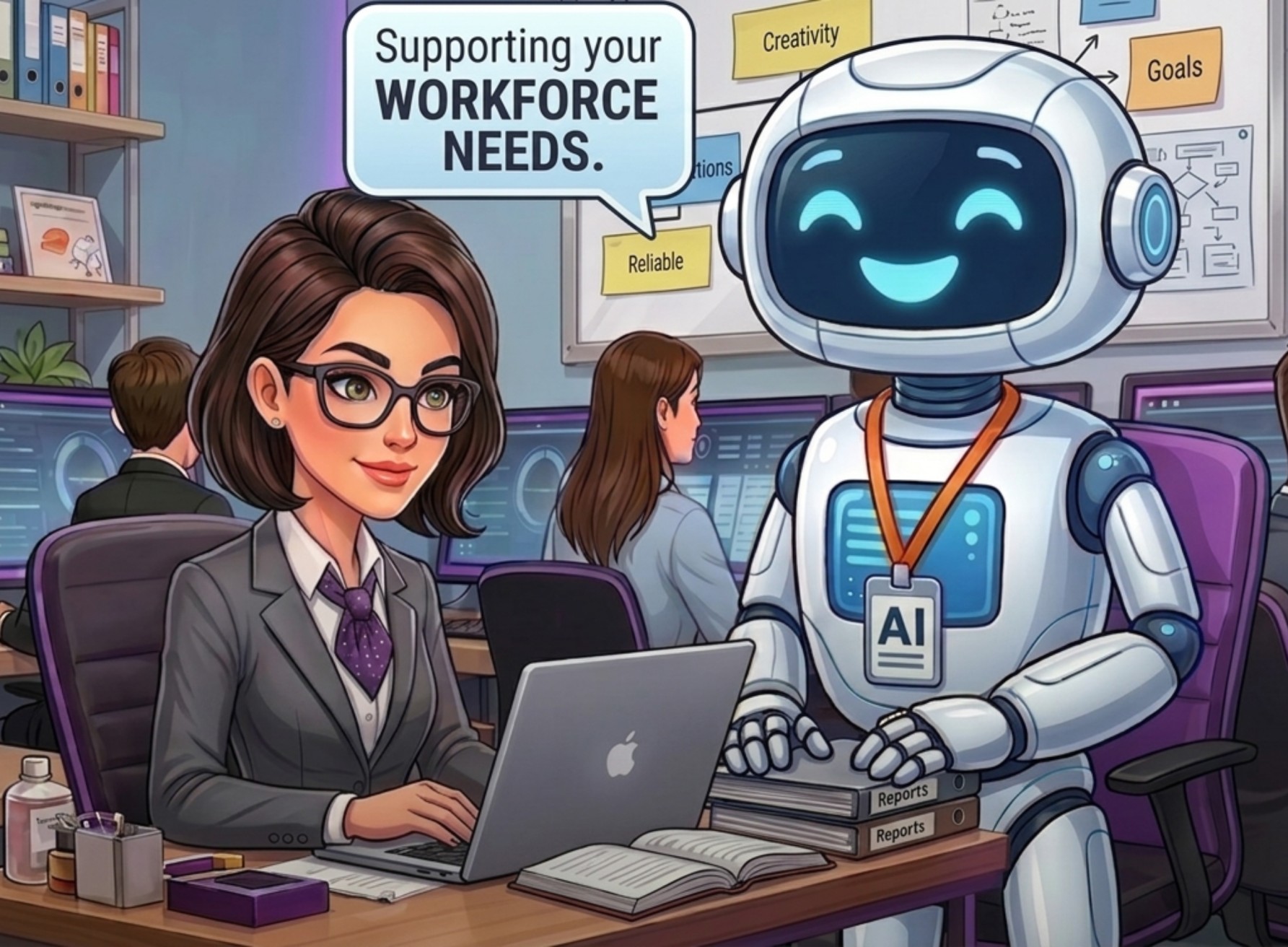
The most consistent feedback from practitioners after adopting AI in workforce planning is the significant reduction in time spent on routine administrative tasks. Hours once spent pulling reports, chasing approvals, and reconciling spreadsheets are now redirected towards higher-value work, including conversations that inspire outcomes - supporting a manager struggling with team dynamics, guiding a high-potential employee who can’t see their next step, or addressing a retention risk that needs a human response.
One of the long-standing challenges for HR has been credibility in strategic planning conversations. Finance brings cost models. Operations bring performance and throughput data. HR, in many cases, has relied on fragmented insights and informed judgment.
That dynamic is changing.
When workforce data is directly connected to business outcomes, HR moves from interpretation to precision. Workforce planning becomes quantifiable, scenario-driven, and aligned with how the business evaluates risk and investment.
HR leaders can now answer critical questions with clarity: where will capability gaps emerge over the next 12 to 18 months, what is the cost of addressing them, and how will workforce decisions impact delivery timelines, productivity, and growth.
As a result, workforce planning shifts from a reactive support function to a core component of enterprise strategy, informing how the business plans, allocates capital, and executes at scale.
AI-driven workforce planning is only as effective as the data it is built on.
Disparate workforce systems, inconsistent job architectures, and poor data quality do more than limit accuracy; they risk reinforcing flawed assumptions if outputs are accepted without sufficient scrutiny.
Leading organizations recognize this and treat AI adoption as an opportunity to strengthen their data foundations. This includes standardizing job families, aligning skill taxonomies, and integrating HR data with financial and operational systems to create a unified and reliable view of the workforce.
This discipline is what ensures that insights are dependable. And ultimately, it reinforces a broader shift. AI may provide the intelligence, but it is the strength of the underlying workforce data and how it is governed that determines whether that intelligence translates into better decisions.

Many people would say that it is absolute madness to keep on doing the same thing, time after time, expecting to get a different result or for something different to happen.
Hoover Dam and the Grand Canyon: Book yourself a seat on any of the many sightseeing tours available and go and watch the architectural marvel that is Hoover Dam built over the Grand canyon which is also a grand sight to see by itself. Black Canyon is another must see as is Lake Mead which is so beautiful just because it is a body of water all surrounded by desert-like nature. Colorado River:
While looking at the Dam and Canyon is from above, to see the true beauty of the river, you have to go down. The Colorado river is excellent for river-rafting and water sports, but you do not have to take part if it is not your thing. Instead just sit back and enjoy another of nature’s marvels.


.webp)
Who can not resist going to one of the old towns like those in the Western gun slinging movies? Your destination needs to be Old Nevada. There you can delight in an old western town right in the middle of Red Rock Canyon. They host western shootouts too so come prepared, partner! I could go on and on about other attractions like the theme park in Circus Circus, the Gilcrease Nature Sanctuary, the Henderson Bird Viewing Preserve and Mt. Charleston but I think you get the picture. In Las Vegas and hate gambling? Do not despair. Just go out and have some clean un-gambling fun.
Many organizations believe workforce planning is under control because processes exist, reports are generated, and roles are filled on time. The reality is more complex.
In most enterprises, workforce decisions are still driven by fragmented signals, manager inputs, periodic reports, and static headcount views that are already outdated by the time they are used. What appears to be coordination is often a reactive adjustment.
The cost of this isn’t always visible immediately. It emerges differently over time through delayed hiring decisions, underutilized internal talent, misaligned workforce investments, and missed opportunities to anticipate change.
Traditional HR systems were designed to track what has happened. They were not built to predict what is about to happen or to connect workforce signals across functions in real-time. As business cycles accelerate and workforce dynamics become more fluid, the gap between insight and action becomes harder to sustain.
That’s the gap - AI in workforce planning is built to close, moving from reactive coordination to proactive data-led decision-making.
Historically, workforce planning has followed a predictable, reactive rhythm.
AI is fundamentally reshaping how workforce planning operates. They continuously analyze live signals across the enterprise project pipelines, hiring velocity, skills availability, and engagement patterns, bringing visibility to emerging gaps before they fully materialize.
This shifts workforce planning from periodic reporting to continuous intelligence.
The impact is already visible in practice. A regional bank that previously required weeks to compile quarterly workforce insights can now generate the same view in less than a day. More importantly, the system proactively highlights emerging risks such as early indicators of attrition in critical functions, enabling leadership to act before those risks translate into business disruption.
Workforce planning is no longer about catching up with change. It is about staying ahead of it.
AI in workforce planning is a shift in how organizations understand, deploy, and future-proof their workforce.
Most organizations have clarity on roles but limited visibility into actual capabilities. AI changes that by creating a continuously updated view of skills, drawing from performance data, project experience, and learning activity. This enables HR and business leaders to identify, in real-time, where critical skills already exist within the organization, thus reducing unnecessary external hiring and accelerating internal mobility.
AI enables a forward-looking approach by identifying patterns linked to attrition, such as tenure trends, compensation positioning, manager dynamics, and engagement signals. This allows organizations to intervene earlier, protecting critical talent and reducing the significant cost associated with unplanned turnover.
AI connects workforce planning directly to business inputs such as pipeline data, project demand, and growth projections. The result is a more precise view of future talent needs, giving organizations the lead time to build their capability internally, rather than responding through last-minute hiring.
Strategic workforce decisions often involve trade-offs – build versus buy, expand versus optimize, and invest versus defer. AI enables HR to model these scenarios using live workforce and business data.
This equips leadership with clear, costed options, allowing workforce strategy to be discussed with the same rigor as financial planning.
The most consistent feedback from practitioners after adopting AI in workforce planning is the significant reduction in time spent on routine administrative tasks. Hours once spent pulling reports, chasing approvals, and reconciling spreadsheets are now redirected towards higher-value work, including conversations that inspire outcomes - supporting a manager struggling with team dynamics, guiding a high-potential employee who can’t see their next step, or addressing a retention risk that needs a human response.
One of the long-standing challenges for HR has been credibility in strategic planning conversations. Finance brings cost models. Operations bring performance and throughput data. HR, in many cases, has relied on fragmented insights and informed judgment.
That dynamic is changing.
When workforce data is directly connected to business outcomes, HR moves from interpretation to precision. Workforce planning becomes quantifiable, scenario-driven, and aligned with how the business evaluates risk and investment.
HR leaders can now answer critical questions with clarity: where will capability gaps emerge over the next 12 to 18 months, what is the cost of addressing them, and how will workforce decisions impact delivery timelines, productivity, and growth.
As a result, workforce planning shifts from a reactive support function to a core component of enterprise strategy, informing how the business plans, allocates capital, and executes at scale.
AI-driven workforce planning is only as effective as the data it is built on.
Disparate workforce systems, inconsistent job architectures, and poor data quality do more than limit accuracy; they risk reinforcing flawed assumptions if outputs are accepted without sufficient scrutiny.
Leading organizations recognize this and treat AI adoption as an opportunity to strengthen their data foundations. This includes standardizing job families, aligning skill taxonomies, and integrating HR data with financial and operational systems to create a unified and reliable view of the workforce.
This discipline is what ensures that insights are dependable. And ultimately, it reinforces a broader shift. AI may provide the intelligence, but it is the strength of the underlying workforce data and how it is governed that determines whether that intelligence translates into better decisions.


.webp)


.webp)

Passionately focused on people and fostering relationships for over 25 Years