

Attending a trade show can be a very effective method of promoting your company and its products. And one of the most effective ways to optimize your trade show display and increase traffic to your booth is through the use of banner stands.

Balamani
Author
AI agents are quickly becoming part of the HR operating model. From screening candidates to resolving employee queries, they promise speed, scale, and efficiency. In fact, AI can automate a significant portion of HR workflows, freeing teams to focus on strategic work.
But here’s the catch - more AI doesn’t automatically mean more value.
The real challenge for HR leaders today is not adoption, but calibration. How do you deploy AI agents in a way that delivers impact without exposing the organization to unnecessary risk?
One of the biggest shifts in thinking is this: AI agents are not employees.
HR leaders are drifting away from treating AI as “digital workers” and instead focusing on embedding it into specific workflows.
This means:
• Using AI for resume screening, not hiring decisions
• Automating interview scheduling, not candidate selection
• Handling HR queries, not employee relations
Right-sizing begins when AI is applied to clearly defined tasks, not entire roles.
AI delivers the most value in areas that are:
• Repetitive
• Rule-based
• Data-heavy
Think of onboarding workflows, payroll queries, or leave management. These processes benefit from automation without introducing major ethical or strategic risks.
AI agents can even handle multi-step workflows across systems, improving efficiency and reducing manual effort.
The key is simple: start where errors are manageable and impact is measurable.
Not every HR process should be fully automated.
AI agents today can act independently, but that autonomy comes with risk. Poor inputs or flawed logic can lead to cascading errors, especially in decision-making systems.
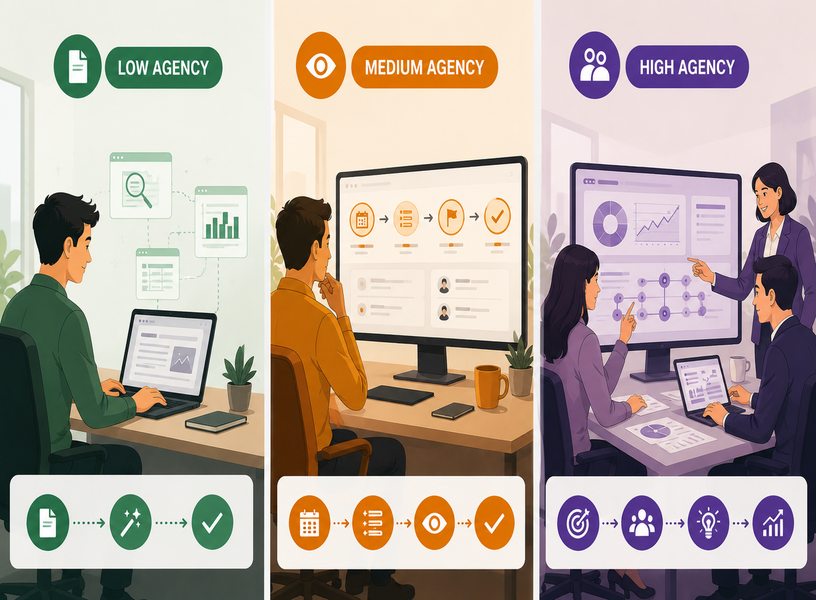
That’s why HR must define clear boundaries:
• AI suggests → human decides
• AI executes → human monitors
• Full autonomy → rare and controlled
Critical areas such as hiring, performance evaluation, and compensation should always include human oversight.
AI adoption is accelerating faster than governance.
Recent reports indicate that while most organizations are experiencing productivity gains, a large percentage still lack structured AI risk frameworks.
That imbalance could become costly.
To right-size AI, HR must establish:
• Clear ownership of AI systems
• Audit trails for decisions
• Usage policies and compliance checks
• Regular performance and bias reviews
Without the right guardrails, growth can outpace control.
AI is only as good as the data it learns from.
In HR, that data includes resumes, performance records, compensation details, and employee histories. Poor-quality or biased data can lead to flawed decisions and compliance issues.
Worse, autonomous AI agents can act on incorrect data, amplifying small errors into larger problems.
Before scaling AI, HR teams must invest in:
• Clean, structured data
• Standardized processes
• Strong data governance
Think of data as the foundation – if it’s weak, everything built on top will be too.
AI agents often operate across systems, which means they require access to sensitive data.
The problem? Many organizations are granting AI more access than necessary, creating security vulnerabilities.
For HR, this is critical. Employee data is among the most sensitive in the enterprise.
Solutions include:
• Role-based access control
• Identity tracking for AI agents
• Zero-trust security models
Right-sizing AI also means right-sizing access.
AI can process data faster than humans; however, AI should not replace human judgment.
It lacks context, empathy, and ethical reasoning – elements that are central to HR. Even as AI enhances decision-making, human validation remains essential to ensure fairness and trust.
The goal is not replacement, but augmentation.
Right-sizing AI agents in HR is not about deploying more tools - it’s about deploying them wisely.
Start small. Focus on the right use cases. Control autonomy. Strengthen governance. Fix your data. Keep humans involved.
Because the organizations that succeed with AI won’t be the ones using it the most.
They’ll be the ones using it with the most intention.

Many people would say that it is absolute madness to keep on doing the same thing, time after time, expecting to get a different result or for something different to happen.
Hoover Dam and the Grand Canyon: Book yourself a seat on any of the many sightseeing tours available and go and watch the architectural marvel that is Hoover Dam built over the Grand canyon which is also a grand sight to see by itself. Black Canyon is another must see as is Lake Mead which is so beautiful just because it is a body of water all surrounded by desert-like nature. Colorado River:
While looking at the Dam and Canyon is from above, to see the true beauty of the river, you have to go down. The Colorado river is excellent for river-rafting and water sports, but you do not have to take part if it is not your thing. Instead just sit back and enjoy another of nature’s marvels.


.webp)
Who can not resist going to one of the old towns like those in the Western gun slinging movies? Your destination needs to be Old Nevada. There you can delight in an old western town right in the middle of Red Rock Canyon. They host western shootouts too so come prepared, partner! I could go on and on about other attractions like the theme park in Circus Circus, the Gilcrease Nature Sanctuary, the Henderson Bird Viewing Preserve and Mt. Charleston but I think you get the picture. In Las Vegas and hate gambling? Do not despair. Just go out and have some clean un-gambling fun.
AI agents are quickly becoming part of the HR operating model. From screening candidates to resolving employee queries, they promise speed, scale, and efficiency. In fact, AI can automate a significant portion of HR workflows, freeing teams to focus on strategic work.
But here’s the catch - more AI doesn’t automatically mean more value.
The real challenge for HR leaders today is not adoption, but calibration. How do you deploy AI agents in a way that delivers impact without exposing the organization to unnecessary risk?
One of the biggest shifts in thinking is this: AI agents are not employees.
HR leaders are drifting away from treating AI as “digital workers” and instead focusing on embedding it into specific workflows.
This means:
• Using AI for resume screening, not hiring decisions
• Automating interview scheduling, not candidate selection
• Handling HR queries, not employee relations
Right-sizing begins when AI is applied to clearly defined tasks, not entire roles.
AI delivers the most value in areas that are:
• Repetitive
• Rule-based
• Data-heavy
Think of onboarding workflows, payroll queries, or leave management. These processes benefit from automation without introducing major ethical or strategic risks.
AI agents can even handle multi-step workflows across systems, improving efficiency and reducing manual effort.
The key is simple: start where errors are manageable and impact is measurable.
Not every HR process should be fully automated.
AI agents today can act independently, but that autonomy comes with risk. Poor inputs or flawed logic can lead to cascading errors, especially in decision-making systems.
That’s why HR must define clear boundaries:
• AI suggests → human decides
• AI executes → human monitors
• Full autonomy → rare and controlled
Critical areas such as hiring, performance evaluation, and compensation should always include human oversight.
AI adoption is accelerating faster than governance.
Recent reports indicate that while most organizations are experiencing productivity gains, a large percentage still lack structured AI risk frameworks.
That imbalance could become costly.
To right-size AI, HR must establish:
• Clear ownership of AI systems
• Audit trails for decisions
• Usage policies and compliance checks
• Regular performance and bias reviews
Without the right guardrails, growth can outpace control.
AI is only as good as the data it learns from.
In HR, that data includes resumes, performance records, compensation details, and employee histories. Poor-quality or biased data can lead to flawed decisions and compliance issues.
Worse, autonomous AI agents can act on incorrect data, amplifying small errors into larger problems.
Before scaling AI, HR teams must invest in:
• Clean, structured data
• Standardized processes
• Strong data governance
Think of data as the foundation – if it’s weak, everything built on top will be too.
AI agents often operate across systems, which means they require access to sensitive data.
The problem? Many organizations are granting AI more access than necessary, creating security vulnerabilities.
For HR, this is critical. Employee data is among the most sensitive in the enterprise.
Solutions include:
• Role-based access control
• Identity tracking for AI agents
• Zero-trust security models
Right-sizing AI also means right-sizing access.
AI can process data faster than humans; however, AI should not replace human judgment.
It lacks context, empathy, and ethical reasoning – elements that are central to HR. Even as AI enhances decision-making, human validation remains essential to ensure fairness and trust.
The goal is not replacement, but augmentation.
Right-sizing AI agents in HR is not about deploying more tools - it’s about deploying them wisely.
Start small. Focus on the right use cases. Control autonomy. Strengthen governance. Fix your data. Keep humans involved.
Because the organizations that succeed with AI won’t be the ones using it the most.
They’ll be the ones using it with the most intention.


.webp)


.webp)

Passionately focused on people and fostering relationships for over 25 Years