
Attending a trade show can be a very effective method of promoting your company and its products. And one of the most effective ways to optimize your trade show display and increase traffic to your booth is through the use of banner stands.

Balamani
Author
Many organizations assume that outdated HR technology merely slows down HR teams. The reality is far broader.
When HR systems fail to evolve, the consequences extend beyond administrative delays. Legacy technology can quietly increase operational costs, create compliance exposure, limit data visibility, and negatively impact employee experience.
According to insights from Deloitte’s human capital research, HR technology has evolved from being a back-office tool to a strategic platform that shapes how organizations manage talent, workforce planning, and business agility.
Yet many organizations still rely on legacy systems built in a different era. The cost of maintaining these systems rarely appears as a single expense. Instead, it accumulates gradually across processes, decision-making, and workforce outcomes.
As organizations increasingly prioritize efficiency, compliance, and employee experience, the hidden costs of outdated HR technology are becoming harder to ignore.
Despite the rapid evolution of digital workplace tools, many organizations continue to operate with a mix of spreadsheets, fragmented applications, and ageing HR software.
These legacy HR systems may still perform basic administrative functions such as maintaining employee records or processing payroll. However, they often struggle to support modern workforce expectations or integrate with other business systems.
In many cases, HR teams rely on multiple disconnected tools to manage recruitment, payroll, performance management, and employee data. This fragmented environment leads to duplicated data entry, inconsistent records, and limited system visibility.
Research and insights from organizations like the Society for Human Resource Management highlight that many HR teams today operate with overly complex technology stacks, where overlapping systems create inefficiencies rather than improving productivity.
Legacy systems also come with ongoing maintenance requirements, limited scalability, and increasing security risks. As organizations grow and workforce structures evolve, these systems often struggle to keep up.
This is where the hidden costs begin to accumulate.
One of the most immediate impacts of outdated HR technology is operational inefficiency.
When HR systems lack automation capabilities, routine processes often become manual tasks. Over time, these manual workflows significantly increase administrative workload.
Common examples include:
Each of these tasks may seem minor on its own. However, across hundreds or thousands of employees, the time required to manage them grows quickly.
Manual HR processes also increase the likelihood of errors, particularly when information must be entered multiple times across different systems.
This is why many organizations are investing in HR automation. Automated workflows for payroll, attendance tracking, and approvals can reduce administrative overhead while improving process accuracy.
By reducing reliance on manual HR processes, organizations can redirect HR teams toward more strategic initiatives such as workforce development and talent planning.
Compliance is another area where outdated HR technology creates hidden risks.
Payroll regulations, tax structures, and labour laws continue to evolve across many regions. Legacy systems that rely on manual updates or fragmented tools can struggle to keep up with these regulatory changes.
When payroll and compliance processes are managed through disconnected systems, several challenges emerge:
Studies on payroll operations indicate that correcting payroll errors can carry high operational costs and administrative effort.
Global payroll insights indicate that payroll complexity is continuing to rise as organizations expand across geographies and adopt more flexible work structures.
Modern payroll automation and integrated HR compliance systems help address these challenges by consolidating payroll rules, statutory updates, and reporting within a single platform.
This reduces the likelihood of compliance gaps while simplifying the reporting and audit preparation.
Data-driven decision-making is becoming increasingly important in modern organizations.
Leaders today rely on workforce insights to make informed decisions about hiring strategies, talent development, workforce planning, and retention initiatives.
However, outdated HR systems often create fragmented data environments. Employee information may be spread across multiple tools, spreadsheets, and legacy platforms.
Without integrated HR reporting and analytics, organizations struggle to answer important questions such as:
According to research and advisory insights from Gartner, HR leaders are increasingly prioritizing workforce analytics as a key investment area.
Integrated HR analytics platforms allow organizations to consolidate workforce data, generate real-time dashboards, and identify trends that may otherwise remain hidden.
Without this visibility, organizations may make decisions based on incomplete information.
Employee expectations around workplace technology have evolved significantly.
Today’s workforce is accustomed to seamless digital experiences in everyday life - from banking apps to online services. Naturally, employees expect the same level of convenience when interacting with workplace systems.
Legacy HR technology often falls short in this area.
Employees may experience:
These friction points can create frustration across the workforce.
Modern employee self-service software allows employees to manage many HR tasks independently - from applying for leave to accessing payslips or updating personal information.
Self-service capabilities not only improve convenience for employees but also reduce the administrative workload for HR teams.
Improving the digital employee experience has become an important factor in workforce engagement and retention.
Perhaps the highest hidden cost of outdated HR technology is strategic limitation.
When HR teams spend most of their time managing administrative tasks, their ability to contribute to organizational strategy becomes limited.
Instead of focusing on talent development, workforce planning, and culture initiatives, HR teams remain occupied with operational processes.
Insights from Deloitte emphasizes that modern HR functions are increasingly expected to play a strategic role in organizational growth and transformation.
Achieving this shift requires the right technological foundation.
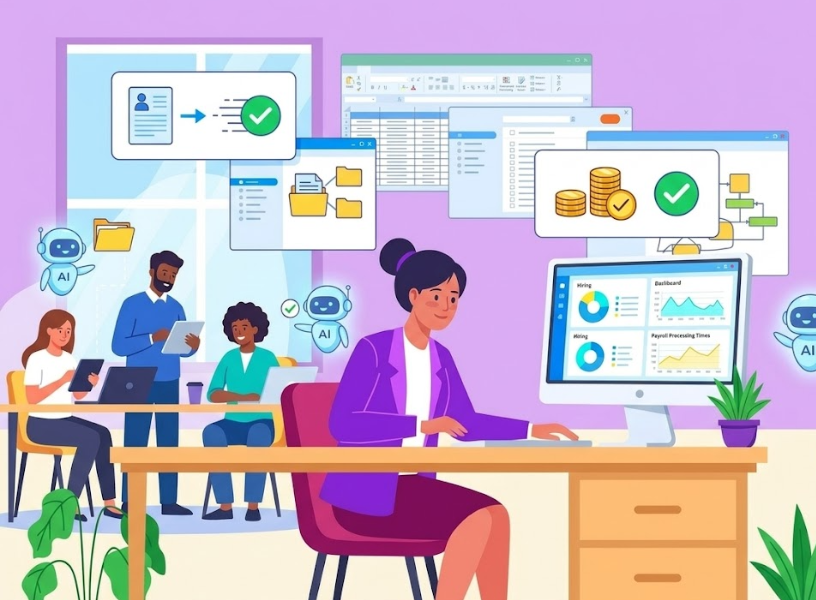
Through HR digital transformation, organizations can automate routine administrative processes while equipping HR teams with tools for workforce analytics, planning, and engagement.
This allows HR leaders to move from operational management to strategic workforce leadership.
As organizations recognize the cumulative impact of outdated HR technology, many are accelerating their investments in modern HR platforms.
These platforms bring together multiple HR functions within a unified ecosystem.
Organizations adopting modern HR technology often report benefits such as:
According to research and industry analysis from Gartner, organizations are increasingly prioritizing digital transformation initiatives that enhance workforce visibility and operational efficiency.
HR technology is no longer viewed solely as an administrative tool. Instead, it is becoming a critical enabler of organizational agility.
Modern HR platforms aim to integrate previously fragmented HR processes into a connected ecosystem.
Rather than operating multiple standalone systems, organizations can integrate key HR functions such as:
This integrated approach allows organizations to maintain a single source of truth for employee data while simplifying HR operations.
It also creates a foundation for advanced capabilities such as predictive workforce analytics, automated workflows, and personalized employee experiences.
The goal is not simply to replace legacy tools but to create a flexible digital HR environment that can evolve with organizational needs.

Many people would say that it is absolute madness to keep on doing the same thing, time after time, expecting to get a different result or for something different to happen.
Hoover Dam and the Grand Canyon: Book yourself a seat on any of the many sightseeing tours available and go and watch the architectural marvel that is Hoover Dam built over the Grand canyon which is also a grand sight to see by itself. Black Canyon is another must see as is Lake Mead which is so beautiful just because it is a body of water all surrounded by desert-like nature. Colorado River:
While looking at the Dam and Canyon is from above, to see the true beauty of the river, you have to go down. The Colorado river is excellent for river-rafting and water sports, but you do not have to take part if it is not your thing. Instead just sit back and enjoy another of nature’s marvels.


.webp)
Who can not resist going to one of the old towns like those in the Western gun slinging movies? Your destination needs to be Old Nevada. There you can delight in an old western town right in the middle of Red Rock Canyon. They host western shootouts too so come prepared, partner! I could go on and on about other attractions like the theme park in Circus Circus, the Gilcrease Nature Sanctuary, the Henderson Bird Viewing Preserve and Mt. Charleston but I think you get the picture. In Las Vegas and hate gambling? Do not despair. Just go out and have some clean un-gambling fun.
Many organizations assume that outdated HR technology merely slows down HR teams. The reality is far broader.
When HR systems fail to evolve, the consequences extend beyond administrative delays. Legacy technology can quietly increase operational costs, create compliance exposure, limit data visibility, and negatively impact employee experience.
According to insights from Deloitte’s human capital research, HR technology has evolved from being a back-office tool to a strategic platform that shapes how organizations manage talent, workforce planning, and business agility.
Yet many organizations still rely on legacy systems built in a different era. The cost of maintaining these systems rarely appears as a single expense. Instead, it accumulates gradually across processes, decision-making, and workforce outcomes.
As organizations increasingly prioritize efficiency, compliance, and employee experience, the hidden costs of outdated HR technology are becoming harder to ignore.
Despite the rapid evolution of digital workplace tools, many organizations continue to operate with a mix of spreadsheets, fragmented applications, and ageing HR software.
These legacy HR systems may still perform basic administrative functions such as maintaining employee records or processing payroll. However, they often struggle to support modern workforce expectations or integrate with other business systems.
In many cases, HR teams rely on multiple disconnected tools to manage recruitment, payroll, performance management, and employee data. This fragmented environment leads to duplicated data entry, inconsistent records, and limited system visibility.
Research and insights from organizations like the Society for Human Resource Management highlight that many HR teams today operate with overly complex technology stacks, where overlapping systems create inefficiencies rather than improving productivity.
Legacy systems also come with ongoing maintenance requirements, limited scalability, and increasing security risks. As organizations grow and workforce structures evolve, these systems often struggle to keep up.
This is where the hidden costs begin to accumulate.
One of the most immediate impacts of outdated HR technology is operational inefficiency.
When HR systems lack automation capabilities, routine processes often become manual tasks. Over time, these manual workflows significantly increase administrative workload.
Common examples include:
Each of these tasks may seem minor on its own. However, across hundreds or thousands of employees, the time required to manage them grows quickly.
Manual HR processes also increase the likelihood of errors, particularly when information must be entered multiple times across different systems.
This is why many organizations are investing in HR automation. Automated workflows for payroll, attendance tracking, and approvals can reduce administrative overhead while improving process accuracy.
By reducing reliance on manual HR processes, organizations can redirect HR teams toward more strategic initiatives such as workforce development and talent planning.
Compliance is another area where outdated HR technology creates hidden risks.
Payroll regulations, tax structures, and labour laws continue to evolve across many regions. Legacy systems that rely on manual updates or fragmented tools can struggle to keep up with these regulatory changes.
When payroll and compliance processes are managed through disconnected systems, several challenges emerge:
Studies on payroll operations indicate that correcting payroll errors can carry high operational costs and administrative effort.
Global payroll insights indicate that payroll complexity is continuing to rise as organizations expand across geographies and adopt more flexible work structures.
Modern payroll automation and integrated HR compliance systems help address these challenges by consolidating payroll rules, statutory updates, and reporting within a single platform.
This reduces the likelihood of compliance gaps while simplifying the reporting and audit preparation.
Data-driven decision-making is becoming increasingly important in modern organizations.
Leaders today rely on workforce insights to make informed decisions about hiring strategies, talent development, workforce planning, and retention initiatives.
However, outdated HR systems often create fragmented data environments. Employee information may be spread across multiple tools, spreadsheets, and legacy platforms.
Without integrated HR reporting and analytics, organizations struggle to answer important questions such as:
According to research and advisory insights from Gartner, HR leaders are increasingly prioritizing workforce analytics as a key investment area.
Integrated HR analytics platforms allow organizations to consolidate workforce data, generate real-time dashboards, and identify trends that may otherwise remain hidden.
Without this visibility, organizations may make decisions based on incomplete information.
Employee expectations around workplace technology have evolved significantly.
Today’s workforce is accustomed to seamless digital experiences in everyday life - from banking apps to online services. Naturally, employees expect the same level of convenience when interacting with workplace systems.
Legacy HR technology often falls short in this area.
Employees may experience:
These friction points can create frustration across the workforce.
Modern employee self-service software allows employees to manage many HR tasks independently - from applying for leave to accessing payslips or updating personal information.
Self-service capabilities not only improve convenience for employees but also reduce the administrative workload for HR teams.
Improving the digital employee experience has become an important factor in workforce engagement and retention.
Perhaps the highest hidden cost of outdated HR technology is strategic limitation.
When HR teams spend most of their time managing administrative tasks, their ability to contribute to organizational strategy becomes limited.
Instead of focusing on talent development, workforce planning, and culture initiatives, HR teams remain occupied with operational processes.
Insights from Deloitte emphasizes that modern HR functions are increasingly expected to play a strategic role in organizational growth and transformation.
Achieving this shift requires the right technological foundation.
Through HR digital transformation, organizations can automate routine administrative processes while equipping HR teams with tools for workforce analytics, planning, and engagement.
This allows HR leaders to move from operational management to strategic workforce leadership.
As organizations recognize the cumulative impact of outdated HR technology, many are accelerating their investments in modern HR platforms.
These platforms bring together multiple HR functions within a unified ecosystem.
Organizations adopting modern HR technology often report benefits such as:
According to research and industry analysis from Gartner, organizations are increasingly prioritizing digital transformation initiatives that enhance workforce visibility and operational efficiency.
HR technology is no longer viewed solely as an administrative tool. Instead, it is becoming a critical enabler of organizational agility.
Modern HR platforms aim to integrate previously fragmented HR processes into a connected ecosystem.
Rather than operating multiple standalone systems, organizations can integrate key HR functions such as:
This integrated approach allows organizations to maintain a single source of truth for employee data while simplifying HR operations.
It also creates a foundation for advanced capabilities such as predictive workforce analytics, automated workflows, and personalized employee experiences.
The goal is not simply to replace legacy tools but to create a flexible digital HR environment that can evolve with organizational needs.


.webp)


.webp)

Passionately focused on people and fostering relationships for over 25 Years