

Attending a trade show can be a very effective method of promoting your company and its products. And one of the most effective ways to optimize your trade show display and increase traffic to your booth is through the use of banner stands.

Balamani
Author
AI is rapidly changing how HR teams hire, manage and support employees. From screening candidates and answering employee queries to automating routine HR tasks, AI HR software is becoming a core part of modern HR technology strategies.
However, Many vendors now market AI as a standard feature, making it difficult for HR leaders to distinguish between meaningful innovation and marketing claims.
If you're evaluating AI HR software, focus less on the number of AI features and more on how the platform improves business outcomes, integrates with your existing HR ecosystem and supports responsible AI adoption.
Here's what to look for before deciding.
The first question isn't "Which platform has the best AI?" It's "What problem are we trying to solve?"
AI should address specific HR challenges such as:
• Reducing administrative work
• Improving recruitment efficiency
• Enhancing employee self-service
• Supporting managers with faster decisions
• Delivering better workforce insights
Without clearly defined objectives, organisations often invest in technology that adds complexity instead of solving real HR problems.
The best AI HR software supports HR teams throughout the employee lifecycle rather than focusing on a single process.
Look for AI capabilities across areas such as:
• Candidate sourcing and matching
• Resume screening
• Interview scheduling
• Job description creation
• Employee self-service chatbots
• Leave and attendance assistance
• HR knowledge search
• Workforce analytics and reporting
Rather than asking what AI features are available, ask how they improve speed, accuracy and employee experience.
AI works best when combined with effective HR automation.
For example, AI can recommend candidates, but automated workflows ensure interview invitations are sent, approvals are completed and onboarding tasks are triggered without manual intervention.
When comparing platforms, evaluate whether they can automate:
• Recruitment approvals
• Leave requests
• Employee onboarding
• Document generation
• Performance review reminders
• HR helpdesk enquiries
Automation reduces repetitive work, allowing HR teams to focus on strategic priorities instead of administrative tasks.
As AI becomes more involved in hiring and people operations, transparency becomes increasingly important.
When reviewing vendors, ask:
• How are AI recommendations generated?
• Can HR teams review or override recommendations?
• Is there visibility into why candidates are ranked?
• How is employee and candidate data protected?
• What safeguards exist to minimise bias?
Responsible AI is about maintaining human oversight while using technology to improve decision-making.
AI is only as effective as the data it can access.
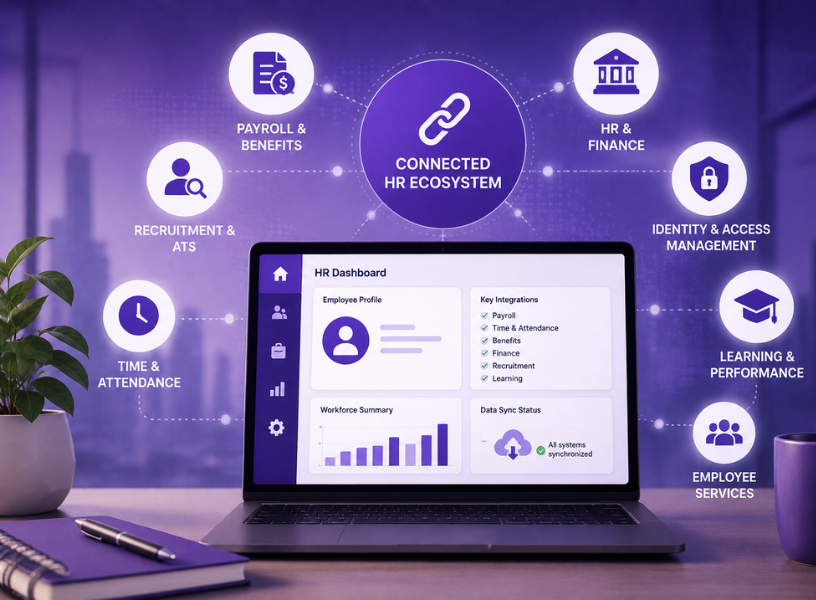
Your software should integrate with existing human resources technology, including:
• HRIS
• Payroll
• Time and attendance
• Learning management
• Performance management
• Recruitment platforms
• Employee engagement tools
Integrated systems eliminate duplicate data entry and enable AI to generate more accurate insights based on complete employee information.
Many organisations begin their AI journey with recruitment, but long-term value extends well beyond hiring.
The most effective intelligent HR systems apply AI across the employee lifecycle, supporting workforce planning, employee development, performance management and HR service delivery. Consider whether the platform can evolve alongside your organisation's future HR priorities rather than solving only today's recruitment challenges.
Choosing software with broader AI capabilities can reduce the need to invest in multiple point solutions later.
7. Evaluate Reporting and Workforce Insights
AI should help HR leaders make better decisions
Look for reporting capabilities that provide insights into:
• Recruitment performance
• Employee turnover
• Skills gaps
• Workforce productivity
• Absenteeism trends
• Manager response times
• HR service requests
The ability to identify patterns and predict workforce trends can help organisations move from reactive HR management to proactive workforce planning.
The success of AI depends on how well employees and managers adopt it.
During your HR vendor comparison, ask how the solution will be implemented and supported.
Important considerations include:
• Implementation timelines
• Change management support
• Employee training
• AI configuration options
• Ongoing product updates
• Customer success services
Even the most advanced AI platform will deliver limited value if users don't trust it or understand how to use it effectively.
Product demonstrations often focus on impressive AI features, but the right questions reveal how well the software performs in everyday HR operations.
• Which HR processes are genuinely AI-powered?
• How does the platform protect employee data?
• Can AI recommendations be reviewed or overridden?
• What integrations are available?
• How is AI performance measured and improved?
• What support is available after implementation?
These conversations will help separate practical AI capabilities from marketing claims.
Choosing AI HR software is about selecting a solution that aligns with your HR strategy, integrates with your existing technology and delivers measurable improvements in productivity, employee experience and decision-making.
As AI continues to reshape human resources technology, organisations should prioritise platforms that combine intelligent automation with transparency, strong governance and the flexibility to support future business needs.
By evaluating vendors against real business outcomes rather than feature lists, HR leaders can invest in AI solutions that create lasting value across hiring and people operations.
AI HR software uses artificial intelligence to automate and enhance HR processes such as recruitment, employee support, workforce analytics, onboarding and performance management. It helps HR teams improve efficiency while making more informed decisions.
HR automation follows predefined workflows to complete repetitive tasks, such as approving leave or sending onboarding emails. AI goes a step further by analysing data, identifying patterns and making recommendations, such as matching candidates to jobs or answering employee questions.
Look for tools that support candidate sourcing, resume screening, interview scheduling, recruitment analytics and responsible AI practices. It's also important to understand how AI recommendations are generated and whether recruiters maintain decision-making control.
A successful HR vendor comparison should consider business outcomes, AI capabilities, integration, automation, security, implementation support, reporting and long-term scalability
No. AI is designed to support HR professionals by automating repetitive tasks and providing insights. Strategic decisions involving hiring, employee development and workforce planning still require human judgement, oversight and empathy.

Many people would say that it is absolute madness to keep on doing the same thing, time after time, expecting to get a different result or for something different to happen.
Hoover Dam and the Grand Canyon: Book yourself a seat on any of the many sightseeing tours available and go and watch the architectural marvel that is Hoover Dam built over the Grand canyon which is also a grand sight to see by itself. Black Canyon is another must see as is Lake Mead which is so beautiful just because it is a body of water all surrounded by desert-like nature. Colorado River:
While looking at the Dam and Canyon is from above, to see the true beauty of the river, you have to go down. The Colorado river is excellent for river-rafting and water sports, but you do not have to take part if it is not your thing. Instead just sit back and enjoy another of nature’s marvels.


.webp)
Who can not resist going to one of the old towns like those in the Western gun slinging movies? Your destination needs to be Old Nevada. There you can delight in an old western town right in the middle of Red Rock Canyon. They host western shootouts too so come prepared, partner! I could go on and on about other attractions like the theme park in Circus Circus, the Gilcrease Nature Sanctuary, the Henderson Bird Viewing Preserve and Mt. Charleston but I think you get the picture. In Las Vegas and hate gambling? Do not despair. Just go out and have some clean un-gambling fun.
AI is rapidly changing how HR teams hire, manage and support employees. From screening candidates and answering employee queries to automating routine HR tasks, AI HR software is becoming a core part of modern HR technology strategies.
However, Many vendors now market AI as a standard feature, making it difficult for HR leaders to distinguish between meaningful innovation and marketing claims.
If you're evaluating AI HR software, focus less on the number of AI features and more on how the platform improves business outcomes, integrates with your existing HR ecosystem and supports responsible AI adoption.
Here's what to look for before deciding.
The first question isn't "Which platform has the best AI?" It's "What problem are we trying to solve?"
AI should address specific HR challenges such as:
• Reducing administrative work
• Improving recruitment efficiency
• Enhancing employee self-service
• Supporting managers with faster decisions
• Delivering better workforce insights
Without clearly defined objectives, organisations often invest in technology that adds complexity instead of solving real HR problems.
The best AI HR software supports HR teams throughout the employee lifecycle rather than focusing on a single process.
Look for AI capabilities across areas such as:
• Candidate sourcing and matching
• Resume screening
• Interview scheduling
• Job description creation
• Employee self-service chatbots
• Leave and attendance assistance
• HR knowledge search
• Workforce analytics and reporting
Rather than asking what AI features are available, ask how they improve speed, accuracy and employee experience.
AI works best when combined with effective HR automation.
For example, AI can recommend candidates, but automated workflows ensure interview invitations are sent, approvals are completed and onboarding tasks are triggered without manual intervention.
When comparing platforms, evaluate whether they can automate:
• Recruitment approvals
• Leave requests
• Employee onboarding
• Document generation
• Performance review reminders
• HR helpdesk enquiries
Automation reduces repetitive work, allowing HR teams to focus on strategic priorities instead of administrative tasks.
As AI becomes more involved in hiring and people operations, transparency becomes increasingly important.
When reviewing vendors, ask:
• How are AI recommendations generated?
• Can HR teams review or override recommendations?
• Is there visibility into why candidates are ranked?
• How is employee and candidate data protected?
• What safeguards exist to minimise bias?
Responsible AI is about maintaining human oversight while using technology to improve decision-making.
AI is only as effective as the data it can access.
Your software should integrate with existing human resources technology, including:
• HRIS
• Payroll
• Time and attendance
• Learning management
• Performance management
• Recruitment platforms
• Employee engagement tools
Integrated systems eliminate duplicate data entry and enable AI to generate more accurate insights based on complete employee information.
Many organisations begin their AI journey with recruitment, but long-term value extends well beyond hiring.
The most effective intelligent HR systems apply AI across the employee lifecycle, supporting workforce planning, employee development, performance management and HR service delivery. Consider whether the platform can evolve alongside your organisation's future HR priorities rather than solving only today's recruitment challenges.
Choosing software with broader AI capabilities can reduce the need to invest in multiple point solutions later.
7. Evaluate Reporting and Workforce Insights
AI should help HR leaders make better decisions
Look for reporting capabilities that provide insights into:
• Recruitment performance
• Employee turnover
• Skills gaps
• Workforce productivity
• Absenteeism trends
• Manager response times
• HR service requests
The ability to identify patterns and predict workforce trends can help organisations move from reactive HR management to proactive workforce planning.
The success of AI depends on how well employees and managers adopt it.
During your HR vendor comparison, ask how the solution will be implemented and supported.
Important considerations include:
• Implementation timelines
• Change management support
• Employee training
• AI configuration options
• Ongoing product updates
• Customer success services
Even the most advanced AI platform will deliver limited value if users don't trust it or understand how to use it effectively.
Product demonstrations often focus on impressive AI features, but the right questions reveal how well the software performs in everyday HR operations.
• Which HR processes are genuinely AI-powered?
• How does the platform protect employee data?
• Can AI recommendations be reviewed or overridden?
• What integrations are available?
• How is AI performance measured and improved?
• What support is available after implementation?
These conversations will help separate practical AI capabilities from marketing claims.
Choosing AI HR software is about selecting a solution that aligns with your HR strategy, integrates with your existing technology and delivers measurable improvements in productivity, employee experience and decision-making.
As AI continues to reshape human resources technology, organisations should prioritise platforms that combine intelligent automation with transparency, strong governance and the flexibility to support future business needs.
By evaluating vendors against real business outcomes rather than feature lists, HR leaders can invest in AI solutions that create lasting value across hiring and people operations.
AI HR software uses artificial intelligence to automate and enhance HR processes such as recruitment, employee support, workforce analytics, onboarding and performance management. It helps HR teams improve efficiency while making more informed decisions.
HR automation follows predefined workflows to complete repetitive tasks, such as approving leave or sending onboarding emails. AI goes a step further by analysing data, identifying patterns and making recommendations, such as matching candidates to jobs or answering employee questions.
Look for tools that support candidate sourcing, resume screening, interview scheduling, recruitment analytics and responsible AI practices. It's also important to understand how AI recommendations are generated and whether recruiters maintain decision-making control.
A successful HR vendor comparison should consider business outcomes, AI capabilities, integration, automation, security, implementation support, reporting and long-term scalability
No. AI is designed to support HR professionals by automating repetitive tasks and providing insights. Strategic decisions involving hiring, employee development and workforce planning still require human judgement, oversight and empathy.


.webp)


.webp)

Passionately focused on people and fostering relationships for over 25 Years