
Attending a trade show can be a very effective method of promoting your company and its products. And one of the most effective ways to optimize your trade show display and increase traffic to your booth is through the use of banner stands.

Balamani
Author
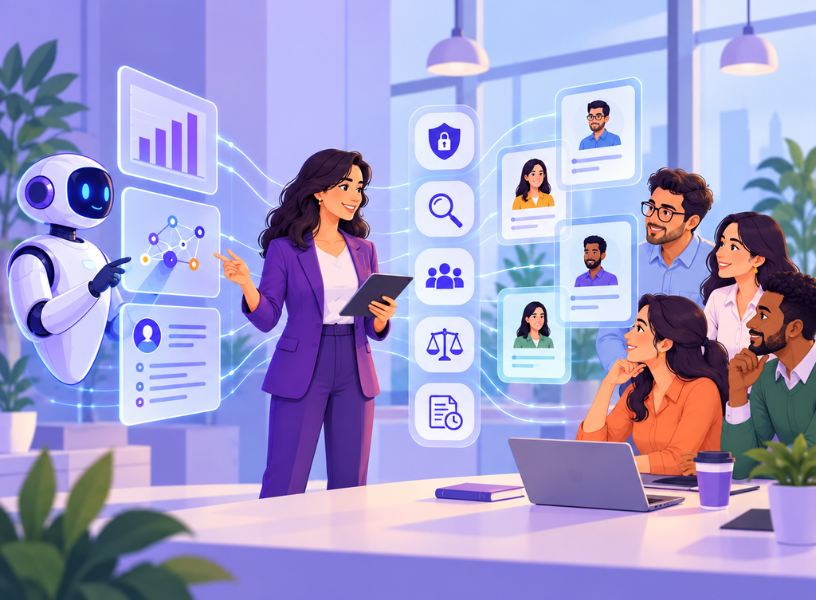
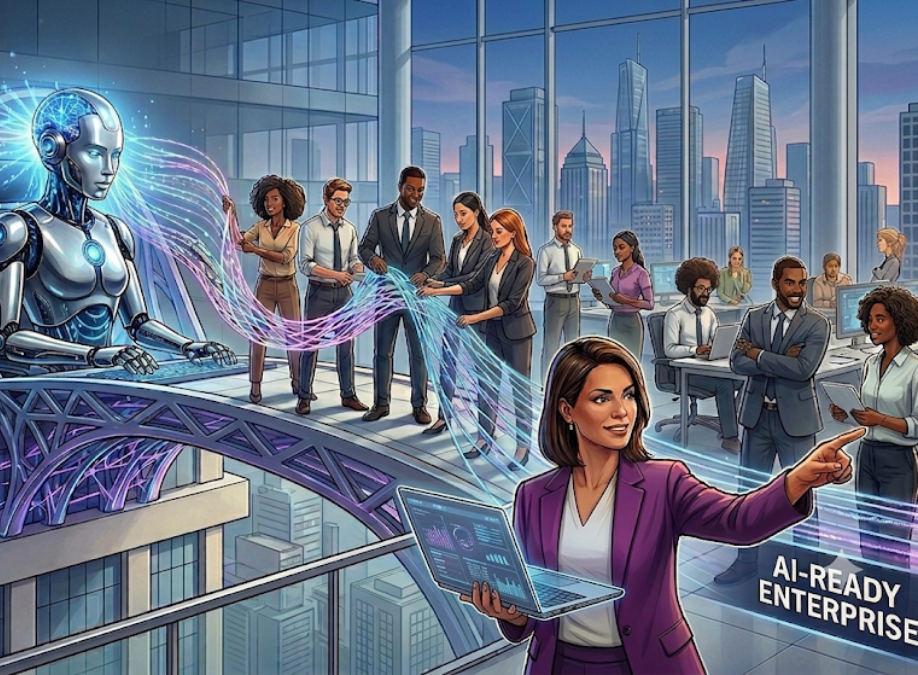
Most enterprises have an AI strategy. Far fewer have a people strategy built around it. HR's role in AI transformation is foundational. The function that owns trust, capability development, accountability, and culture is the same function that determines whether AI investments deliver lasting value or remain expensive, underused tools.
HR leads AI transformation by bridging the gap between technology deployment and the human behaviours, trust, capability that is needed to make AI actually work inside an organization. Without HR owning workforce readiness, governance, and adoption, even the most sophisticated AI investments stall after deployment.
The pattern is consistent across industries and geographies. Organizations invest significantly in AI capability, the tools, the data pipelines, the vendor relationships and then underestimate the organizational work required to make that investment perform.
Deployment is the starting point. What comes after - adoption, trust, behavioural change, governance is where the real work begins. And that work is deeply, fundamentally human.
Employees question how AI influences decisions that affect them. Managers are uncertain about when to rely on AI outputs. Leaders often lack consistent frameworks for fairness, accountability, and governance across the enterprise. Without addressing these, AI remains trapped in pilots. And overcoming that resistance is a workforce transformation challenge.
In organizations where AI is scaling successfully, HR is defining how AI integrates into the operating model of the enterprise, influencing how work is executed, how decisions are made, and how performance is assessed. Several characteristics consistently define these organizations.
Employees have a clear understanding of where AI is applied, how decisions are derived, and what safeguards are in place. This transparency is a pre-requisite for enterprise-wide adoption.
AI-driven decisions are continuously evaluated across roles, levels, and demographics. This ensures that outcomes remain equitable and defensible, while positioning fairness as an operational standard.
AI is integrated into workflows, role expectations, and managerial practices. The focus shifts from tool availability to consistent, outcome-driven usage across the organization.
AI literacy is directly linked to performance, progression, and workforce planning. Organizations that lead in this space are building a workforce capable of translating AI outputs into sustained business value.
Clear boundaries are established between automation and accountability. This ensures that AI enhances decision-making without diluting leadership responsibility or organizational context.
Governance is where AI ambition either takes root or quietly unravels. Deploying AI without a structured governance framework creates a compounding risk, inconsistent decisions, and unexplained outcomes, eroding employee trust before adoption can scale.
HR is the only function positioned to own this layer with credibility. It brings together the workforce perspective, the equity mandate, and the cross-functional influence needed to establish governance that is both operable and respected.
In practice, this means defining clear standards for how AI-driven decisions are reviewed, who holds accountability when outcomes are contested, and how frequently tools are audited for fairness and accuracy. Governance, when led by HR, becomes a strategic enabler, the foundation that gives leadership the confidence to scale AI broadly and assures employees that their interests remain central to how it is applied.
In the age of AI, that work is getting more consequential than it has ever been. The role of HR moves beyond traditional talent management in an AI-driven enterprise. The focus now is on orchestrating capability by ensuring that the right skills are available, applied, and developed in line with business priorities.
The starting point is straightforward. Start leading it as a workforce transformation. That means owning governance, building trust intentionally, embedding adoption into how work actually gets done, and making AI literacy a measurable strategic capability
The enterprises that position HR accordingly will build something durable. And they are already starting.

Many people would say that it is absolute madness to keep on doing the same thing, time after time, expecting to get a different result or for something different to happen.
Hoover Dam and the Grand Canyon: Book yourself a seat on any of the many sightseeing tours available and go and watch the architectural marvel that is Hoover Dam built over the Grand canyon which is also a grand sight to see by itself. Black Canyon is another must see as is Lake Mead which is so beautiful just because it is a body of water all surrounded by desert-like nature. Colorado River:
While looking at the Dam and Canyon is from above, to see the true beauty of the river, you have to go down. The Colorado river is excellent for river-rafting and water sports, but you do not have to take part if it is not your thing. Instead just sit back and enjoy another of nature’s marvels.


.webp)
Who can not resist going to one of the old towns like those in the Western gun slinging movies? Your destination needs to be Old Nevada. There you can delight in an old western town right in the middle of Red Rock Canyon. They host western shootouts too so come prepared, partner! I could go on and on about other attractions like the theme park in Circus Circus, the Gilcrease Nature Sanctuary, the Henderson Bird Viewing Preserve and Mt. Charleston but I think you get the picture. In Las Vegas and hate gambling? Do not despair. Just go out and have some clean un-gambling fun.
Most enterprises have an AI strategy. Far fewer have a people strategy built around it. HR's role in AI transformation is foundational. The function that owns trust, capability development, accountability, and culture is the same function that determines whether AI investments deliver lasting value or remain expensive, underused tools.
HR leads AI transformation by bridging the gap between technology deployment and the human behaviours, trust, capability that is needed to make AI actually work inside an organization. Without HR owning workforce readiness, governance, and adoption, even the most sophisticated AI investments stall after deployment.
The pattern is consistent across industries and geographies. Organizations invest significantly in AI capability, the tools, the data pipelines, the vendor relationships and then underestimate the organizational work required to make that investment perform.
Deployment is the starting point. What comes after - adoption, trust, behavioural change, governance is where the real work begins. And that work is deeply, fundamentally human.
Employees question how AI influences decisions that affect them. Managers are uncertain about when to rely on AI outputs. Leaders often lack consistent frameworks for fairness, accountability, and governance across the enterprise. Without addressing these, AI remains trapped in pilots. And overcoming that resistance is a workforce transformation challenge.
In organizations where AI is scaling successfully, HR is defining how AI integrates into the operating model of the enterprise, influencing how work is executed, how decisions are made, and how performance is assessed. Several characteristics consistently define these organizations.
Employees have a clear understanding of where AI is applied, how decisions are derived, and what safeguards are in place. This transparency is a pre-requisite for enterprise-wide adoption.
AI-driven decisions are continuously evaluated across roles, levels, and demographics. This ensures that outcomes remain equitable and defensible, while positioning fairness as an operational standard.
AI is integrated into workflows, role expectations, and managerial practices. The focus shifts from tool availability to consistent, outcome-driven usage across the organization.
AI literacy is directly linked to performance, progression, and workforce planning. Organizations that lead in this space are building a workforce capable of translating AI outputs into sustained business value.
Clear boundaries are established between automation and accountability. This ensures that AI enhances decision-making without diluting leadership responsibility or organizational context.
Governance is where AI ambition either takes root or quietly unravels. Deploying AI without a structured governance framework creates a compounding risk, inconsistent decisions, and unexplained outcomes, eroding employee trust before adoption can scale.
HR is the only function positioned to own this layer with credibility. It brings together the workforce perspective, the equity mandate, and the cross-functional influence needed to establish governance that is both operable and respected.
In practice, this means defining clear standards for how AI-driven decisions are reviewed, who holds accountability when outcomes are contested, and how frequently tools are audited for fairness and accuracy. Governance, when led by HR, becomes a strategic enabler, the foundation that gives leadership the confidence to scale AI broadly and assures employees that their interests remain central to how it is applied.
In the age of AI, that work is getting more consequential than it has ever been. The role of HR moves beyond traditional talent management in an AI-driven enterprise. The focus now is on orchestrating capability by ensuring that the right skills are available, applied, and developed in line with business priorities.
The starting point is straightforward. Start leading it as a workforce transformation. That means owning governance, building trust intentionally, embedding adoption into how work actually gets done, and making AI literacy a measurable strategic capability
The enterprises that position HR accordingly will build something durable. And they are already starting.


.webp)


.webp)

Passionately focused on people and fostering relationships for over 25 Years