

Attending a trade show can be a very effective method of promoting your company and its products. And one of the most effective ways to optimize your trade show display and increase traffic to your booth is through the use of banner stands.

Balamani
Author
"Will AI replace my recruiters?" It's the question every HR leader is sitting with right now. The short answer is no. The longer answer is interesting and far more urgent.
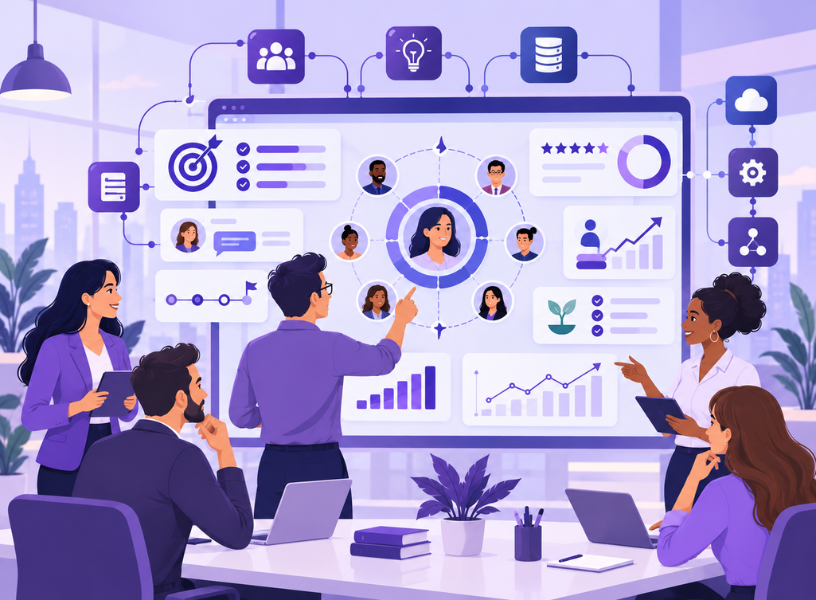
AI agents are redefining how much of the HR team's time is spent on coordination, copying and pasting, calendar management, and follow-up emails. The work your best recruiters hate but do anyway because there's no one else to do it. AI can handle the grunt work while HR can focus on operational tasks and a smooth candidate journey.
A study from Demandsage in 2026 shows AI recruitment is transforming global hiring, with 87% of companies now using AI-driven tools. Over 65% of recruiters have already implemented AI, primarily to save time (44%), improve candidate sourcing (58%), and reduce hiring costs by up to 30% per hire.
High5test recruitment statistic shows that 64% of HR teams using AI apply it specifically to recruiting, making talent acquisition the single largest use case in all of HR.
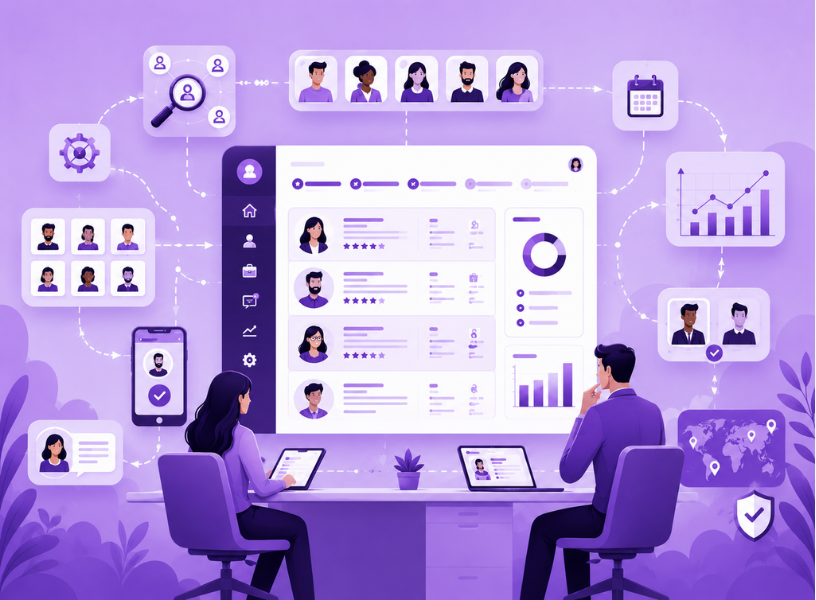
AI agents can understand goals and act autonomously to accomplish them. For example: If the goal is "fill this senior engineer role in six weeks," the AI autonomously work through the steps to get there. Sourcing candidates from multiple databases. Drafting personalised outreach. Screening applications against job criteria. Scheduling interviews. Following up when a candidate goes quiet.
LinkedIn's Hiring Assistant, launched in late 2024, does exactly this. A recruiter describes the role in plain language, and the agent generates the job description, surfaces matched candidates, sends personalised messages, and handles scheduling. Early adopters are saving 4+ hours per role, reviewing 62% fewer profiles, and seeing a 69% improvement in InMail acceptance rates.
The market has already moved beyond asking whether AI can conduct first-round interviews. Startups are already running voice- and video-based AI screening at enterprise scale, with investors pouring millions into the category.
"The question in AI for Acquisition is whether your team is ready to do the work, AI cannot."
Short Answer is No. AI can handle the repetitive HR tasks while HRs can focus on metrics that matters. Here is what AI agents are genuinely poor at and will remain poor at for the foreseeable future: reading a room. Understanding why a star candidate is hesitating. Knowing when a hiring manager's "must-have" is a "nice-to-have." Building the kind of trust that makes a candidate choose your company over a competing offer that pays more.
Relationship work. Judgment calls. Cultural intuition. The things your strongest recruiters do that no one has ever written a rubric for are where the value of a human-in-the-loop becomes irreplaceable and, frankly, more visible than it has ever been.
When AI handles the volume, your recruiters handle the meaning.
The best candidates have options. They decide whether your company is worth their time within the first few interactions, and right now, most recruiting processes are failing that test. Delayed responses, generic outreach, and radio silence after interviews are brand moments that candidates talk about.
AI agents fix the parts of acquisition that erode trust the fastest. Every applicant gets a response. Follow-ups happen on time. Interview scheduling does not take four emails back and forth. The candidate who applied on a Sunday evening hears back before Monday morning. That consistency, at scale, is what builds an employer brand that talent wants to engage with.
Candidate experience is now among the top three factors influencing offer acceptance ranking alongside compensation and growth opportunity. The organisations using AI agents are leaving candidates with a better impression of the company, whether they get the job or not. That is the kind of brand equity that shows up in referrals, Glassdoor ratings, and the quality of your next hire.
Gartner predicts that by 2027, 75% of hiring processes will include certifications and tests for workplace AI proficiency. The recruiters who learn to direct, audit, and partner with AI agents will become significantly more productive and more valuable. The ones who wait for clarity will find the market has moved on without them.
The tools exist. The use cases are proven. The gap is in process readiness, data readiness, and the willingness to redesign recruiting roles for humans
“Your best recruiter's calendar are replaceable. Start there.”
No. AI automates repetitive tasks such as sourcing, screening, scheduling, and follow-ups. Recruiters remain essential for relationship building, hiring decisions, negotiation, and assessing cultural fit.
AI agents assist with candidate sourcing, resume screening, interview scheduling, candidate communication, and recruitment analytics, helping recruiters focus on higher-value work.
AI helps reduce administrative work, improve hiring speed, enhance candidate experience, and increase recruiter productivity.
Yes. AI enables faster responses, timely follow-ups, automated scheduling, and consistent communication throughout the hiring process.
AI will become a standard part of recruitment, handle routine tasks while enabling recruiters to focus on strategy, relationships, and decision-making.

Many people would say that it is absolute madness to keep on doing the same thing, time after time, expecting to get a different result or for something different to happen.
Hoover Dam and the Grand Canyon: Book yourself a seat on any of the many sightseeing tours available and go and watch the architectural marvel that is Hoover Dam built over the Grand canyon which is also a grand sight to see by itself. Black Canyon is another must see as is Lake Mead which is so beautiful just because it is a body of water all surrounded by desert-like nature. Colorado River:
While looking at the Dam and Canyon is from above, to see the true beauty of the river, you have to go down. The Colorado river is excellent for river-rafting and water sports, but you do not have to take part if it is not your thing. Instead just sit back and enjoy another of nature’s marvels.


.webp)
Who can not resist going to one of the old towns like those in the Western gun slinging movies? Your destination needs to be Old Nevada. There you can delight in an old western town right in the middle of Red Rock Canyon. They host western shootouts too so come prepared, partner! I could go on and on about other attractions like the theme park in Circus Circus, the Gilcrease Nature Sanctuary, the Henderson Bird Viewing Preserve and Mt. Charleston but I think you get the picture. In Las Vegas and hate gambling? Do not despair. Just go out and have some clean un-gambling fun.
"Will AI replace my recruiters?" It's the question every HR leader is sitting with right now. The short answer is no. The longer answer is interesting and far more urgent.
AI agents are redefining how much of the HR team's time is spent on coordination, copying and pasting, calendar management, and follow-up emails. The work your best recruiters hate but do anyway because there's no one else to do it. AI can handle the grunt work while HR can focus on operational tasks and a smooth candidate journey.
A study from Demandsage in 2026 shows AI recruitment is transforming global hiring, with 87% of companies now using AI-driven tools. Over 65% of recruiters have already implemented AI, primarily to save time (44%), improve candidate sourcing (58%), and reduce hiring costs by up to 30% per hire.
High5test recruitment statistic shows that 64% of HR teams using AI apply it specifically to recruiting, making talent acquisition the single largest use case in all of HR.
AI agents can understand goals and act autonomously to accomplish them. For example: If the goal is "fill this senior engineer role in six weeks," the AI autonomously work through the steps to get there. Sourcing candidates from multiple databases. Drafting personalised outreach. Screening applications against job criteria. Scheduling interviews. Following up when a candidate goes quiet.
LinkedIn's Hiring Assistant, launched in late 2024, does exactly this. A recruiter describes the role in plain language, and the agent generates the job description, surfaces matched candidates, sends personalised messages, and handles scheduling. Early adopters are saving 4+ hours per role, reviewing 62% fewer profiles, and seeing a 69% improvement in InMail acceptance rates.
The market has already moved beyond asking whether AI can conduct first-round interviews. Startups are already running voice- and video-based AI screening at enterprise scale, with investors pouring millions into the category.
"The question in AI for Acquisition is whether your team is ready to do the work, AI cannot."
Short Answer is No. AI can handle the repetitive HR tasks while HRs can focus on metrics that matters. Here is what AI agents are genuinely poor at and will remain poor at for the foreseeable future: reading a room. Understanding why a star candidate is hesitating. Knowing when a hiring manager's "must-have" is a "nice-to-have." Building the kind of trust that makes a candidate choose your company over a competing offer that pays more.
Relationship work. Judgment calls. Cultural intuition. The things your strongest recruiters do that no one has ever written a rubric for are where the value of a human-in-the-loop becomes irreplaceable and, frankly, more visible than it has ever been.
When AI handles the volume, your recruiters handle the meaning.
The best candidates have options. They decide whether your company is worth their time within the first few interactions, and right now, most recruiting processes are failing that test. Delayed responses, generic outreach, and radio silence after interviews are brand moments that candidates talk about.
AI agents fix the parts of acquisition that erode trust the fastest. Every applicant gets a response. Follow-ups happen on time. Interview scheduling does not take four emails back and forth. The candidate who applied on a Sunday evening hears back before Monday morning. That consistency, at scale, is what builds an employer brand that talent wants to engage with.
Candidate experience is now among the top three factors influencing offer acceptance ranking alongside compensation and growth opportunity. The organisations using AI agents are leaving candidates with a better impression of the company, whether they get the job or not. That is the kind of brand equity that shows up in referrals, Glassdoor ratings, and the quality of your next hire.
Gartner predicts that by 2027, 75% of hiring processes will include certifications and tests for workplace AI proficiency. The recruiters who learn to direct, audit, and partner with AI agents will become significantly more productive and more valuable. The ones who wait for clarity will find the market has moved on without them.
The tools exist. The use cases are proven. The gap is in process readiness, data readiness, and the willingness to redesign recruiting roles for humans
“Your best recruiter's calendar are replaceable. Start there.”
No. AI automates repetitive tasks such as sourcing, screening, scheduling, and follow-ups. Recruiters remain essential for relationship building, hiring decisions, negotiation, and assessing cultural fit.
AI agents assist with candidate sourcing, resume screening, interview scheduling, candidate communication, and recruitment analytics, helping recruiters focus on higher-value work.
AI helps reduce administrative work, improve hiring speed, enhance candidate experience, and increase recruiter productivity.
Yes. AI enables faster responses, timely follow-ups, automated scheduling, and consistent communication throughout the hiring process.
AI will become a standard part of recruitment, handle routine tasks while enabling recruiters to focus on strategy, relationships, and decision-making.


.webp)


.webp)

Passionately focused on people and fostering relationships for over 25 Years