

Attending a trade show can be a very effective method of promoting your company and its products. And one of the most effective ways to optimize your trade show display and increase traffic to your booth is through the use of banner stands.

Balamani
Author
Choosing Talent Acquisition Software is no longer about finding the platform with the most features. For enterprise HR leaders, the right solution must support complex hiring across multiple business units, integrate seamlessly with existing HR systems, enable responsible AI, and scale as workforce needs evolve.
With hundreds of ATS vendors, recruitment software providers and hiring platforms in the market, comparing feature lists alone can lead to costly mistakes. Instead, organisations should evaluate software against their hiring strategy, operating model and long-term business goals.
Before scheduling product demonstrations, define what success looks like for your organisation.
Ask questions such as:
• How many employees do we hire each year?
• Are we recruiting across multiple countries or business units?
• What are our biggest recruitment bottlenecks?
• Which HR systems must the platform integrate with?
• How do we expect hiring needs to change over the next three to five years?
A clear understanding of your business requirements will narrow your shortlist and prevent you from investing in software that solves today's problems but limits future growth.
Modern talent acquisition software offers far more than applicant tracking. Rather than comparing every feature available, focus on capabilities that will improve recruitment outcomes.
Look for platforms that provide:
• A robust Applicant Tracking System (ATS)
• AI-assisted candidate sourcing and matching
• Candidate Relationship Management (CRM)
• Recruitment analytics and dashboards
• Mobile-friendly candidate experiences
• Interview scheduling and workflow automation
These capabilities should simplify recruitment processes, improve collaboration between recruiters and hiring managers, and enhance the candidate experience.
Many organisations select software based on functionality alone. In reality, long-term success often depends on factors that aren't highlighted in product demonstrations.
Integration - Connects with your HRIS, payroll and other HR systems to eliminate manual work.
Scalability - Supports business growth, acquisitions and hiring across multiple regions.
Configurability - Allows recruitment workflows to adapt without extensive custom development.
AI Governance - Ensures AI recommendations are transparent, explainable and responsibly managed.
Analytics - Provides actionable insights into hiring performance and recruitment efficiency.
Vendor Support - Delivers implementation expertise and ongoing customer support.
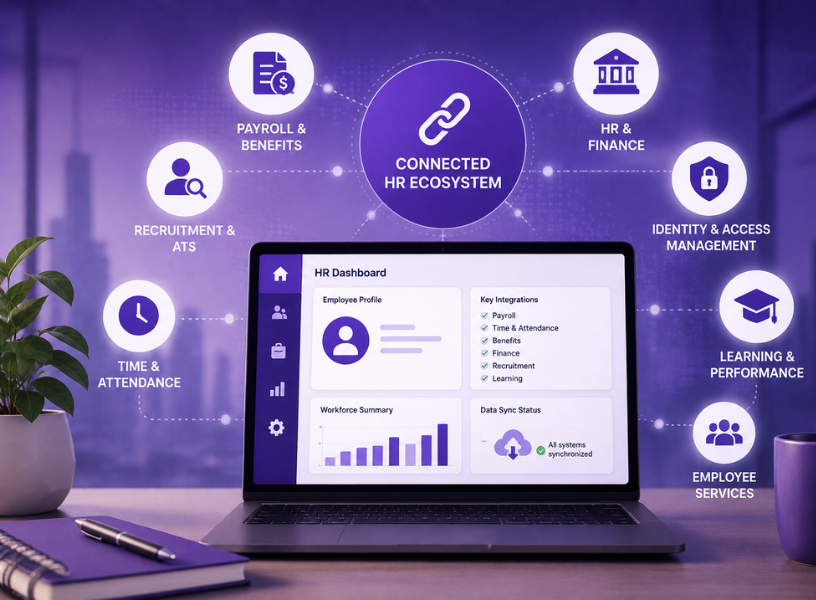
A platform that integrates well with your existing HR ecosystem will typically deliver greater long-term value than one with a larger feature set.
For organisations operating across Asia Pacific, the Middle East and Africa, recruitment processes are rarely identical across every market.
Your software should support:
• Multiple languages
• Local recruitment workflows
• Country-specific approval processes
• Flexible organisational structures
• Regional reporting requirements
Choosing a platform that can accommodate regional differences helps create consistency while allowing local HR teams to meet business and regulatory requirements.
Artificial intelligence is now embedded in many recruitment software solutions, helping recruiters automate repetitive tasks and identify suitable candidates more efficiently.
However, AI should support human decision-making rather than replace it.
• How are AI recommendations generated?
• Can recruiters review and override recommendations?
• How is candidate data protected?
• What controls exist to reduce bias?
• How are AI models updated and monitored?
Responsible AI governance is becoming just as important as AI functionality.
Instead of asking for a feature demonstration, focus on questions that reveal how well the platform supports enterprise recruitment.
For example:
• How long does implementation typically take?
• Which integrations are available out of the box?
• How does the platform support multi-country recruitment?
• What recruitment metrics are available by default?
• How often are new features released?
• What level of implementation and customer support is included?
These questions provide a clearer picture of how the platform will perform after implementation.
Many enterprise HR teams make similar mistakes during software selection.
Avoid:
• Choosing software based solely on features
• Ignoring integration requirements
• Underestimating implementation and change management
• Overlooking future scalability
• Treating AI as the primary differentiator
The best hiring platforms enable better recruitment processes, but they cannot compensate for poorly defined hiring strategies or inconsistent workflows.
Choosing Talent Acquisition Software in 2026 requires a broader perspective than simply comparing features or reviewing "best recruitment tools" lists. Enterprise HR leaders should evaluate how well a platform aligns with business strategy, integrates with existing technology, supports responsible AI and scales across the organisation.
By defining evaluation criteria before engaging ATS vendors, organisations can make more informed decisions and select a solution that delivers long-term value rather than short-term convenience.
Talent acquisition software helps organisations manage the entire recruitment process, from sourcing candidates and managing applications to interviews, offers and hiring analytics. Many enterprise platforms also include AI, candidate relationship management and recruitment marketing capabilities.
An Applicant Tracking System (ATS) primarily manages applications and recruitment workflows. Talent acquisition software typically includes broader capabilities such as candidate sourcing, CRM, AI-powered matching, analytics and workforce planning.
Beyond core recruitment features, enterprises should evaluate integration capabilities, scalability, AI governance, analytics, configurability, implementation support and multi-country functionality.
The most effective approach is to assess vendors against predefined business requirements, implementation capabilities, integration options, security, scalability and long-term product roadmap rather than comparing feature lists alone.
Implementation timelines vary depending on organisational size, integrations and process complexity. Enterprise implementations typically take several months and often follow a phased rollout approach.

Many people would say that it is absolute madness to keep on doing the same thing, time after time, expecting to get a different result or for something different to happen.
Hoover Dam and the Grand Canyon: Book yourself a seat on any of the many sightseeing tours available and go and watch the architectural marvel that is Hoover Dam built over the Grand canyon which is also a grand sight to see by itself. Black Canyon is another must see as is Lake Mead which is so beautiful just because it is a body of water all surrounded by desert-like nature. Colorado River:
While looking at the Dam and Canyon is from above, to see the true beauty of the river, you have to go down. The Colorado river is excellent for river-rafting and water sports, but you do not have to take part if it is not your thing. Instead just sit back and enjoy another of nature’s marvels.


.webp)
Who can not resist going to one of the old towns like those in the Western gun slinging movies? Your destination needs to be Old Nevada. There you can delight in an old western town right in the middle of Red Rock Canyon. They host western shootouts too so come prepared, partner! I could go on and on about other attractions like the theme park in Circus Circus, the Gilcrease Nature Sanctuary, the Henderson Bird Viewing Preserve and Mt. Charleston but I think you get the picture. In Las Vegas and hate gambling? Do not despair. Just go out and have some clean un-gambling fun.
Choosing Talent Acquisition Software is no longer about finding the platform with the most features. For enterprise HR leaders, the right solution must support complex hiring across multiple business units, integrate seamlessly with existing HR systems, enable responsible AI, and scale as workforce needs evolve.
With hundreds of ATS vendors, recruitment software providers and hiring platforms in the market, comparing feature lists alone can lead to costly mistakes. Instead, organisations should evaluate software against their hiring strategy, operating model and long-term business goals.
Before scheduling product demonstrations, define what success looks like for your organisation.
Ask questions such as:
• How many employees do we hire each year?
• Are we recruiting across multiple countries or business units?
• What are our biggest recruitment bottlenecks?
• Which HR systems must the platform integrate with?
• How do we expect hiring needs to change over the next three to five years?
A clear understanding of your business requirements will narrow your shortlist and prevent you from investing in software that solves today's problems but limits future growth.
Modern talent acquisition software offers far more than applicant tracking. Rather than comparing every feature available, focus on capabilities that will improve recruitment outcomes.
Look for platforms that provide:
• A robust Applicant Tracking System (ATS)
• AI-assisted candidate sourcing and matching
• Candidate Relationship Management (CRM)
• Recruitment analytics and dashboards
• Mobile-friendly candidate experiences
• Interview scheduling and workflow automation
These capabilities should simplify recruitment processes, improve collaboration between recruiters and hiring managers, and enhance the candidate experience.
Many organisations select software based on functionality alone. In reality, long-term success often depends on factors that aren't highlighted in product demonstrations.
Integration - Connects with your HRIS, payroll and other HR systems to eliminate manual work.
Scalability - Supports business growth, acquisitions and hiring across multiple regions.
Configurability - Allows recruitment workflows to adapt without extensive custom development.
AI Governance - Ensures AI recommendations are transparent, explainable and responsibly managed.
Analytics - Provides actionable insights into hiring performance and recruitment efficiency.
Vendor Support - Delivers implementation expertise and ongoing customer support.
A platform that integrates well with your existing HR ecosystem will typically deliver greater long-term value than one with a larger feature set.
For organisations operating across Asia Pacific, the Middle East and Africa, recruitment processes are rarely identical across every market.
Your software should support:
• Multiple languages
• Local recruitment workflows
• Country-specific approval processes
• Flexible organisational structures
• Regional reporting requirements
Choosing a platform that can accommodate regional differences helps create consistency while allowing local HR teams to meet business and regulatory requirements.
Artificial intelligence is now embedded in many recruitment software solutions, helping recruiters automate repetitive tasks and identify suitable candidates more efficiently.
However, AI should support human decision-making rather than replace it.
• How are AI recommendations generated?
• Can recruiters review and override recommendations?
• How is candidate data protected?
• What controls exist to reduce bias?
• How are AI models updated and monitored?
Responsible AI governance is becoming just as important as AI functionality.
Instead of asking for a feature demonstration, focus on questions that reveal how well the platform supports enterprise recruitment.
For example:
• How long does implementation typically take?
• Which integrations are available out of the box?
• How does the platform support multi-country recruitment?
• What recruitment metrics are available by default?
• How often are new features released?
• What level of implementation and customer support is included?
These questions provide a clearer picture of how the platform will perform after implementation.
Many enterprise HR teams make similar mistakes during software selection.
Avoid:
• Choosing software based solely on features
• Ignoring integration requirements
• Underestimating implementation and change management
• Overlooking future scalability
• Treating AI as the primary differentiator
The best hiring platforms enable better recruitment processes, but they cannot compensate for poorly defined hiring strategies or inconsistent workflows.
Choosing Talent Acquisition Software in 2026 requires a broader perspective than simply comparing features or reviewing "best recruitment tools" lists. Enterprise HR leaders should evaluate how well a platform aligns with business strategy, integrates with existing technology, supports responsible AI and scales across the organisation.
By defining evaluation criteria before engaging ATS vendors, organisations can make more informed decisions and select a solution that delivers long-term value rather than short-term convenience.
Talent acquisition software helps organisations manage the entire recruitment process, from sourcing candidates and managing applications to interviews, offers and hiring analytics. Many enterprise platforms also include AI, candidate relationship management and recruitment marketing capabilities.
An Applicant Tracking System (ATS) primarily manages applications and recruitment workflows. Talent acquisition software typically includes broader capabilities such as candidate sourcing, CRM, AI-powered matching, analytics and workforce planning.
Beyond core recruitment features, enterprises should evaluate integration capabilities, scalability, AI governance, analytics, configurability, implementation support and multi-country functionality.
The most effective approach is to assess vendors against predefined business requirements, implementation capabilities, integration options, security, scalability and long-term product roadmap rather than comparing feature lists alone.
Implementation timelines vary depending on organisational size, integrations and process complexity. Enterprise implementations typically take several months and often follow a phased rollout approach.


.webp)


.webp)

Passionately focused on people and fostering relationships for over 25 Years