
%20%20-%20hero.png)
Attending a trade show can be a very effective method of promoting your company and its products. And one of the most effective ways to optimize your trade show display and increase traffic to your booth is through the use of banner stands.

Balamani
Author
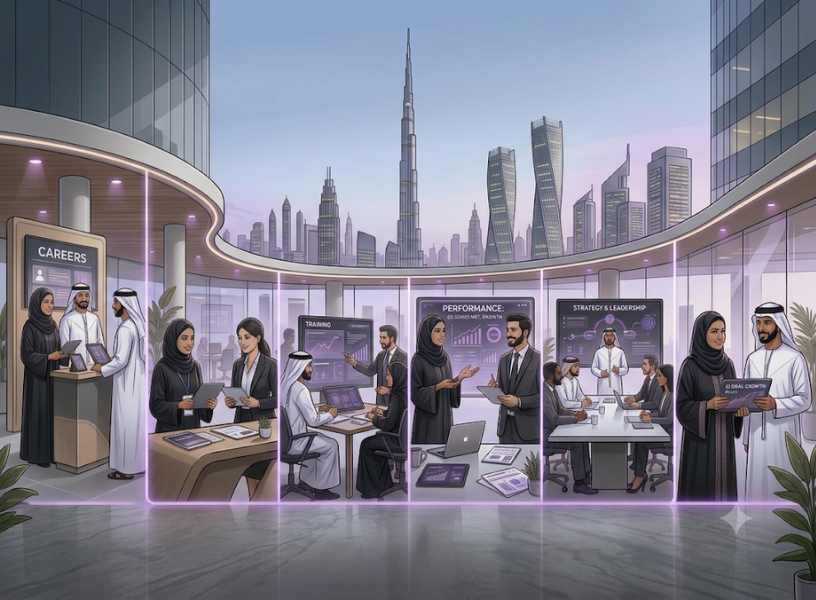
The GCC's workforce landscape is changing rapidly. Economic diversification, digital transformation, workforce nationalization initiatives, and rising employee expectations are redefining how organizations compete for talent. While attracting skilled professionals remains a priority, many organizations are discovering that hiring is only the beginning. Retaining top talent has become the bigger challenge.
Recent workforce research indicates rising employee turnover across the GCC alongside persistent skills shortages, prompting organizations to rethink how they engage, develop, and retain their people. As high-growth sectors such as technology, financial services, healthcare, tourism, and advanced manufacturing continue to expand across the region, demand for skilled professionals is accelerating. Organizations are now competing harder than ever to retain experienced talent in an increasingly dynamic labour market.
Retention influences business continuity, productivity, and long-term growth.
Every resignation carries a cost that extends far beyond recruitment. Organizations lose institutional knowledge, customer relationships, productivity, and team stability. High turnover also places additional pressure on managers and employees who must absorb increased workloads while new hires get up to speed.
The challenge is even more pronounced in the GCC, where expatriate workforces, evolving labour policies, and growing demand for specialized skills create an environment of constant talent movement. At the same time, nationalization initiatives such as Emiratisation and Saudization require organizations to maintain mandated levels of local workforce participation, with non-compliance often resulting in financial penalties and operational constraints. This creates a dual challenge for employers- retaining skilled expatriate talent while also attracting, developing, and retaining national employees in line with regulatory expectations. Organizations must therefore design workforce strategies that balance regulatory compliance withlong-term talent sustainability, ensuring both expatriate and national employees are effectively engaged and developed.
Retaining employees in the GCC requires more than periodic engagement surveys or annual salary reviews. It demands a connected people strategy that reflects the region’s unique workforce dynamics, particularly the balance between nationalization goals and a highly mobile expatriate workforce.
Workforce nationalization initiatives such as Emiratisation have made it essential for organizations to maintain the right mix of local talent. However, retention begins at the hiring stage.
Simply hiring to meet quotas without aligning roles to skills, aspirations, and long-term career pathways often leads to disengagement and early attrition. Organizations must focus on identifying the right Emirati talent, individuals whose capabilities and career goals align with the organization’s needs.
Structured hiring processes, competency-based assessments, and clear career progression plans ensure that Emirati employees are set up for long-term success rather than short-term compliance.
For expatriate employees, retention is closely tied to stability and belonging, especially in times of global and economic uncertainty.
Beyond compensation, expats seek clarity, inclusion, and a sense of purpose within the organization. Transparent communication, inclusive workplace practices, and opportunities for growth help build trust and long-term commitment.
Organizations that actively foster a culture where expatriate employees feel valued and connected are more likely to retain critical skills and maintain workforce continuity.
One of the strongest drivers of employee retention is career progression. Employees who can see a future within the organization are significantly more likely to stay.
Transparent career frameworks, personalized development plans, internal mobility opportunities, and continuous learning initiatives help employees visualize long-term growth instead of seeking it elsewhere.
Recognition should not be reserved for annual awards or performance cycles. Employees who feel valued for their contributions are more engaged and committed to organizational goals.
Timely appreciation, peer recognition, milestone celebrations, and performance-based rewards foster a culture where employees feel their work genuinely matters.
Employees often leave managers before they leave organizations.
Managers play a critical role in shaping employee experiences through coaching, communication, feedback, and support. Equipping leaders with the right tools and insights enables more meaningful conversations that strengthen trust and engagement across teams.
Annual engagement surveys provide valuable insights, but they often arrive too late to address emerging issues.
Continuous listening through pulse surveys, feedback channels, and employee sentiment analysis allows HR teams to identify concerns early and respond before disengagement turns into attrition.
Modern HR is increasingly data-driven.
Instead of reacting after employees resign, organizations can use workforce analytics to identify trends such as declining engagement,stalled career progression, increased absenteeism, or performance changes that may signal retention risks.
These insights allow HR leaders to intervene proactively with targeted development, recognition, or career conversations before valuable talent is lost.
An advanced HCM software plays a critical role in both attracting the right Emirati talent and keeping expatriate employees engaged.
From enabling structured recruitment processes that match candidates to roles more effectively, to providing visibility into career progression, performance, and engagement, an integrated system helps HR teams make informed decisions.
For Emirati employees, it supports better alignment between skills, roles, and development pathways. For expatriates, it enables continuous engagement through feedback, communication, and personalized experiences that reinforce a sense of belonging.
By connecting data across the employee lifecycle, HCM platforms empower organizations to move beyond reactive retention strategies and build a more stable, committed, and future-ready workforce.
Delivering a consistent employee experience across recruitment, onboarding, performance, learning, engagement, and career development is difficult when these processes operate in isolation.
An integrated Human Capital Management (HCM) platform connects every stage of the employee lifecycle, giving HR leaders a holistic view of workforce engagement and enabling timely, data-backed decisions.
With AI-powered insights, personalized learning recommendations, automated feedback mechanisms, performance tracking, and workforce analytics, organizations can move from reactive retention efforts to proactive talent management. Rather than relying on intuition alone, HR leaders gain the visibility needed to understand what drives employee satisfaction and where intervention is most needed.
As the GCC continues its transformation into a global hub for innovation and business growth, organizations will compete not only for customers but also for skilled talent.
The companies that succeed will be those that create workplaces where employees choose to build their careers, not because they have to, but because they want to.
Employee retention is no longer about preventing exits. It is about creating an environment where people can grow, contribute, and thrive over the long term.
For HR leaders, the opportunity is clear. By combining strategic people practices with connected HCM technology, organizations can strengthen employee engagement, improve workforce stability, and build the resilient teams needed to support the GCC's next phase of growth.
1. Why is employee retention important for businesses in the GCC?
Employee retention reduces hiring costs, preserves critical skills, improves productivity, and supports long-term business growth in a competitive talent market.
2. What are the biggest employee retention challenges in the GCC?
Organizations face high talent mobility, skills shortages, workforce nationalization requirements, and rising employee expectations for career growth and workplace experience.
3. How can organizations improve employee retention?
Organizations can improve retention by hiring the right talent, creating career growth opportunities, recognizing employee contributions, developing managers, and listening to employee feedback continuously.
4. How can HR identify employees who are at risk of leaving?
HR teams can use workforce analytics to monitor engagement, performance, absenteeism, and career progression, helping identify retention risks before employees resign.
5. How does HCM software improve employee retention?
HCM software connects recruitment, onboarding, learning, performance, engagement, and workforce analytics to help organizations deliver better employee experiences and make informed retention decisions.

Many people would say that it is absolute madness to keep on doing the same thing, time after time, expecting to get a different result or for something different to happen.
Hoover Dam and the Grand Canyon: Book yourself a seat on any of the many sightseeing tours available and go and watch the architectural marvel that is Hoover Dam built over the Grand canyon which is also a grand sight to see by itself. Black Canyon is another must see as is Lake Mead which is so beautiful just because it is a body of water all surrounded by desert-like nature. Colorado River:
While looking at the Dam and Canyon is from above, to see the true beauty of the river, you have to go down. The Colorado river is excellent for river-rafting and water sports, but you do not have to take part if it is not your thing. Instead just sit back and enjoy another of nature’s marvels.


.webp)
Who can not resist going to one of the old towns like those in the Western gun slinging movies? Your destination needs to be Old Nevada. There you can delight in an old western town right in the middle of Red Rock Canyon. They host western shootouts too so come prepared, partner! I could go on and on about other attractions like the theme park in Circus Circus, the Gilcrease Nature Sanctuary, the Henderson Bird Viewing Preserve and Mt. Charleston but I think you get the picture. In Las Vegas and hate gambling? Do not despair. Just go out and have some clean un-gambling fun.
The GCC's workforce landscape is changing rapidly. Economic diversification, digital transformation, workforce nationalization initiatives, and rising employee expectations are redefining how organizations compete for talent. While attracting skilled professionals remains a priority, many organizations are discovering that hiring is only the beginning. Retaining top talent has become the bigger challenge.
Recent workforce research indicates rising employee turnover across the GCC alongside persistent skills shortages, prompting organizations to rethink how they engage, develop, and retain their people. As high-growth sectors such as technology, financial services, healthcare, tourism, and advanced manufacturing continue to expand across the region, demand for skilled professionals is accelerating. Organizations are now competing harder than ever to retain experienced talent in an increasingly dynamic labour market.
Retention influences business continuity, productivity, and long-term growth.
Every resignation carries a cost that extends far beyond recruitment. Organizations lose institutional knowledge, customer relationships, productivity, and team stability. High turnover also places additional pressure on managers and employees who must absorb increased workloads while new hires get up to speed.
The challenge is even more pronounced in the GCC, where expatriate workforces, evolving labour policies, and growing demand for specialized skills create an environment of constant talent movement. At the same time, nationalization initiatives such as Emiratisation and Saudization require organizations to maintain mandated levels of local workforce participation, with non-compliance often resulting in financial penalties and operational constraints. This creates a dual challenge for employers- retaining skilled expatriate talent while also attracting, developing, and retaining national employees in line with regulatory expectations. Organizations must therefore design workforce strategies that balance regulatory compliance withlong-term talent sustainability, ensuring both expatriate and national employees are effectively engaged and developed.
Retaining employees in the GCC requires more than periodic engagement surveys or annual salary reviews. It demands a connected people strategy that reflects the region’s unique workforce dynamics, particularly the balance between nationalization goals and a highly mobile expatriate workforce.
Workforce nationalization initiatives such as Emiratisation have made it essential for organizations to maintain the right mix of local talent. However, retention begins at the hiring stage.
Simply hiring to meet quotas without aligning roles to skills, aspirations, and long-term career pathways often leads to disengagement and early attrition. Organizations must focus on identifying the right Emirati talent, individuals whose capabilities and career goals align with the organization’s needs.
Structured hiring processes, competency-based assessments, and clear career progression plans ensure that Emirati employees are set up for long-term success rather than short-term compliance.
For expatriate employees, retention is closely tied to stability and belonging, especially in times of global and economic uncertainty.
Beyond compensation, expats seek clarity, inclusion, and a sense of purpose within the organization. Transparent communication, inclusive workplace practices, and opportunities for growth help build trust and long-term commitment.
Organizations that actively foster a culture where expatriate employees feel valued and connected are more likely to retain critical skills and maintain workforce continuity.
One of the strongest drivers of employee retention is career progression. Employees who can see a future within the organization are significantly more likely to stay.
Transparent career frameworks, personalized development plans, internal mobility opportunities, and continuous learning initiatives help employees visualize long-term growth instead of seeking it elsewhere.
Recognition should not be reserved for annual awards or performance cycles. Employees who feel valued for their contributions are more engaged and committed to organizational goals.
Timely appreciation, peer recognition, milestone celebrations, and performance-based rewards foster a culture where employees feel their work genuinely matters.
Employees often leave managers before they leave organizations.
Managers play a critical role in shaping employee experiences through coaching, communication, feedback, and support. Equipping leaders with the right tools and insights enables more meaningful conversations that strengthen trust and engagement across teams.
Annual engagement surveys provide valuable insights, but they often arrive too late to address emerging issues.
Continuous listening through pulse surveys, feedback channels, and employee sentiment analysis allows HR teams to identify concerns early and respond before disengagement turns into attrition.
Modern HR is increasingly data-driven.
Instead of reacting after employees resign, organizations can use workforce analytics to identify trends such as declining engagement,stalled career progression, increased absenteeism, or performance changes that may signal retention risks.
These insights allow HR leaders to intervene proactively with targeted development, recognition, or career conversations before valuable talent is lost.
An advanced HCM software plays a critical role in both attracting the right Emirati talent and keeping expatriate employees engaged.
From enabling structured recruitment processes that match candidates to roles more effectively, to providing visibility into career progression, performance, and engagement, an integrated system helps HR teams make informed decisions.
For Emirati employees, it supports better alignment between skills, roles, and development pathways. For expatriates, it enables continuous engagement through feedback, communication, and personalized experiences that reinforce a sense of belonging.
By connecting data across the employee lifecycle, HCM platforms empower organizations to move beyond reactive retention strategies and build a more stable, committed, and future-ready workforce.
Delivering a consistent employee experience across recruitment, onboarding, performance, learning, engagement, and career development is difficult when these processes operate in isolation.
An integrated Human Capital Management (HCM) platform connects every stage of the employee lifecycle, giving HR leaders a holistic view of workforce engagement and enabling timely, data-backed decisions.
With AI-powered insights, personalized learning recommendations, automated feedback mechanisms, performance tracking, and workforce analytics, organizations can move from reactive retention efforts to proactive talent management. Rather than relying on intuition alone, HR leaders gain the visibility needed to understand what drives employee satisfaction and where intervention is most needed.
As the GCC continues its transformation into a global hub for innovation and business growth, organizations will compete not only for customers but also for skilled talent.
The companies that succeed will be those that create workplaces where employees choose to build their careers, not because they have to, but because they want to.
Employee retention is no longer about preventing exits. It is about creating an environment where people can grow, contribute, and thrive over the long term.
For HR leaders, the opportunity is clear. By combining strategic people practices with connected HCM technology, organizations can strengthen employee engagement, improve workforce stability, and build the resilient teams needed to support the GCC's next phase of growth.
1. Why is employee retention important for businesses in the GCC?
Employee retention reduces hiring costs, preserves critical skills, improves productivity, and supports long-term business growth in a competitive talent market.
2. What are the biggest employee retention challenges in the GCC?
Organizations face high talent mobility, skills shortages, workforce nationalization requirements, and rising employee expectations for career growth and workplace experience.
3. How can organizations improve employee retention?
Organizations can improve retention by hiring the right talent, creating career growth opportunities, recognizing employee contributions, developing managers, and listening to employee feedback continuously.
4. How can HR identify employees who are at risk of leaving?
HR teams can use workforce analytics to monitor engagement, performance, absenteeism, and career progression, helping identify retention risks before employees resign.
5. How does HCM software improve employee retention?
HCM software connects recruitment, onboarding, learning, performance, engagement, and workforce analytics to help organizations deliver better employee experiences and make informed retention decisions.


.webp)


.webp)

Passionately focused on people and fostering relationships for over 25 Years