

Attending a trade show can be a very effective method of promoting your company and its products. And one of the most effective ways to optimize your trade show display and increase traffic to your booth is through the use of banner stands.

Balamani
Author
Selecting Workforce Management Software has become considerably more complex. Today's enterprise organizations expect workforce management platforms to improve productivity, support compliance, optimize labour costs and provide better workforce visibility across multiple locations, business units and employment models.
The challenge is that many WMS vendors appear to offer similar functionality at first glance. Product demonstrations often highlight attractive user interfaces and long feature lists, making it difficult for HR and operations leaders to distinguish meaningful business capabilities from standard functionality.
The most effective evaluation approach starts with organizational outcomes rather than software features. Instead of asking, "Which vendor has the most features?" enterprise HR leaders should ask, "Which capabilities will help us manage our workforce more effectively over the next five to ten years?"
This article outlines nine workforce management capabilities that deserve careful assessment before creating a vendor shortlist.
Workforce Management Software helps organizations plan, deploy, monitor and optimize their workforce. It combines capabilities such as employee scheduling, time and attendance, labour forecasting, workforce analytics and compliance management to ensure organizations have the right people, with the right skills, in the right place, at the right time.
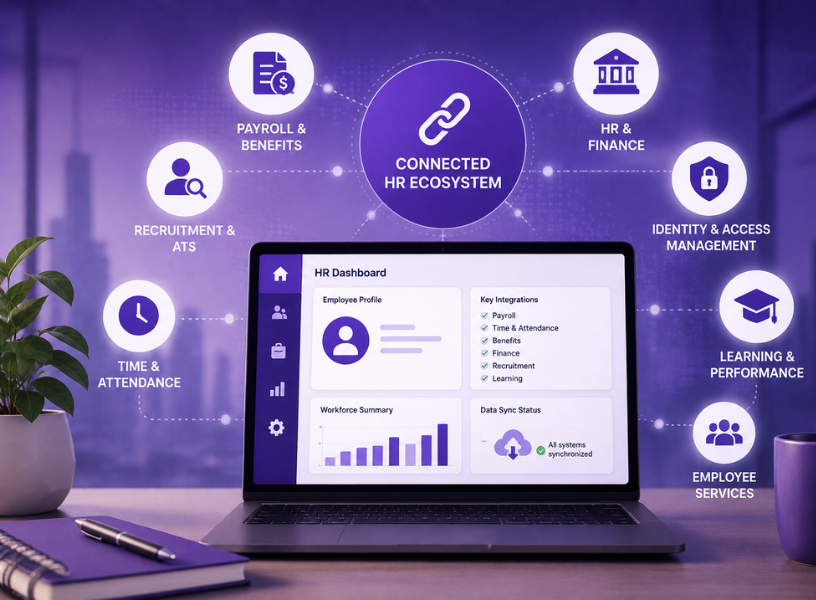
Modern workforce management platforms increasingly integrate with broader HCM software ecosystems, connecting workforce planning with payroll, talent management and employee data.
Many implementation challenges originate long before a contract is signed. Organizations frequently evaluate software based on demonstrations or isolated features without considering how well those capabilities support long-term workforce objectives.
A capability-led assessment helps organizations:
The following nine capabilities provide a practical framework for evaluating workforce management solutions.
Employee scheduling remains one of the most visible workforce management functions, but enterprise organizations require far more than digital shift creation.
Assess whether the platform can:
Scheduling should balance operational efficiency with employee experience rather than treating these objectives as competing priorities.
Reliable time capture forms the foundation of accurate payroll and labour reporting.
Key questions include:
Strong time management capabilities reduce payroll corrections while improving workforce visibility.
Effective labour management extends beyond tracking hours worked.
Leading solutions should help organizations understand:
The objective is not simply reducing labour costs but improving workforce optimization while maintaining customer service and employee wellbeing.
Historical reporting alone is insufficient for enterprise workforce planning.
Evaluate whether the platform can:
Forecasting capabilities become increasingly valuable for organizations managing multiple sites, countries or high-volume frontline workforces.
Employment regulations, working time rules and organizational policies vary significantly across industries and jurisdictions.
Rather than relying on manual oversight, organizations should assess whether the platform can automatically:
Automation reduces administrative effort while supporting more consistent governance.
Reporting is valuable, but actionable analytics deliver greater strategic value.
Look for capabilities that provide:
Analytics should enable HR, finance and operational leaders to make faster, evidence-based workforce decisions.
Technology adoption often depends on everyday usability.
Evaluate how effectively employees and managers can:
An intuitive experience reduces administrative workload while encouraging higher adoption across frontline and desk-based workforces.
Workforce management rarely operates in isolation.
Assess how well the solution integrates with:
Strong integration reduces duplicate data entry, improves reporting consistency and supports a single source of workforce information.
Today's requirements may differ significantly from those five years from now.
Enterprise HR leaders should assess whether WMS vendors can support:
Equally important are implementation methodology, customer support, product roadmap and long-term partnership capability.
Before shortlisting Workforce Management Software, organizations should ensure they have clearly defined:
These criteria create a more objective foundation for comparing vendors.
Many workforce management evaluations become overly focused on product demonstrations rather than operational fit.
Common pitfalls include:
Avoiding these mistakes increases the likelihood of successful implementation and long-term value.
Selecting Workforce Management Software is ultimately a strategic business decision rather than a technology purchase. While many WMS vendors provide similar core functionality, the capabilities that matter most are those that support sustainable workforce optimization, operational resilience and better decision-making.
By evaluating platforms against these nine capabilities, HR leaders can develop clearer decision criteria, compare vendors more consistently and build a shortlist aligned with organizational priorities rather than product marketing.
A structured, capability-led evaluation also creates a stronger foundation for implementation planning, stakeholder alignment and long-term workforce transformation.
There is no single most important capability. Enterprise organizations should evaluate how well the platform combines scheduling, time management, labour management, analytics, compliance and integration to support their operational objectives.
HCM software manages the broader employee lifecycle, including recruitment, payroll, learning and performance. Workforce management focuses on planning, deploying and optimizing employees through capabilities such as scheduling, attendance, forecasting and labour management.
Questions should focus on business capabilities, scalability, integration, analytics, configurability, implementation approach, support model, security and the vendor's ability to meet future workforce requirements rather than simply demonstrating product features.
Modern employee scheduling directly influences labour costs, employee experience, operational efficiency and customer service. Intelligent scheduling also helps organizations respond more effectively to changing business demand.
Technology should support well-designed processes rather than replace them. Organizations should first clarify workforce policies, standardize operational processes, improve data quality, define measurable business outcomes and align stakeholders before selecting a platform.

Many people would say that it is absolute madness to keep on doing the same thing, time after time, expecting to get a different result or for something different to happen.
Hoover Dam and the Grand Canyon: Book yourself a seat on any of the many sightseeing tours available and go and watch the architectural marvel that is Hoover Dam built over the Grand canyon which is also a grand sight to see by itself. Black Canyon is another must see as is Lake Mead which is so beautiful just because it is a body of water all surrounded by desert-like nature. Colorado River:
While looking at the Dam and Canyon is from above, to see the true beauty of the river, you have to go down. The Colorado river is excellent for river-rafting and water sports, but you do not have to take part if it is not your thing. Instead just sit back and enjoy another of nature’s marvels.


.webp)
Who can not resist going to one of the old towns like those in the Western gun slinging movies? Your destination needs to be Old Nevada. There you can delight in an old western town right in the middle of Red Rock Canyon. They host western shootouts too so come prepared, partner! I could go on and on about other attractions like the theme park in Circus Circus, the Gilcrease Nature Sanctuary, the Henderson Bird Viewing Preserve and Mt. Charleston but I think you get the picture. In Las Vegas and hate gambling? Do not despair. Just go out and have some clean un-gambling fun.
Selecting Workforce Management Software has become considerably more complex. Today's enterprise organizations expect workforce management platforms to improve productivity, support compliance, optimize labour costs and provide better workforce visibility across multiple locations, business units and employment models.
The challenge is that many WMS vendors appear to offer similar functionality at first glance. Product demonstrations often highlight attractive user interfaces and long feature lists, making it difficult for HR and operations leaders to distinguish meaningful business capabilities from standard functionality.
The most effective evaluation approach starts with organizational outcomes rather than software features. Instead of asking, "Which vendor has the most features?" enterprise HR leaders should ask, "Which capabilities will help us manage our workforce more effectively over the next five to ten years?"
This article outlines nine workforce management capabilities that deserve careful assessment before creating a vendor shortlist.
Workforce Management Software helps organizations plan, deploy, monitor and optimize their workforce. It combines capabilities such as employee scheduling, time and attendance, labour forecasting, workforce analytics and compliance management to ensure organizations have the right people, with the right skills, in the right place, at the right time.
Modern workforce management platforms increasingly integrate with broader HCM software ecosystems, connecting workforce planning with payroll, talent management and employee data.
Many implementation challenges originate long before a contract is signed. Organizations frequently evaluate software based on demonstrations or isolated features without considering how well those capabilities support long-term workforce objectives.
A capability-led assessment helps organizations:
The following nine capabilities provide a practical framework for evaluating workforce management solutions.
Employee scheduling remains one of the most visible workforce management functions, but enterprise organizations require far more than digital shift creation.
Assess whether the platform can:
Scheduling should balance operational efficiency with employee experience rather than treating these objectives as competing priorities.
Reliable time capture forms the foundation of accurate payroll and labour reporting.
Key questions include:
Strong time management capabilities reduce payroll corrections while improving workforce visibility.
Effective labour management extends beyond tracking hours worked.
Leading solutions should help organizations understand:
The objective is not simply reducing labour costs but improving workforce optimization while maintaining customer service and employee wellbeing.
Historical reporting alone is insufficient for enterprise workforce planning.
Evaluate whether the platform can:
Forecasting capabilities become increasingly valuable for organizations managing multiple sites, countries or high-volume frontline workforces.
Employment regulations, working time rules and organizational policies vary significantly across industries and jurisdictions.
Rather than relying on manual oversight, organizations should assess whether the platform can automatically:
Automation reduces administrative effort while supporting more consistent governance.
Reporting is valuable, but actionable analytics deliver greater strategic value.
Look for capabilities that provide:
Analytics should enable HR, finance and operational leaders to make faster, evidence-based workforce decisions.
Technology adoption often depends on everyday usability.
Evaluate how effectively employees and managers can:
An intuitive experience reduces administrative workload while encouraging higher adoption across frontline and desk-based workforces.
Workforce management rarely operates in isolation.
Assess how well the solution integrates with:
Strong integration reduces duplicate data entry, improves reporting consistency and supports a single source of workforce information.
Today's requirements may differ significantly from those five years from now.
Enterprise HR leaders should assess whether WMS vendors can support:
Equally important are implementation methodology, customer support, product roadmap and long-term partnership capability.
Before shortlisting Workforce Management Software, organizations should ensure they have clearly defined:
These criteria create a more objective foundation for comparing vendors.
Many workforce management evaluations become overly focused on product demonstrations rather than operational fit.
Common pitfalls include:
Avoiding these mistakes increases the likelihood of successful implementation and long-term value.
Selecting Workforce Management Software is ultimately a strategic business decision rather than a technology purchase. While many WMS vendors provide similar core functionality, the capabilities that matter most are those that support sustainable workforce optimization, operational resilience and better decision-making.
By evaluating platforms against these nine capabilities, HR leaders can develop clearer decision criteria, compare vendors more consistently and build a shortlist aligned with organizational priorities rather than product marketing.
A structured, capability-led evaluation also creates a stronger foundation for implementation planning, stakeholder alignment and long-term workforce transformation.
There is no single most important capability. Enterprise organizations should evaluate how well the platform combines scheduling, time management, labour management, analytics, compliance and integration to support their operational objectives.
HCM software manages the broader employee lifecycle, including recruitment, payroll, learning and performance. Workforce management focuses on planning, deploying and optimizing employees through capabilities such as scheduling, attendance, forecasting and labour management.
Questions should focus on business capabilities, scalability, integration, analytics, configurability, implementation approach, support model, security and the vendor's ability to meet future workforce requirements rather than simply demonstrating product features.
Modern employee scheduling directly influences labour costs, employee experience, operational efficiency and customer service. Intelligent scheduling also helps organizations respond more effectively to changing business demand.
Technology should support well-designed processes rather than replace them. Organizations should first clarify workforce policies, standardize operational processes, improve data quality, define measurable business outcomes and align stakeholders before selecting a platform.


.webp)


.webp)

Passionately focused on people and fostering relationships for over 25 Years