

Attending a trade show can be a very effective method of promoting your company and its products. And one of the most effective ways to optimize your trade show display and increase traffic to your booth is through the use of banner stands.

Balamani
Author
Selecting payroll software is one of the most important technology decisions for HR leaders in the Philippines. While many payroll vendors offer similar features, not every solution is built to handle the realities of Philippine payroll.
Beyond processing salaries, payroll software must manage statutory deductions, complex pay rules, government reporting and changing compliance requirements. As organisations grow, manual calculations and disconnected systems become increasingly difficult to manage, increasing the risk of payroll errors and compliance issues.
Compliance should be the first checkpoint in any payroll software evaluation.
A solution may offer an excellent user experience, but if it cannot keep pace with Philippine payroll regulations, it will create unnecessary work for HR and payroll teams.
Your payroll software should support key statutory requirements, including:
• Bureau of Internal Revenue (BIR) withholding tax
• Social Security System (SSS) contributions
• PhilHealth premiums
• Pag-IBIG Fund contributions
• 13th Month Pay calculations
• Taxable and non-taxable earnings
• Government payroll reports
Equally important is how the vendor manages regulatory updates. Ask whether statutory changes are delivered automatically or require manual configuration. The less manual intervention required, the lower the compliance risk.
Payroll in the Philippines is far more complex than calculating monthly salaries.
Employees may receive different rates depending on when they work, how long they work, and whether the day falls on a holiday or scheduled rest day. A payroll solution should automatically apply these rules instead of relying on spreadsheets or manual calculations.
Look for software that supports:
• Regular pay
• Overtime pay
• Night Shift Differential (NSD)
• Rest day premiums
• Regular Holiday pay
• Special Non-Working Day pay
• Double Holiday scenarios
• Holiday overtime
• Holiday work on a rest day
• Shift differentials
• Bonuses and incentives
• Leave conversions and encashments
• Retroactive salary adjustments
• Final pay processing
These calculations become particularly challenging during periods such as Holy Week, where multiple holiday classifications, overtime and night shifts may overlap. Automating these scenarios reduces payroll errors and saves payroll teams significant processing time.
Many payroll errors originate before payroll processing even begins.
Missing attendance records, unapproved overtime, incorrect shift schedules or outdated employee information can all result in inaccurate salary calculations.
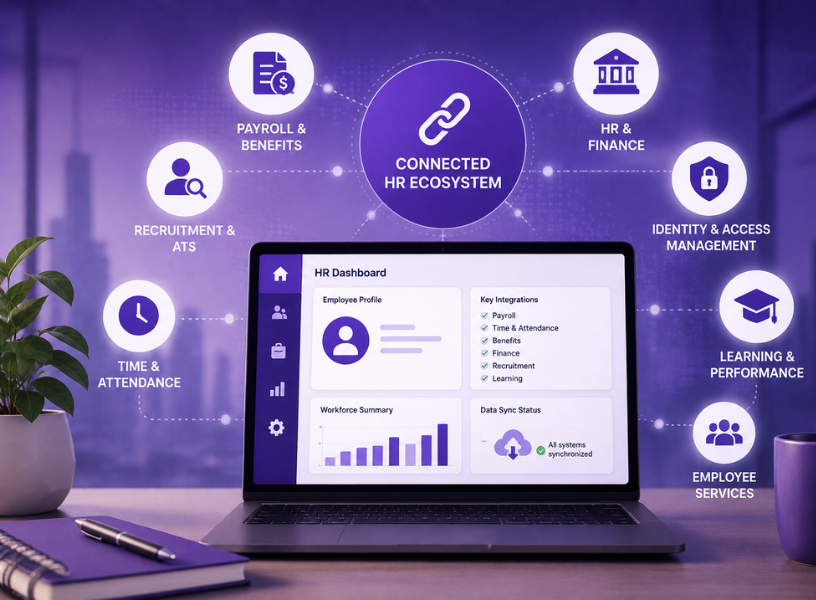
For this reason, payroll software should integrate seamlessly with:
• Time and attendance
• Leave management
• Shift scheduling
• Overtime approvals
• Employee master records
• HR information systems
• Finance or ERP platforms
An integrated system reduces duplicate data entry, improves payroll accuracy and gives HR teams greater confidence in every payroll cycle.
Every payroll cycle includes exceptions that cannot be ignored.
Employees join midway through the month, resign, receive promotions, earn bonuses or require payroll corrections. These situations often consume more payroll time than standard salary processing.
Ask vendors how their platform manages:
• Mid-cycle joiners and leavers
• Salary revisions
• Retroactive payments
• Off-cycle payroll
• Multiple payroll groups
• Back pay and payroll corrections
• Final pay settlements
The easier these scenarios are to manage, the less manual effort your payroll team will spend each month.
Payroll reporting should do more than generate payslips.
HR and finance teams rely on payroll data for statutory submissions, audits and workforce planning. Strong reporting capabilities also reduce the need to export data into spreadsheets for further analysis.
Look for reports covering:
• BIR, SSS, PhilHealth and Pag-IBIG submissions
• Payroll journals
• Cost centre reporting
• Overtime analysis
• Employee compensation summaries
• Leave liabilities
• Audit trails
Good reporting transforms payroll from an administrative function into a valuable source of business insight.
Payroll contains some of the most confidential information within an organisation, making security a critical evaluation criterion.
Beyond basic password protection, the software should provide:
• Role-based user access
• Multi-factor authentication
• Approval workflows
• Audit logs
• Data encryption
• Secure backups
It should also support compliance with the Philippine Data Privacy Act to help organisations protect employee information and strengthen payroll governance.
Today's employees expect digital access to payroll information whenever they need it.
Modern payroll software should include self-service capabilities that allow employees to securely access their payroll information without contacting HR.
Useful employee self-service features include:
• Digital payslips
• Payroll history
• Tax documents
• Employee compensation records
• Personal information updates
• Payroll enquiry requests
This improves transparency while reducing routine administrative work for HR teams.
Choosing the right software is only part of the decision. Successful implementation is equally important.
When comparing payroll vendors, understand how they support customers throughout implementation and beyond.
Ask questions such as:
• Who configures payroll rules?
• How is historical payroll data migrated?
• What training is included?
• How are statutory updates managed?
• What support is available after go-live?
A vendor with strong local payroll expertise can help organisations adapt more quickly to regulatory changes and minimise implementation risks.
Payroll requirements rarely stay the same.
As organisations expand, they often add new business entities, locations, payroll policies and HR processes. Selecting scalable payroll software today can prevent costly system replacements in the future.
The platform should support:
• Business growth
• Multiple legal entities
• Different employee categories
• Additional payroll policies
• Integration with broader human resources software
• Future HR transformation initiatives
Thinking beyond today's payroll requirements will help ensure your investment continues to deliver value as your organisation evolves.
A product demonstration can showcase features, but asking the right questions will reveal how well the platform performs in real-world payroll environments.
Consider asking:
• How are BIR, SSS, PhilHealth and Pag-IBIG updates managed?
• Can the software automatically calculate holiday pay, overtime and night shift differentials?
• How does the platform process final pay and retroactive salary adjustments?
• Which HR and finance systems integrate with the software?
• What reports are available for audits and statutory submissions?
• What implementation and post-go-live support is included?
These conversations often provide greater insight than comparing feature checklists alone.
Choosing payroll software in the Philippines isn't about selecting the platform with the longest feature list. It's about finding a solution that accurately manages statutory compliance, automates complex payroll calculations and supports the way your organisation operates.
By evaluating payroll vendors against real operational requirements,from holiday pay and statutory deductions to integrations, reporting and implementation support,HR leaders can make more informed decisions and build a payroll process that is accurate, compliant and ready to scale with the business.
Businesses should prioritise compliance with BIR, SSS, PhilHealth and Pag-IBIG requirements, along with automation, reporting, integration, security and scalability.
Localisation ensures the software can accurately manage statutory deductions, tax calculations, government reporting and payroll practices specific to the Philippines, reducing compliance risks.
Payroll software automates salary calculations, statutory deductions, reporting and employee records, helping HR teams reduce manual work, improve accuracy and process payroll more efficiently.
Yes. Integration with human resources software helps automate attendance, leave, employee records and onboarding, reducing duplicate data entry and improving payroll accuracy.
Rather than comparing feature lists alone, organisations should evaluate vendors based on compliance capabilities, implementation support, integrations, security, reporting, scalability and customer service.

Many people would say that it is absolute madness to keep on doing the same thing, time after time, expecting to get a different result or for something different to happen.
Hoover Dam and the Grand Canyon: Book yourself a seat on any of the many sightseeing tours available and go and watch the architectural marvel that is Hoover Dam built over the Grand canyon which is also a grand sight to see by itself. Black Canyon is another must see as is Lake Mead which is so beautiful just because it is a body of water all surrounded by desert-like nature. Colorado River:
While looking at the Dam and Canyon is from above, to see the true beauty of the river, you have to go down. The Colorado river is excellent for river-rafting and water sports, but you do not have to take part if it is not your thing. Instead just sit back and enjoy another of nature’s marvels.


.webp)
Who can not resist going to one of the old towns like those in the Western gun slinging movies? Your destination needs to be Old Nevada. There you can delight in an old western town right in the middle of Red Rock Canyon. They host western shootouts too so come prepared, partner! I could go on and on about other attractions like the theme park in Circus Circus, the Gilcrease Nature Sanctuary, the Henderson Bird Viewing Preserve and Mt. Charleston but I think you get the picture. In Las Vegas and hate gambling? Do not despair. Just go out and have some clean un-gambling fun.
Selecting payroll software is one of the most important technology decisions for HR leaders in the Philippines. While many payroll vendors offer similar features, not every solution is built to handle the realities of Philippine payroll.
Beyond processing salaries, payroll software must manage statutory deductions, complex pay rules, government reporting and changing compliance requirements. As organisations grow, manual calculations and disconnected systems become increasingly difficult to manage, increasing the risk of payroll errors and compliance issues.
Compliance should be the first checkpoint in any payroll software evaluation.
A solution may offer an excellent user experience, but if it cannot keep pace with Philippine payroll regulations, it will create unnecessary work for HR and payroll teams.
Your payroll software should support key statutory requirements, including:
• Bureau of Internal Revenue (BIR) withholding tax
• Social Security System (SSS) contributions
• PhilHealth premiums
• Pag-IBIG Fund contributions
• 13th Month Pay calculations
• Taxable and non-taxable earnings
• Government payroll reports
Equally important is how the vendor manages regulatory updates. Ask whether statutory changes are delivered automatically or require manual configuration. The less manual intervention required, the lower the compliance risk.
Payroll in the Philippines is far more complex than calculating monthly salaries.
Employees may receive different rates depending on when they work, how long they work, and whether the day falls on a holiday or scheduled rest day. A payroll solution should automatically apply these rules instead of relying on spreadsheets or manual calculations.
Look for software that supports:
• Regular pay
• Overtime pay
• Night Shift Differential (NSD)
• Rest day premiums
• Regular Holiday pay
• Special Non-Working Day pay
• Double Holiday scenarios
• Holiday overtime
• Holiday work on a rest day
• Shift differentials
• Bonuses and incentives
• Leave conversions and encashments
• Retroactive salary adjustments
• Final pay processing
These calculations become particularly challenging during periods such as Holy Week, where multiple holiday classifications, overtime and night shifts may overlap. Automating these scenarios reduces payroll errors and saves payroll teams significant processing time.
Many payroll errors originate before payroll processing even begins.
Missing attendance records, unapproved overtime, incorrect shift schedules or outdated employee information can all result in inaccurate salary calculations.
For this reason, payroll software should integrate seamlessly with:
• Time and attendance
• Leave management
• Shift scheduling
• Overtime approvals
• Employee master records
• HR information systems
• Finance or ERP platforms
An integrated system reduces duplicate data entry, improves payroll accuracy and gives HR teams greater confidence in every payroll cycle.
Every payroll cycle includes exceptions that cannot be ignored.
Employees join midway through the month, resign, receive promotions, earn bonuses or require payroll corrections. These situations often consume more payroll time than standard salary processing.
Ask vendors how their platform manages:
• Mid-cycle joiners and leavers
• Salary revisions
• Retroactive payments
• Off-cycle payroll
• Multiple payroll groups
• Back pay and payroll corrections
• Final pay settlements
The easier these scenarios are to manage, the less manual effort your payroll team will spend each month.
Payroll reporting should do more than generate payslips.
HR and finance teams rely on payroll data for statutory submissions, audits and workforce planning. Strong reporting capabilities also reduce the need to export data into spreadsheets for further analysis.
Look for reports covering:
• BIR, SSS, PhilHealth and Pag-IBIG submissions
• Payroll journals
• Cost centre reporting
• Overtime analysis
• Employee compensation summaries
• Leave liabilities
• Audit trails
Good reporting transforms payroll from an administrative function into a valuable source of business insight.
Payroll contains some of the most confidential information within an organisation, making security a critical evaluation criterion.
Beyond basic password protection, the software should provide:
• Role-based user access
• Multi-factor authentication
• Approval workflows
• Audit logs
• Data encryption
• Secure backups
It should also support compliance with the Philippine Data Privacy Act to help organisations protect employee information and strengthen payroll governance.
Today's employees expect digital access to payroll information whenever they need it.
Modern payroll software should include self-service capabilities that allow employees to securely access their payroll information without contacting HR.
Useful employee self-service features include:
• Digital payslips
• Payroll history
• Tax documents
• Employee compensation records
• Personal information updates
• Payroll enquiry requests
This improves transparency while reducing routine administrative work for HR teams.
Choosing the right software is only part of the decision. Successful implementation is equally important.
When comparing payroll vendors, understand how they support customers throughout implementation and beyond.
Ask questions such as:
• Who configures payroll rules?
• How is historical payroll data migrated?
• What training is included?
• How are statutory updates managed?
• What support is available after go-live?
A vendor with strong local payroll expertise can help organisations adapt more quickly to regulatory changes and minimise implementation risks.
Payroll requirements rarely stay the same.
As organisations expand, they often add new business entities, locations, payroll policies and HR processes. Selecting scalable payroll software today can prevent costly system replacements in the future.
The platform should support:
• Business growth
• Multiple legal entities
• Different employee categories
• Additional payroll policies
• Integration with broader human resources software
• Future HR transformation initiatives
Thinking beyond today's payroll requirements will help ensure your investment continues to deliver value as your organisation evolves.
A product demonstration can showcase features, but asking the right questions will reveal how well the platform performs in real-world payroll environments.
Consider asking:
• How are BIR, SSS, PhilHealth and Pag-IBIG updates managed?
• Can the software automatically calculate holiday pay, overtime and night shift differentials?
• How does the platform process final pay and retroactive salary adjustments?
• Which HR and finance systems integrate with the software?
• What reports are available for audits and statutory submissions?
• What implementation and post-go-live support is included?
These conversations often provide greater insight than comparing feature checklists alone.
Choosing payroll software in the Philippines isn't about selecting the platform with the longest feature list. It's about finding a solution that accurately manages statutory compliance, automates complex payroll calculations and supports the way your organisation operates.
By evaluating payroll vendors against real operational requirements,from holiday pay and statutory deductions to integrations, reporting and implementation support,HR leaders can make more informed decisions and build a payroll process that is accurate, compliant and ready to scale with the business.
Businesses should prioritise compliance with BIR, SSS, PhilHealth and Pag-IBIG requirements, along with automation, reporting, integration, security and scalability.
Localisation ensures the software can accurately manage statutory deductions, tax calculations, government reporting and payroll practices specific to the Philippines, reducing compliance risks.
Payroll software automates salary calculations, statutory deductions, reporting and employee records, helping HR teams reduce manual work, improve accuracy and process payroll more efficiently.
Yes. Integration with human resources software helps automate attendance, leave, employee records and onboarding, reducing duplicate data entry and improving payroll accuracy.
Rather than comparing feature lists alone, organisations should evaluate vendors based on compliance capabilities, implementation support, integrations, security, reporting, scalability and customer service.


.webp)


.webp)

Passionately focused on people and fostering relationships for over 25 Years