
Attending a trade show can be a very effective method of promoting your company and its products. And one of the most effective ways to optimize your trade show display and increase traffic to your booth is through the use of banner stands.

Balamani
Author
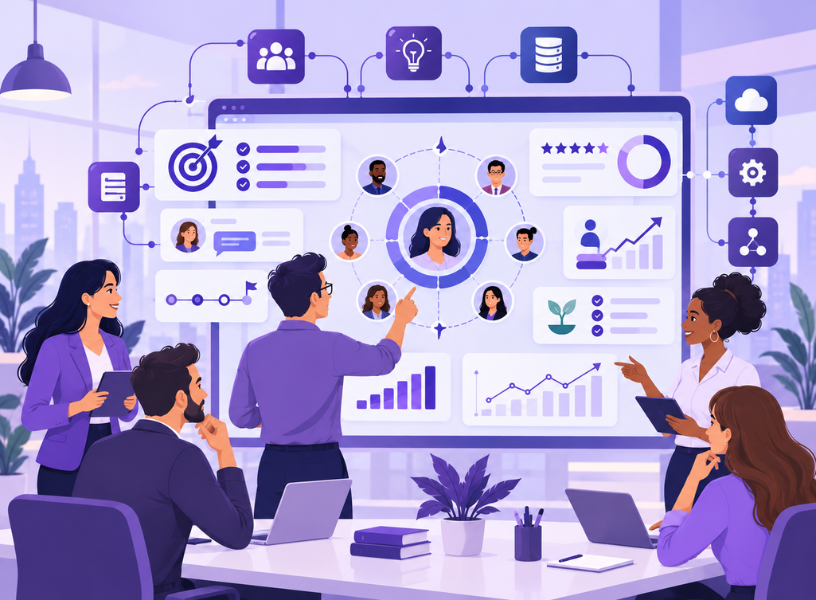
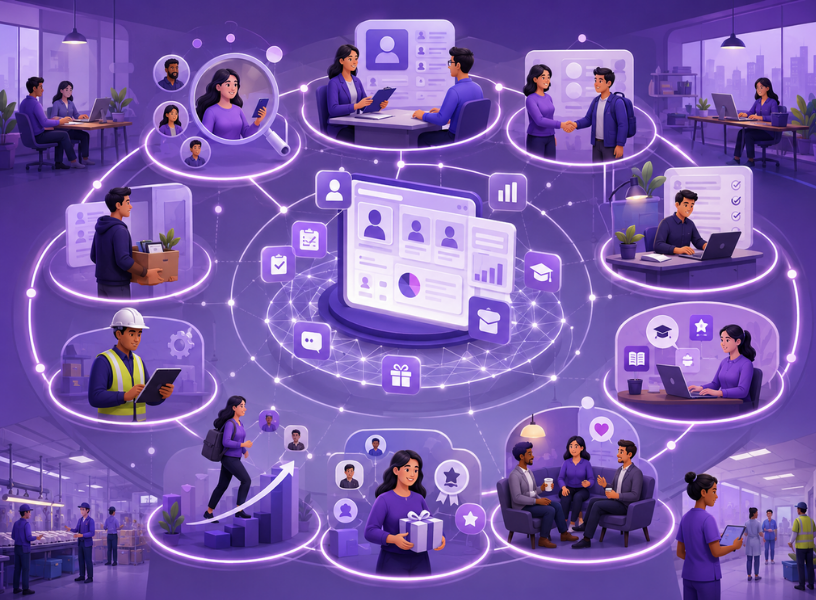
Employee lifecycle management covers the stages an employee moves through, from attraction and recruitment to onboarding, development, retention and off boarding.
For enterprise HR teams, digitising these stages can reduce manual work, improve employee experience and give HR better visibility across the workforce. But digitisation should not mean buying a separate tool for every HR activity.
The better approach is to identify where employee journeys are fragmented, then use technology to connect the processes, people and data involved.
Here are the nine employee lifecycle stages HR teams should consider digitising in 2026.
The employee lifecycle begins before recruitment.
Digital careers pages, talent communities, employer-brand content and candidate communications can help organisations build relationships with prospective employees.
For enterprise HR teams, the priority should be creating a consistent experience between the employer brand and the recruitment process, particularly when hiring across multiple markets.
Recruitment is often affected by disconnected systems and manual hand-offs.
Digitising requisitions, approvals, job postings, candidate management, interviews, assessments and offers can create a more structured hiring process.
When evaluating HR software, consider whether recruitment workflows can support different business units and countries without excessive customisation.
AI also requires careful governance. Where automated recommendations or screening are used, organisations should establish clear accountability for candidate data and final hiring decisions.
Employee onboarding and offboarding are critical transition points in the employee lifecycle.
Onboarding can involve contracts, documentation, payroll information, equipment, system access, training and manager activities.
A digital workflow can connect HR, IT, payroll, facilities and managers so responsibilities are clear.
The experience should also reflect the workforce. Mobile-first access may be essential for frontline or distributed employees who do not regularly use desktop systems.
Performance management works better when it becomes an ongoing process rather than an annual administrative exercise.
Digital tools can connect organisational objectives with employee goals, check-ins, feedback, reviews and development plans.
The key question for HR leaders is not simply whether a platform has a performance module. It is whether performance information can connect with other employee lifecycle activities without repeated data entry.
Skills requirements are changing rapidly. The World Economic Forum's Future of Jobs Report 2025 found that 85% of employers globally expect upskilling to be an important workforce strategy through 2030. In South-Eastern Asia, the figure rises to 96%.
This makes digital learning and skills management increasingly important.
HR teams should look for ways to connect:
Skills → learning → career development → internal mobility → workforce planning
This turns learning from a standalone activity into part of broader employee lifecycle management.
Employee experience management goes beyond annual engagement surveys.
It includes employees' everyday interactions with HR, managers, policies and workplace technology.
Digital employee listening, HR self-service, case management, knowledge bases and pulse surveys can help identify and address recurring friction.
However, automation should not simply digitise a poor process. HR teams should understand the employee problem first and then decide whether technology, process redesign, communication or manager capability is the right solution.
Pay and benefits have a direct impact on employee experience, while also requiring operational accuracy.
Digital processes can connect compensation decisions, payroll inputs, benefits, approvals and employee self-service.
For organisations operating across several countries, HR teams should assess how technology handles different currencies, compensation structures, benefits and local requirements.
The goal does not necessarily need to be one system for everything. Reliable data flows and clear ownership can be more important than consolidation alone.
Retention should not be viewed as something that happens only after an employee decides to leave.
Career opportunities, skills development, recognition, reward and manager relationships all influence the employee's decision to stay.
Digitising skills and career data can help organisations identify internal candidates for new roles and development opportunities.
This can be especially valuable in markets where employers face skills shortages and are looking for alternatives to continuously hiring externally.
Offboarding is often one of the least connected HR processes.
A digital workflow can coordinate resignation or termination approvals, knowledge transfer, asset recovery, access removal, final documentation and exit feedback.
A mature process should also consider whether departing employees should remain connected through an alumni or talent community.
The objective is not simply to mark an employee as inactive. It is to manage the transition securely while preserving knowledge and useful organisational relationships.
The nine stages provide a useful framework for assessing technology, but HR leaders should look beyond feature lists.
Consider five questions:
· Does it connect the lifecycle? Can information move between relevant HR processes?
· Does it integrate? Can it work with payroll, finance, IT and existing HR systems?
· Can it support local variation? Can country-specific requirements coexist with enterprise standards?
· Does it work for employees? Is it accessible to office-based, frontline and distributed workers?
· Can HR measure outcomes? Can the organisation track process performance, employee experience and workforce insights?
Technology should support the operating model, not replace it.
HR teams do not need to digitise all nine stages simultaneously.
Start with the processes where three factors overlap:
High employee friction - Employees regularly experience delays, confusion or repetitive administration.
High operational complexity - Multiple teams, systems or approvals are involved.
High business impact - Improving the process could affect productivity, retention, compliance or workforce capability.
Once those priorities are clear, HR leaders can build a phased road map rather than attempting a large-scale transformation all at once.
The value of employee lifecycle digitisation comes from connection, not simply automation.
A recruitment system, learning platform, engagement tool and payroll application can each work well while employees still experience disconnected processes.
For enterprises with business in multiple regions, the strongest approach is likely to combine common enterprise standards with appropriate country-level flexibility.
Employee Lifecycle Management Software should therefore be evaluated on how well it connects employee journeys, data and decisions, rather than how many features it offers.
HR leaders can start by mapping the nine stages, identifying the biggest points of friction and determining which processes will create the greatest measurable value when digitised.
For enterprises looking to move from fragmented HR processes to connected employee lifecycle management, Adrenalin HCM brings employee records, lifecycle workflows, workforce administration and employee services together on a unified platform.
Its Talent Operations capabilities are designed to digitise employee journeys from onboarding through separation, using role-based workflows, approvals and automated tasks. The platform also connects employee self-service, leave and attendance, workforce scheduling, helpdesk, assets and claims with core employee information.
1. What is Employee Lifecycle Management Software?
Employee Lifecycle Management Software helps organisations manage key employee stages, from recruitment and onboarding to development, retention and offboarding.
2. Which employee lifecycle stage should HR digitise first?
Start with the stage causing the most employee friction, operational complexity or business impact. For many organisations, this may be onboarding, recruitment or employee services.
3. How does employee lifecycle management improve employee experience?
It can reduce repetitive administration, improve access to information and create more consistent HR interactions. Technology should support, not replace, good HR processes.
4. What should enterprises consider when choosing HR software?
Evaluate lifecycle coverage, integrations, usability, analytics, security, governance and the ability to support country-specific requirements.
5. Can employee lifecycle software support multi-country organisations?
Yes. Look for technology that combines consistent entrprise processes with flexibility for local workflows, languages, currencies, payroll integrations and regulatory requirements.

Many people would say that it is absolute madness to keep on doing the same thing, time after time, expecting to get a different result or for something different to happen.
Hoover Dam and the Grand Canyon: Book yourself a seat on any of the many sightseeing tours available and go and watch the architectural marvel that is Hoover Dam built over the Grand canyon which is also a grand sight to see by itself. Black Canyon is another must see as is Lake Mead which is so beautiful just because it is a body of water all surrounded by desert-like nature. Colorado River:
While looking at the Dam and Canyon is from above, to see the true beauty of the river, you have to go down. The Colorado river is excellent for river-rafting and water sports, but you do not have to take part if it is not your thing. Instead just sit back and enjoy another of nature’s marvels.


.webp)
Who can not resist going to one of the old towns like those in the Western gun slinging movies? Your destination needs to be Old Nevada. There you can delight in an old western town right in the middle of Red Rock Canyon. They host western shootouts too so come prepared, partner! I could go on and on about other attractions like the theme park in Circus Circus, the Gilcrease Nature Sanctuary, the Henderson Bird Viewing Preserve and Mt. Charleston but I think you get the picture. In Las Vegas and hate gambling? Do not despair. Just go out and have some clean un-gambling fun.
Employee lifecycle management covers the stages an employee moves through, from attraction and recruitment to onboarding, development, retention and off boarding.
For enterprise HR teams, digitising these stages can reduce manual work, improve employee experience and give HR better visibility across the workforce. But digitisation should not mean buying a separate tool for every HR activity.
The better approach is to identify where employee journeys are fragmented, then use technology to connect the processes, people and data involved.
Here are the nine employee lifecycle stages HR teams should consider digitising in 2026.
The employee lifecycle begins before recruitment.
Digital careers pages, talent communities, employer-brand content and candidate communications can help organisations build relationships with prospective employees.
For enterprise HR teams, the priority should be creating a consistent experience between the employer brand and the recruitment process, particularly when hiring across multiple markets.
Recruitment is often affected by disconnected systems and manual hand-offs.
Digitising requisitions, approvals, job postings, candidate management, interviews, assessments and offers can create a more structured hiring process.
When evaluating HR software, consider whether recruitment workflows can support different business units and countries without excessive customisation.
AI also requires careful governance. Where automated recommendations or screening are used, organisations should establish clear accountability for candidate data and final hiring decisions.
Employee onboarding and offboarding are critical transition points in the employee lifecycle.
Onboarding can involve contracts, documentation, payroll information, equipment, system access, training and manager activities.
A digital workflow can connect HR, IT, payroll, facilities and managers so responsibilities are clear.
The experience should also reflect the workforce. Mobile-first access may be essential for frontline or distributed employees who do not regularly use desktop systems.
Performance management works better when it becomes an ongoing process rather than an annual administrative exercise.
Digital tools can connect organisational objectives with employee goals, check-ins, feedback, reviews and development plans.
The key question for HR leaders is not simply whether a platform has a performance module. It is whether performance information can connect with other employee lifecycle activities without repeated data entry.
Skills requirements are changing rapidly. The World Economic Forum's Future of Jobs Report 2025 found that 85% of employers globally expect upskilling to be an important workforce strategy through 2030. In South-Eastern Asia, the figure rises to 96%.
This makes digital learning and skills management increasingly important.
HR teams should look for ways to connect:
Skills → learning → career development → internal mobility → workforce planning
This turns learning from a standalone activity into part of broader employee lifecycle management.
Employee experience management goes beyond annual engagement surveys.
It includes employees' everyday interactions with HR, managers, policies and workplace technology.
Digital employee listening, HR self-service, case management, knowledge bases and pulse surveys can help identify and address recurring friction.
However, automation should not simply digitise a poor process. HR teams should understand the employee problem first and then decide whether technology, process redesign, communication or manager capability is the right solution.
Pay and benefits have a direct impact on employee experience, while also requiring operational accuracy.
Digital processes can connect compensation decisions, payroll inputs, benefits, approvals and employee self-service.
For organisations operating across several countries, HR teams should assess how technology handles different currencies, compensation structures, benefits and local requirements.
The goal does not necessarily need to be one system for everything. Reliable data flows and clear ownership can be more important than consolidation alone.
Retention should not be viewed as something that happens only after an employee decides to leave.
Career opportunities, skills development, recognition, reward and manager relationships all influence the employee's decision to stay.
Digitising skills and career data can help organisations identify internal candidates for new roles and development opportunities.
This can be especially valuable in markets where employers face skills shortages and are looking for alternatives to continuously hiring externally.
Offboarding is often one of the least connected HR processes.
A digital workflow can coordinate resignation or termination approvals, knowledge transfer, asset recovery, access removal, final documentation and exit feedback.
A mature process should also consider whether departing employees should remain connected through an alumni or talent community.
The objective is not simply to mark an employee as inactive. It is to manage the transition securely while preserving knowledge and useful organisational relationships.
The nine stages provide a useful framework for assessing technology, but HR leaders should look beyond feature lists.
Consider five questions:
· Does it connect the lifecycle? Can information move between relevant HR processes?
· Does it integrate? Can it work with payroll, finance, IT and existing HR systems?
· Can it support local variation? Can country-specific requirements coexist with enterprise standards?
· Does it work for employees? Is it accessible to office-based, frontline and distributed workers?
· Can HR measure outcomes? Can the organisation track process performance, employee experience and workforce insights?
Technology should support the operating model, not replace it.
HR teams do not need to digitise all nine stages simultaneously.
Start with the processes where three factors overlap:
High employee friction - Employees regularly experience delays, confusion or repetitive administration.
High operational complexity - Multiple teams, systems or approvals are involved.
High business impact - Improving the process could affect productivity, retention, compliance or workforce capability.
Once those priorities are clear, HR leaders can build a phased road map rather than attempting a large-scale transformation all at once.
The value of employee lifecycle digitisation comes from connection, not simply automation.
A recruitment system, learning platform, engagement tool and payroll application can each work well while employees still experience disconnected processes.
For enterprises with business in multiple regions, the strongest approach is likely to combine common enterprise standards with appropriate country-level flexibility.
Employee Lifecycle Management Software should therefore be evaluated on how well it connects employee journeys, data and decisions, rather than how many features it offers.
HR leaders can start by mapping the nine stages, identifying the biggest points of friction and determining which processes will create the greatest measurable value when digitised.
For enterprises looking to move from fragmented HR processes to connected employee lifecycle management, Adrenalin HCM brings employee records, lifecycle workflows, workforce administration and employee services together on a unified platform.
Its Talent Operations capabilities are designed to digitise employee journeys from onboarding through separation, using role-based workflows, approvals and automated tasks. The platform also connects employee self-service, leave and attendance, workforce scheduling, helpdesk, assets and claims with core employee information.
1. What is Employee Lifecycle Management Software?
Employee Lifecycle Management Software helps organisations manage key employee stages, from recruitment and onboarding to development, retention and offboarding.
2. Which employee lifecycle stage should HR digitise first?
Start with the stage causing the most employee friction, operational complexity or business impact. For many organisations, this may be onboarding, recruitment or employee services.
3. How does employee lifecycle management improve employee experience?
It can reduce repetitive administration, improve access to information and create more consistent HR interactions. Technology should support, not replace, good HR processes.
4. What should enterprises consider when choosing HR software?
Evaluate lifecycle coverage, integrations, usability, analytics, security, governance and the ability to support country-specific requirements.
5. Can employee lifecycle software support multi-country organisations?
Yes. Look for technology that combines consistent entrprise processes with flexibility for local workflows, languages, currencies, payroll integrations and regulatory requirements.


.webp)

.webp)

Passionately focused on people and fostering relationships for over 25 Years