
Attending a trade show can be a very effective method of promoting your company and its products. And one of the most effective ways to optimize your trade show display and increase traffic to your booth is through the use of banner stands.

Balamani
Author
Hiring has become significantly more complex than simply filling vacancies. Enterprise organizations are expected to attract skilled talent in competitive markets, deliver a seamless candidate experience, reduce hiring costs, and make data-driven recruitment decisions,all while managing compliance and hiring at scale.
This is why Talent Acquisition Software has evolved beyond a traditional applicant tracking system (ATS). Today's solutions combine AI-powered automation, analytics, recruitment marketing, and workflow management to help organizations hire more effectively.
However, not every platform offers the same capabilities. Rather than relying on generic vendor rankings or feature checklists, enterprise HR leaders should evaluate software based on the capabilities that will support their long-term hiring strategy.
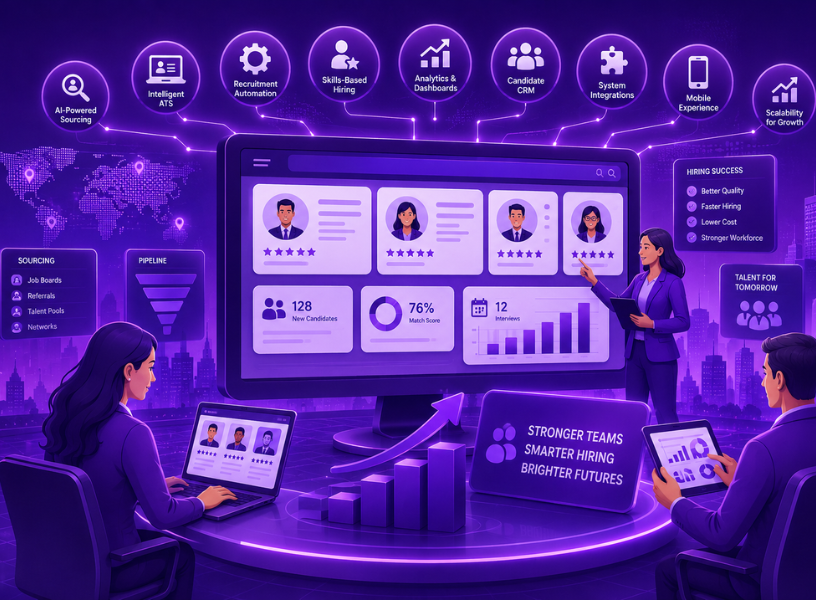
The best talent acquisition software helps recruiters identify qualified candidates faster by using AI to search internal talent pools, external job boards, employee referrals, and professional networks.
Look for solutions that can:
• Recommend suitable candidates based on skills and experience
• Rediscover previous applicants
• Reduce manual sourcing effort
• Minimise recruiter bias through configurable matching criteria
An Applicant Tracking System (ATS) remains the foundation of enterprise recruitment, but modern ATS platforms should do far more than store resumes.
An enterprise ATS should support:
• Custom hiring workflows
• Automated interview scheduling
• Candidate communication
• Approval workflows
• Hiring across multiple business units and locations
Recruiters spend a significant amount of time on repetitive administrative tasks.
Modern recruitment software should automate:
• Job posting across multiple channels
• Candidate screening
• Interview scheduling
• Offer approvals
• Candidate notifications
• Recruitment reminders
Automation enables recruiters to spend more time engaging with candidates instead of managing manual processes.
Many organizations are moving beyond traditional qualification-based hiring.
Talent acquisition software should allow recruiters to evaluate candidates based on:
• Skills
• Certifications
• Experience
• Competencies
• Transferable capabilities
Skills-based hiring can expand talent pools while improving long-term workforce planning.
Enterprise hiring decisions should be supported by data rather than assumptions.
Look for software that provides real-time visibility into metrics such as:
• Time-to-hire
• Cost-per-hire
• Source effectiveness
• Offer acceptance rates
• Recruiter productivity
• Diversity metrics
Actionable analytics help HR leaders identify bottlenecks and continuously improve recruitment performance.
Recruitment doesn't end when a candidate declines an offer.
Candidate Relationship Management (CRM) capabilities help organizations build and nurture talent pipelines for future hiring needs.
A strong recruitment CRM should support:
• Talent pools
• Automated engagement campaigns
• Event management
• Candidate segmentation
• Personalised communication
Maintaining relationships with prospective candidates can reduce sourcing costs and improve future hiring outcomes.
Talent acquisition software should integrate with the broader HR technology ecosystem.
Look for integrations with:
• HRIS or HCM platforms
• Payroll systems
• Onboarding software
• Background screening providers
• Video interviewing platforms
• Learning management systems
Integrated systems reduce manual data entry and create a smoother transition from recruitment to onboarding.
Candidates increasingly search and apply for jobs using mobile devices.
A modern recruiting platform should provide:
• Mobile-optimised applications
• Easy document uploads
• Application progress tracking
• Interview notifications
• Self-service candidate portals
A poor mobile experience can lead to higher application abandonment rates and negatively affect employer branding.
Recruitment platforms process large volumes of personal information.
HR leaders should evaluate whether the software offers:
• Role-based access controls
• Data encryption
• Audit trails
• Consent management
• Data retention controls
• Compliance with applicable privacy regulations
Strong governance helps organizations protect candidate data while supporting internal compliance requirements.
Recruitment requirements evolve as organizations grow.
Talent acquisition software should support:
• High-volume hiring
• Multiple business entities
• Multi-country recruitment
• Different recruitment processes
• Flexible workflows
• Future integrations
Choosing a scalable solution reduces the need for costly platform changes as hiring demands increase.
• Can the platform support our current and future hiring volumes?
• Does it integrate with our existing HR and payroll systems?
• How configurable are recruitment workflows?
• What AI capabilities are included, and how transparent are they?
• Can hiring managers and recruiters collaborate easily?
• What analytics are available to measure recruitment performance?
• How does the platform protect candidate data?
• What implementation and ongoing support does the vendor provide?
These questions will help organizations evaluate solutions based on business outcomes.
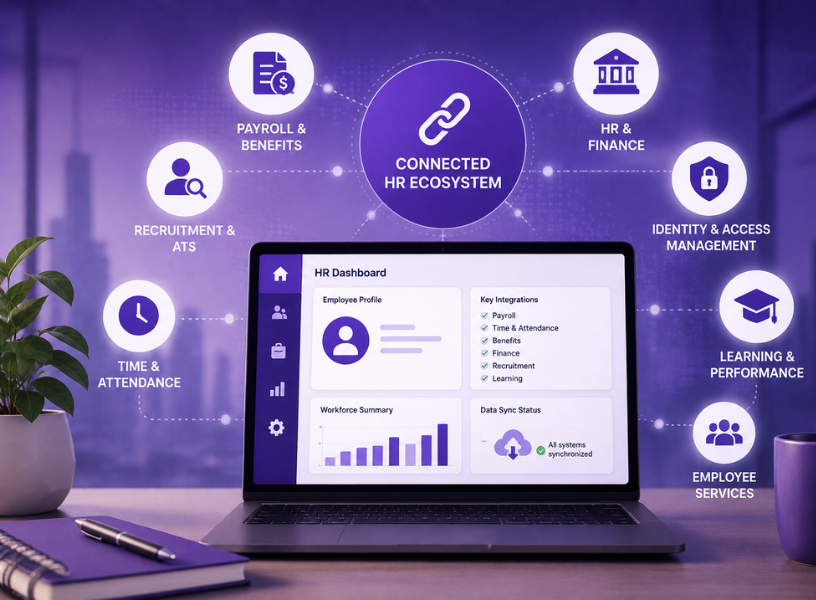
Many organizations begin by searching for standalone recruitment software but eventually realise that hiring is only one part of the employee lifecycle. Candidate information needs to flow seamlessly into onboarding, core HR, payroll, learning, and performance management.
Platforms like Adrenalin HCM take this unified approach by integrating talent acquisition with broader HCM capabilities. Instead of managing multiple disconnected systems, HR teams can streamline recruitment, improve data accuracy, and create a more consistent employee experience from hiring through to development and retention.
The right recruitment platform should help enterprise organizations attract qualified talent, streamline hiring workflows, improve collaboration, and generate meaningful recruitment insights.
HR leaders should evaluate how well a solution supports their hiring strategy, integrates with existing HR systems, and adapts to changing workforce needs.
By prioritising these ten capabilities, organizations can invest in a recruitment platform that delivers value today while remaining flexible enough to support future growth.
Look for AI-powered sourcing, an intelligent applicant tracking system, recruitment automation, skills-based hiring, analytics, CRM, integrations, mobile recruiting, security, and scalability.
An ATS primarily manages job applications and hiring workflows, while talent acquisition software includes additional capabilities such as candidate sourcing, recruitment marketing, CRM, analytics, AI, and workforce planning.
Evaluate compliance, workflow flexibility, AI capabilities, reporting, integrations, scalability, implementation support, and the overall candidate and recruiter experience rather than focusing only on pricing.
Integrations connect recruitment with HR, payroll, onboarding, and learning systems, reducing manual data entry and creating a seamless hiring-to-employment process.
AI can improve sourcing, screening, scheduling, and candidate matching, helping recruiters save time and focus on strategic hiring. However, organizations should also evaluate how AI recommendations are generated and governed to ensure fairness and transparency.

Many people would say that it is absolute madness to keep on doing the same thing, time after time, expecting to get a different result or for something different to happen.
Hoover Dam and the Grand Canyon: Book yourself a seat on any of the many sightseeing tours available and go and watch the architectural marvel that is Hoover Dam built over the Grand canyon which is also a grand sight to see by itself. Black Canyon is another must see as is Lake Mead which is so beautiful just because it is a body of water all surrounded by desert-like nature. Colorado River:
While looking at the Dam and Canyon is from above, to see the true beauty of the river, you have to go down. The Colorado river is excellent for river-rafting and water sports, but you do not have to take part if it is not your thing. Instead just sit back and enjoy another of nature’s marvels.


.webp)
Who can not resist going to one of the old towns like those in the Western gun slinging movies? Your destination needs to be Old Nevada. There you can delight in an old western town right in the middle of Red Rock Canyon. They host western shootouts too so come prepared, partner! I could go on and on about other attractions like the theme park in Circus Circus, the Gilcrease Nature Sanctuary, the Henderson Bird Viewing Preserve and Mt. Charleston but I think you get the picture. In Las Vegas and hate gambling? Do not despair. Just go out and have some clean un-gambling fun.
Hiring has become significantly more complex than simply filling vacancies. Enterprise organizations are expected to attract skilled talent in competitive markets, deliver a seamless candidate experience, reduce hiring costs, and make data-driven recruitment decisions,all while managing compliance and hiring at scale.
This is why Talent Acquisition Software has evolved beyond a traditional applicant tracking system (ATS). Today's solutions combine AI-powered automation, analytics, recruitment marketing, and workflow management to help organizations hire more effectively.
However, not every platform offers the same capabilities. Rather than relying on generic vendor rankings or feature checklists, enterprise HR leaders should evaluate software based on the capabilities that will support their long-term hiring strategy.
The best talent acquisition software helps recruiters identify qualified candidates faster by using AI to search internal talent pools, external job boards, employee referrals, and professional networks.
Look for solutions that can:
• Recommend suitable candidates based on skills and experience
• Rediscover previous applicants
• Reduce manual sourcing effort
• Minimise recruiter bias through configurable matching criteria
An Applicant Tracking System (ATS) remains the foundation of enterprise recruitment, but modern ATS platforms should do far more than store resumes.
An enterprise ATS should support:
• Custom hiring workflows
• Automated interview scheduling
• Candidate communication
• Approval workflows
• Hiring across multiple business units and locations
Recruiters spend a significant amount of time on repetitive administrative tasks.
Modern recruitment software should automate:
• Job posting across multiple channels
• Candidate screening
• Interview scheduling
• Offer approvals
• Candidate notifications
• Recruitment reminders
Automation enables recruiters to spend more time engaging with candidates instead of managing manual processes.
Many organizations are moving beyond traditional qualification-based hiring.
Talent acquisition software should allow recruiters to evaluate candidates based on:
• Skills
• Certifications
• Experience
• Competencies
• Transferable capabilities
Skills-based hiring can expand talent pools while improving long-term workforce planning.
Enterprise hiring decisions should be supported by data rather than assumptions.
Look for software that provides real-time visibility into metrics such as:
• Time-to-hire
• Cost-per-hire
• Source effectiveness
• Offer acceptance rates
• Recruiter productivity
• Diversity metrics
Actionable analytics help HR leaders identify bottlenecks and continuously improve recruitment performance.
Recruitment doesn't end when a candidate declines an offer.
Candidate Relationship Management (CRM) capabilities help organizations build and nurture talent pipelines for future hiring needs.
A strong recruitment CRM should support:
• Talent pools
• Automated engagement campaigns
• Event management
• Candidate segmentation
• Personalised communication
Maintaining relationships with prospective candidates can reduce sourcing costs and improve future hiring outcomes.
Talent acquisition software should integrate with the broader HR technology ecosystem.
Look for integrations with:
• HRIS or HCM platforms
• Payroll systems
• Onboarding software
• Background screening providers
• Video interviewing platforms
• Learning management systems
Integrated systems reduce manual data entry and create a smoother transition from recruitment to onboarding.
Candidates increasingly search and apply for jobs using mobile devices.
A modern recruiting platform should provide:
• Mobile-optimised applications
• Easy document uploads
• Application progress tracking
• Interview notifications
• Self-service candidate portals
A poor mobile experience can lead to higher application abandonment rates and negatively affect employer branding.
Recruitment platforms process large volumes of personal information.
HR leaders should evaluate whether the software offers:
• Role-based access controls
• Data encryption
• Audit trails
• Consent management
• Data retention controls
• Compliance with applicable privacy regulations
Strong governance helps organizations protect candidate data while supporting internal compliance requirements.
Recruitment requirements evolve as organizations grow.
Talent acquisition software should support:
• High-volume hiring
• Multiple business entities
• Multi-country recruitment
• Different recruitment processes
• Flexible workflows
• Future integrations
Choosing a scalable solution reduces the need for costly platform changes as hiring demands increase.
• Can the platform support our current and future hiring volumes?
• Does it integrate with our existing HR and payroll systems?
• How configurable are recruitment workflows?
• What AI capabilities are included, and how transparent are they?
• Can hiring managers and recruiters collaborate easily?
• What analytics are available to measure recruitment performance?
• How does the platform protect candidate data?
• What implementation and ongoing support does the vendor provide?
These questions will help organizations evaluate solutions based on business outcomes.
Many organizations begin by searching for standalone recruitment software but eventually realise that hiring is only one part of the employee lifecycle. Candidate information needs to flow seamlessly into onboarding, core HR, payroll, learning, and performance management.
Platforms like Adrenalin HCM take this unified approach by integrating talent acquisition with broader HCM capabilities. Instead of managing multiple disconnected systems, HR teams can streamline recruitment, improve data accuracy, and create a more consistent employee experience from hiring through to development and retention.
The right recruitment platform should help enterprise organizations attract qualified talent, streamline hiring workflows, improve collaboration, and generate meaningful recruitment insights.
HR leaders should evaluate how well a solution supports their hiring strategy, integrates with existing HR systems, and adapts to changing workforce needs.
By prioritising these ten capabilities, organizations can invest in a recruitment platform that delivers value today while remaining flexible enough to support future growth.
Look for AI-powered sourcing, an intelligent applicant tracking system, recruitment automation, skills-based hiring, analytics, CRM, integrations, mobile recruiting, security, and scalability.
An ATS primarily manages job applications and hiring workflows, while talent acquisition software includes additional capabilities such as candidate sourcing, recruitment marketing, CRM, analytics, AI, and workforce planning.
Evaluate compliance, workflow flexibility, AI capabilities, reporting, integrations, scalability, implementation support, and the overall candidate and recruiter experience rather than focusing only on pricing.
Integrations connect recruitment with HR, payroll, onboarding, and learning systems, reducing manual data entry and creating a seamless hiring-to-employment process.
AI can improve sourcing, screening, scheduling, and candidate matching, helping recruiters save time and focus on strategic hiring. However, organizations should also evaluate how AI recommendations are generated and governed to ensure fairness and transparency.


.webp)


.webp)

Passionately focused on people and fostering relationships for over 25 Years