
Attending a trade show can be a very effective method of promoting your company and its products. And one of the most effective ways to optimize your trade show display and increase traffic to your booth is through the use of banner stands.

Balamani
Author
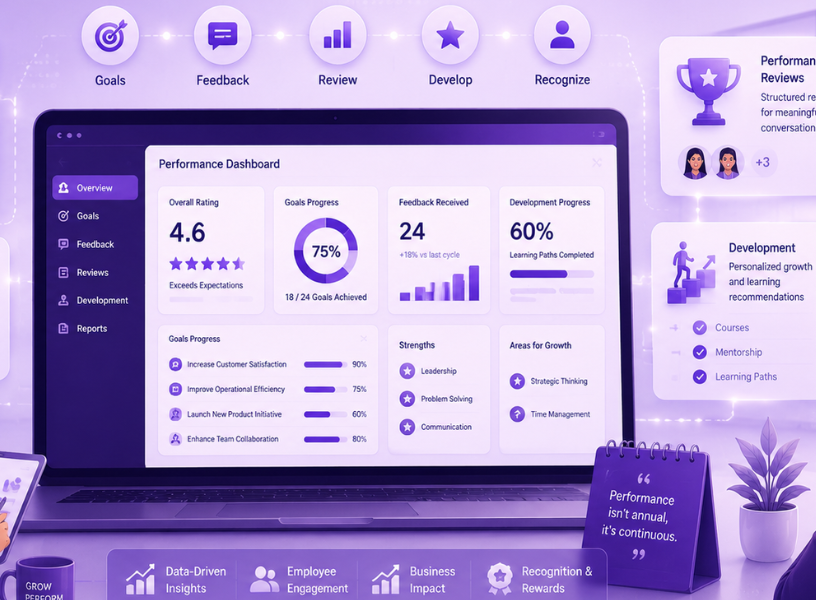
Performance management has evolved beyond annual appraisals and rating employees once a year. Today's organizations need continuous feedback, real-time performance insights, meaningful employee development, and data-driven decision-making to build high-performing teams.
This shift has made performance management software an essential component of modern Human Capital Management (HCM). The right solution doesn't just digitise performance reviews,it helps organizations align employee goals with business objectives, develop future leaders, and improve workforce performance over time.
However, with numerous HR software vendors offering performance management solutions, it can be difficult to distinguish essential capabilities from marketing claims.
Instead of searching for the "best" software, enterprise HR leaders should evaluate platforms based on the features that support long-term business outcomes.
Performance starts with clear goals.
Modern performance management software should allow organizations to create, align, and monitor employee goals throughout the year rather than limiting performance discussions to annual reviews.
Look for capabilities such as:
• Individual and team goals
• Department and organizational goal alignment
• Progress tracking
• Goal updates throughout the review cycle
• Cascading objectives
Questions to ask vendors
• Can goals be updated throughout the year?
• Can managers align individual goals with business objectives?
• Are goal progress dashboards available?
Annual reviews alone rarely provide enough insight into employee performance.
Modern platforms should encourage continuous conversations between managers and employees through:
• Regular one-to-one check-ins
• Real-time feedback
• Recognition tools
• Coaching notes
• Conversation history
Frequent feedback supports employee development while helping managers address performance issues early.
Every organization has its own performance review process.
Performance appraisal tools should support multiple review formats, including:
• Annual reviews
• Quarterly reviews
• Probation reviews
• Project-based evaluations
• Self-assessments
• Manager reviews
• Peer reviews
Flexible workflows allow organizations to adapt performance processes to different business units or employee groups.
Employee performance is rarely reflected through manager feedback alone.
A robust platform should support 360-degree feedback, allowing input from:
• Managers
• Peers
• Direct reports
• Cross-functional teams
• Project stakeholders
This provides a more balanced view of employee performance and supports fairer development discussions.
Performance data should help HR leaders make informed decisions,not simply complete appraisal cycles.
Look for analytics that provide visibility into:
• Goal completion
• High-performing employees
• Performance trends
• Team performance
• Skills gaps
• Review completion rates
• Manager effectiveness
Real-time reporting helps HR teams identify workforce trends and improve organizational performance.
Performance management should directly support employee growth.
The best platforms connect performance reviews with development opportunities by recommending:
• Learning courses
• Certification programmes
• Skills development
• Career pathways
• Mentoring opportunities
This creates a continuous learning culture instead of treating performance reviews as standalone HR activities.
Questions to ask vendors
• Can development plans be linked to performance reviews?
• Does the platform recommend learning based on performance outcomes?
• Can managers track employee development progress?
Performance often influences salary reviews, bonuses, promotions, and recognition.
Performance management software should integrate with compensation planning to help organizations make consistent, data-driven reward decisions.
Look for capabilities including:
• Merit increase planning
• Bonus recommendations
• Promotion workflows
• Reward approvals
• Compensation reporting
Integration reduces manual work while improving transparency and fairness.
Artificial intelligence is becoming an increasingly valuable capability in performance management.
AI can help managers identify trends, reduce administrative work, and provide more meaningful performance insights.
Potential AI capabilities include:
• Performance summaries
• Goal recommendations
• Skills gap analysis
• Suggested development plans
• Manager coaching prompts
• Predictive workforce insights
When evaluating vendors, understand how AI recommendations are generated and whether managers retain final decision-making authority.
Employees should be active participants in their own performance journey.
Look for software that enables employees to:
• Update goals
• Request feedback
• Complete self-assessments
• Access performance history
• Review development plans
• Participate in performance conversations from mobile devices
Self-service improves engagement while reducing administrative effort for HR teams.
Performance management should not operate in isolation.
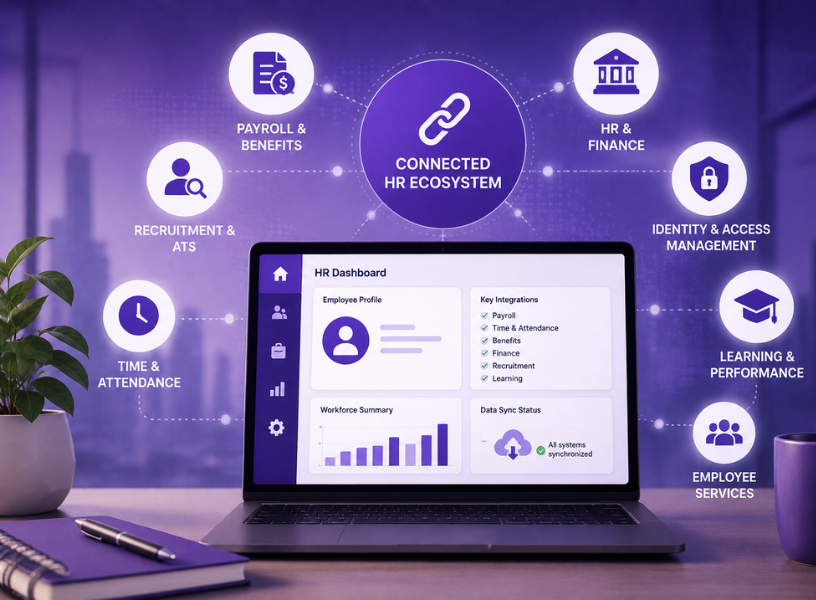
As organizations grow, performance data should connect with recruitment, onboarding, learning, succession planning, payroll, and workforce analytics.
Many organizations therefore prefer performance management as part of a broader HCM platform rather than as a standalone application. For example, Adrenalin HCM integrates performance management with core HR, payroll, learning, talent management, employee engagement, and analytics, enabling organizations to create a more connected employee experience while reducing the complexity of managing multiple HR systems.
Questions Every HR Leader Should Ask Performance Management Software Vendors
Before shortlisting vendors, ask these essential questions:
• Can the platform support continuous performance management rather than annual reviews alone?
• Does it provide configurable review workflows for different employee groups?
• Can goals be aligned with organizational objectives?
• Does the platform support 360-degree feedback?
• Are performance reviews connected to learning and development?
• What AI capabilities are available, and how are recommendations generated?
• Can performance data integrate with compensation and succession planning?
• Does the platform provide mobile access and employee self-service?
These questions will help you evaluate vendors based on long-term business value rather than feature demonstrations.
Choosing the right performance management software is about more than digitising performance reviews. The right platform should enable continuous feedback, align employee goals with business priorities, support learning and development, and provide meaningful insights that improve workforce performance.
By evaluating these ten capabilities, enterprise HR leaders can identify solutions that not only streamline performance management but also contribute to stronger employee engagement, better decision-making, and long-term organizational success.
Look for continuous goal management, real-time feedback, flexible performance reviews, 360-degree feedback, analytics, learning integration, compensation alignment, AI-powered insights, employee self-service, and scalability.
Modern performance management software supports continuous feedback, ongoing goal tracking, employee development, analytics, and AI-powered insights, whereas traditional appraisal tools primarily focus on annual performance reviews.
Integration connects performance data with learning, compensation, payroll, succession planning, and core HR, creating a more seamless employee experience and reducing manual administration.
Evaluate vendors based on workflow flexibility, reporting, AI capabilities, integrations, scalability, employee experience, mobile access, implementation support, and their ability to support continuous performance management.
Yes. AI can help automate administrative tasks, recommend goals and development plans, identify skills gaps, summarise performance trends, and provide managers with actionable insights while keeping people involved in final performance decisions.

Many people would say that it is absolute madness to keep on doing the same thing, time after time, expecting to get a different result or for something different to happen.
Hoover Dam and the Grand Canyon: Book yourself a seat on any of the many sightseeing tours available and go and watch the architectural marvel that is Hoover Dam built over the Grand canyon which is also a grand sight to see by itself. Black Canyon is another must see as is Lake Mead which is so beautiful just because it is a body of water all surrounded by desert-like nature. Colorado River:
While looking at the Dam and Canyon is from above, to see the true beauty of the river, you have to go down. The Colorado river is excellent for river-rafting and water sports, but you do not have to take part if it is not your thing. Instead just sit back and enjoy another of nature’s marvels.


.webp)
Who can not resist going to one of the old towns like those in the Western gun slinging movies? Your destination needs to be Old Nevada. There you can delight in an old western town right in the middle of Red Rock Canyon. They host western shootouts too so come prepared, partner! I could go on and on about other attractions like the theme park in Circus Circus, the Gilcrease Nature Sanctuary, the Henderson Bird Viewing Preserve and Mt. Charleston but I think you get the picture. In Las Vegas and hate gambling? Do not despair. Just go out and have some clean un-gambling fun.
Performance management has evolved beyond annual appraisals and rating employees once a year. Today's organizations need continuous feedback, real-time performance insights, meaningful employee development, and data-driven decision-making to build high-performing teams.
This shift has made performance management software an essential component of modern Human Capital Management (HCM). The right solution doesn't just digitise performance reviews,it helps organizations align employee goals with business objectives, develop future leaders, and improve workforce performance over time.
However, with numerous HR software vendors offering performance management solutions, it can be difficult to distinguish essential capabilities from marketing claims.
Instead of searching for the "best" software, enterprise HR leaders should evaluate platforms based on the features that support long-term business outcomes.
Performance starts with clear goals.
Modern performance management software should allow organizations to create, align, and monitor employee goals throughout the year rather than limiting performance discussions to annual reviews.
Look for capabilities such as:
• Individual and team goals
• Department and organizational goal alignment
• Progress tracking
• Goal updates throughout the review cycle
• Cascading objectives
Questions to ask vendors
• Can goals be updated throughout the year?
• Can managers align individual goals with business objectives?
• Are goal progress dashboards available?
Annual reviews alone rarely provide enough insight into employee performance.
Modern platforms should encourage continuous conversations between managers and employees through:
• Regular one-to-one check-ins
• Real-time feedback
• Recognition tools
• Coaching notes
• Conversation history
Frequent feedback supports employee development while helping managers address performance issues early.
Every organization has its own performance review process.
Performance appraisal tools should support multiple review formats, including:
• Annual reviews
• Quarterly reviews
• Probation reviews
• Project-based evaluations
• Self-assessments
• Manager reviews
• Peer reviews
Flexible workflows allow organizations to adapt performance processes to different business units or employee groups.
Employee performance is rarely reflected through manager feedback alone.
A robust platform should support 360-degree feedback, allowing input from:
• Managers
• Peers
• Direct reports
• Cross-functional teams
• Project stakeholders
This provides a more balanced view of employee performance and supports fairer development discussions.
Performance data should help HR leaders make informed decisions,not simply complete appraisal cycles.
Look for analytics that provide visibility into:
• Goal completion
• High-performing employees
• Performance trends
• Team performance
• Skills gaps
• Review completion rates
• Manager effectiveness
Real-time reporting helps HR teams identify workforce trends and improve organizational performance.
Performance management should directly support employee growth.
The best platforms connect performance reviews with development opportunities by recommending:
• Learning courses
• Certification programmes
• Skills development
• Career pathways
• Mentoring opportunities
This creates a continuous learning culture instead of treating performance reviews as standalone HR activities.
Questions to ask vendors
• Can development plans be linked to performance reviews?
• Does the platform recommend learning based on performance outcomes?
• Can managers track employee development progress?
Performance often influences salary reviews, bonuses, promotions, and recognition.
Performance management software should integrate with compensation planning to help organizations make consistent, data-driven reward decisions.
Look for capabilities including:
• Merit increase planning
• Bonus recommendations
• Promotion workflows
• Reward approvals
• Compensation reporting
Integration reduces manual work while improving transparency and fairness.
Artificial intelligence is becoming an increasingly valuable capability in performance management.
AI can help managers identify trends, reduce administrative work, and provide more meaningful performance insights.
Potential AI capabilities include:
• Performance summaries
• Goal recommendations
• Skills gap analysis
• Suggested development plans
• Manager coaching prompts
• Predictive workforce insights
When evaluating vendors, understand how AI recommendations are generated and whether managers retain final decision-making authority.
Employees should be active participants in their own performance journey.
Look for software that enables employees to:
• Update goals
• Request feedback
• Complete self-assessments
• Access performance history
• Review development plans
• Participate in performance conversations from mobile devices
Self-service improves engagement while reducing administrative effort for HR teams.
Performance management should not operate in isolation.
As organizations grow, performance data should connect with recruitment, onboarding, learning, succession planning, payroll, and workforce analytics.
Many organizations therefore prefer performance management as part of a broader HCM platform rather than as a standalone application. For example, Adrenalin HCM integrates performance management with core HR, payroll, learning, talent management, employee engagement, and analytics, enabling organizations to create a more connected employee experience while reducing the complexity of managing multiple HR systems.
Questions Every HR Leader Should Ask Performance Management Software Vendors
Before shortlisting vendors, ask these essential questions:
• Can the platform support continuous performance management rather than annual reviews alone?
• Does it provide configurable review workflows for different employee groups?
• Can goals be aligned with organizational objectives?
• Does the platform support 360-degree feedback?
• Are performance reviews connected to learning and development?
• What AI capabilities are available, and how are recommendations generated?
• Can performance data integrate with compensation and succession planning?
• Does the platform provide mobile access and employee self-service?
These questions will help you evaluate vendors based on long-term business value rather than feature demonstrations.
Choosing the right performance management software is about more than digitising performance reviews. The right platform should enable continuous feedback, align employee goals with business priorities, support learning and development, and provide meaningful insights that improve workforce performance.
By evaluating these ten capabilities, enterprise HR leaders can identify solutions that not only streamline performance management but also contribute to stronger employee engagement, better decision-making, and long-term organizational success.
Look for continuous goal management, real-time feedback, flexible performance reviews, 360-degree feedback, analytics, learning integration, compensation alignment, AI-powered insights, employee self-service, and scalability.
Modern performance management software supports continuous feedback, ongoing goal tracking, employee development, analytics, and AI-powered insights, whereas traditional appraisal tools primarily focus on annual performance reviews.
Integration connects performance data with learning, compensation, payroll, succession planning, and core HR, creating a more seamless employee experience and reducing manual administration.
Evaluate vendors based on workflow flexibility, reporting, AI capabilities, integrations, scalability, employee experience, mobile access, implementation support, and their ability to support continuous performance management.
Yes. AI can help automate administrative tasks, recommend goals and development plans, identify skills gaps, summarise performance trends, and provide managers with actionable insights while keeping people involved in final performance decisions.


.webp)


.webp)

Passionately focused on people and fostering relationships for over 25 Years