


“A high-performance leader is different from a high-performance individual”
~ Ram Charan
When the CEO of a large manufacturing enterprise announces his premature retirement, the succession discussion begins almost immediately. There is no shortage of names. One candidate has spent two decades with the company and enjoys enormous credibility with the board. Another has delivered exceptional business results but has spent most of her career in a single function. A third, considerably younger, has quietly led some of the organisation’s most difficult transformation initiatives and built influence well beyond her formal remit.
The leadership team weighs experience, performance, managerial capability and business familiarity. Eventually, someone says, “I think he is the safest choice.” The room nods.
There is nothing unusual about this conversation. In fact, it is remarkably close to how succession decisions are made in many organisations. The problem is not that experienced leaders are incapable of making sound judgements. It is that succession is one of the areas of HR where human judgement is particularly vulnerable to incomplete information, personal familiarity and unconscious bias. That makes objectivity one of the biggest unfinished challenges in succession planning.
The stakes are considerable.
McKinsey’s analysis has found that between 27% and 46% of executive transitions are viewed as failures or disappointments two years later. *
Technology has already brought discipline to the process. Modern HCM platforms can bring performance history, competencies, learning, career movement and talent assessments into a common environment. Organisations can create talent pools, define readiness levels and build development plans rather than relying entirely on spreadsheets and institutional memory.
Yet digitising a process does not necessarily make it objective. If the information entering the system is shaped by managerial preferences, historical opportunity or inconsistent assessments, technology can simply make an existing process more efficient.
Consider the three candidates in our hypothetical organisation. A conventional succession review might give considerable weight to tenure, current performance, leadership experience and recommendations from senior managers. An AI-enabled system could examine a much broader range of signals: skills acquired, learning velocity, project complexity, cross-functional exposure, career aspirations, internal mobility and performance trajectories.
The younger transformation leader might suddenly look different through that lens. She may not have managed the largest team or spent the longest time in the organisation, but the data could reveal a consistent pattern: she has repeatedly taken on unfamiliar challenges, acquired adjacent capabilities, influenced people outside her reporting structure and performed well amidst ambiguity.
That matters because leadership potential rarely arrives with a title. It often appears first as a pattern of behaviour. The broader talent picture makes this challenge even more pressing.
Gartner reports that 72% of HR leaders struggle to close successor capability gaps, while only 38% of CHROs are confident they can deliver their succession-management goals over the following year. (**)
Deloitte’s 2025 Global Human Capital Trends research found that 66% of managers and executives believe most recent hires are not fully prepared for their roles, with lack of experience the most common shortcoming. (***)
The takeaway here is significant: organizations cannot afford to sit back and wait until leadership readiness becomes self-evident. Instead, they need a clearer, deeper understanding of how that capability is evolving.
Succession Planning, therefore, needs to move beyond asking who is ready today and begin asking who is demonstrating the trajectory to become ready tomorrow. AI can help make that shift possible by continuously connecting signals that might otherwise remain scattered across performance reviews, learning systems, projects and career histories.
There is, however, a paradox. We are turning to AI to make talent decisions more objective even though AI learns from data generated by organisations and their people. If some employees historically received better assignments, greater exposure to senior leaders or more favourable ratings, those patterns can enter the dataset. If previous promotions consistently favoured a particular leadership profile, an algorithm could reinforce that definition.
This is why responsible AI in Succession Planning must begin with questions about the quality of talent data. Are performance assessments calibrated consistently? Are different career paths being valued fairly? Are aspirations being captured rather than assumed? Are informal leadership behaviours recognised alongside formal managerial responsibility? Are we assessing future potential, or are we just rewarding people for past visibility?
These are not technology questions; they are questions of HR governance.
LinkedIn’s 2025 Workplace Learning Report found that only 36% of organisations qualify as “career development champions”. Among them, 51% describe their organisations as leading or accelerating in generative AI adoption, compared with 36% among organisations with weaker career-development programmes. LinkedIn calculates that career-development champions are 42% more likely to be AI frontrunners. (LinkedIn Business Solutions)
This also changes the role of HR. The best AI-enabled Succession process will not present leadership teams with a definitive ranking and ask them to approve it. It will provide evidence and patterns and allow leaders to interrogate them.
AI can identify a pattern. The organisation must understand the context behind it.
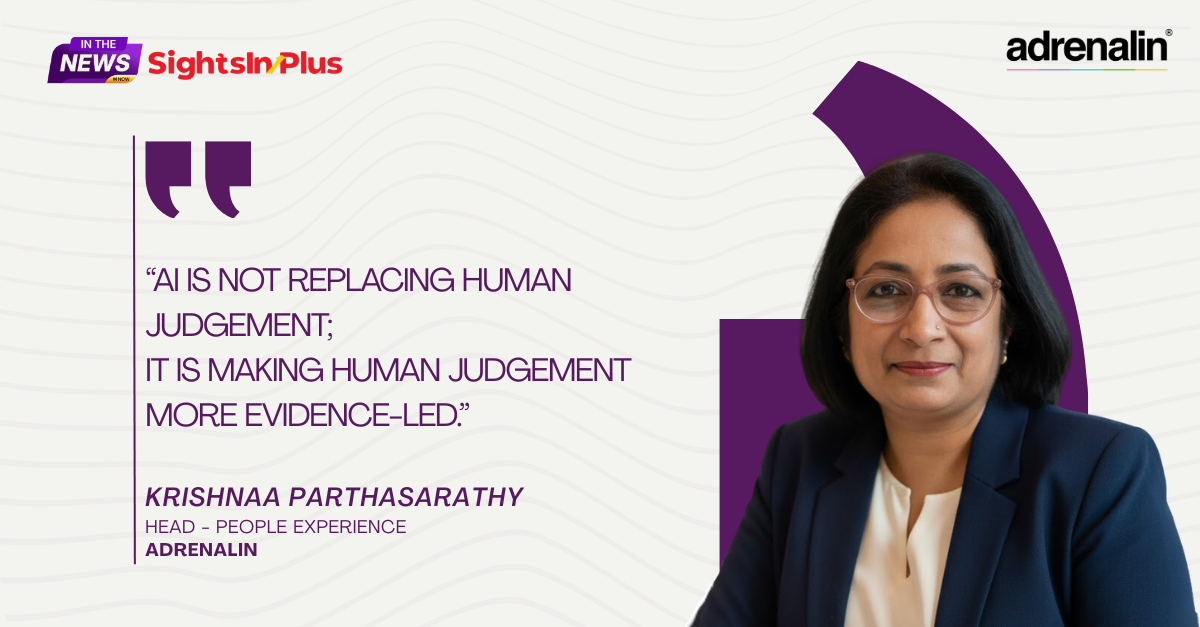
The future of Succession Planning, therefore, is not AI replacing human judgement but AI making human judgement more evidence-led. The technology can analyse thousands of workforce signals, challenge assumptions and bring overlooked talent into the conversation. HR and business leaders must still determine whether those signals make sense within the organisation’s strategy, culture and realities.
The objective should not be an AI-generated list of successors. It should be a succession process in which fewer people are overlooked because they lacked visibility, fewer decisions are driven by familiarity, and leadership potential is assessed against a broader body of evidence.
The next leader may already be somewhere inside the organisation. The competitive advantage may lie in identifying that person before the title, visibility and conventional markers of leadership make the answer obvious. That is where AI can make Succession Planning genuinely more objective – not by taking the human out of the decision, but by ensuring the human decision is made with far more of the picture in view.
“A high-performance leader is different from a high-performance individual”
~ Ram Charan
When the CEO of a large manufacturing enterprise announces his premature retirement, the succession discussion begins almost immediately. There is no shortage of names. One candidate has spent two decades with the company and enjoys enormous credibility with the board. Another has delivered exceptional business results but has spent most of her career in a single function. A third, considerably younger, has quietly led some of the organisation’s most difficult transformation initiatives and built influence well beyond her formal remit.
The leadership team weighs experience, performance, managerial capability and business familiarity. Eventually, someone says, “I think he is the safest choice.” The room nods.
There is nothing unusual about this conversation. In fact, it is remarkably close to how succession decisions are made in many organisations. The problem is not that experienced leaders are incapable of making sound judgements. It is that succession is one of the areas of HR where human judgement is particularly vulnerable to incomplete information, personal familiarity and unconscious bias. That makes objectivity one of the biggest unfinished challenges in succession planning.
The stakes are considerable.
McKinsey’s analysis has found that between 27% and 46% of executive transitions are viewed as failures or disappointments two years later. *
Technology has already brought discipline to the process. Modern HCM platforms can bring performance history, competencies, learning, career movement and talent assessments into a common environment. Organisations can create talent pools, define readiness levels and build development plans rather than relying entirely on spreadsheets and institutional memory.
Yet digitising a process does not necessarily make it objective. If the information entering the system is shaped by managerial preferences, historical opportunity or inconsistent assessments, technology can simply make an existing process more efficient.
Consider the three candidates in our hypothetical organisation. A conventional succession review might give considerable weight to tenure, current performance, leadership experience and recommendations from senior managers. An AI-enabled system could examine a much broader range of signals: skills acquired, learning velocity, project complexity, cross-functional exposure, career aspirations, internal mobility and performance trajectories.
The younger transformation leader might suddenly look different through that lens. She may not have managed the largest team or spent the longest time in the organisation, but the data could reveal a consistent pattern: she has repeatedly taken on unfamiliar challenges, acquired adjacent capabilities, influenced people outside her reporting structure and performed well amidst ambiguity.
That matters because leadership potential rarely arrives with a title. It often appears first as a pattern of behaviour. The broader talent picture makes this challenge even more pressing.
Gartner reports that 72% of HR leaders struggle to close successor capability gaps, while only 38% of CHROs are confident they can deliver their succession-management goals over the following year. (**)
Deloitte’s 2025 Global Human Capital Trends research found that 66% of managers and executives believe most recent hires are not fully prepared for their roles, with lack of experience the most common shortcoming. (***)
The takeaway here is significant: organizations cannot afford to sit back and wait until leadership readiness becomes self-evident. Instead, they need a clearer, deeper understanding of how that capability is evolving.
Succession Planning, therefore, needs to move beyond asking who is ready today and begin asking who is demonstrating the trajectory to become ready tomorrow. AI can help make that shift possible by continuously connecting signals that might otherwise remain scattered across performance reviews, learning systems, projects and career histories.
There is, however, a paradox. We are turning to AI to make talent decisions more objective even though AI learns from data generated by organisations and their people. If some employees historically received better assignments, greater exposure to senior leaders or more favourable ratings, those patterns can enter the dataset. If previous promotions consistently favoured a particular leadership profile, an algorithm could reinforce that definition.
This is why responsible AI in Succession Planning must begin with questions about the quality of talent data. Are performance assessments calibrated consistently? Are different career paths being valued fairly? Are aspirations being captured rather than assumed? Are informal leadership behaviours recognised alongside formal managerial responsibility? Are we assessing future potential, or are we just rewarding people for past visibility?
These are not technology questions; they are questions of HR governance.
LinkedIn’s 2025 Workplace Learning Report found that only 36% of organisations qualify as “career development champions”. Among them, 51% describe their organisations as leading or accelerating in generative AI adoption, compared with 36% among organisations with weaker career-development programmes. LinkedIn calculates that career-development champions are 42% more likely to be AI frontrunners. (LinkedIn Business Solutions)
This also changes the role of HR. The best AI-enabled Succession process will not present leadership teams with a definitive ranking and ask them to approve it. It will provide evidence and patterns and allow leaders to interrogate them.
AI can identify a pattern. The organisation must understand the context behind it.
The future of Succession Planning, therefore, is not AI replacing human judgement but AI making human judgement more evidence-led. The technology can analyse thousands of workforce signals, challenge assumptions and bring overlooked talent into the conversation. HR and business leaders must still determine whether those signals make sense within the organisation’s strategy, culture and realities.
The objective should not be an AI-generated list of successors. It should be a succession process in which fewer people are overlooked because they lacked visibility, fewer decisions are driven by familiarity, and leadership potential is assessed against a broader body of evidence.
The next leader may already be somewhere inside the organisation. The competitive advantage may lie in identifying that person before the title, visibility and conventional markers of leadership make the answer obvious. That is where AI can make Succession Planning genuinely more objective – not by taking the human out of the decision, but by ensuring the human decision is made with far more of the picture in view.